


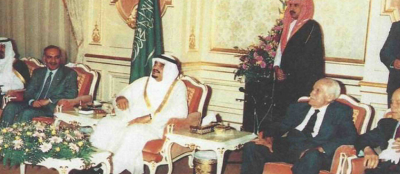
More than three decades have passed since the birth of the "Document of National Accord" in the Saudi city of Taif in 1989. Today, this agreement remains the fundamental pillar and the actual regulator of political life and peaceful stability in Lebanon. The Taif Agreement was never merely a settlement to end a bloody fifteen-year civil war; rather, it was a brilliant reformulation of the concept of co-existence, a reaffirmation of Lebanon's definitive Arab identity, and the institutionalization of the formula "no victor, no vanquished," which protects the unique pluralism of this nation.
The core importance of the Taif Agreement lies in its ability to transition Lebanon from the shores of sectarian infighting to the shores of institutional governance. The accord redistributed constitutional powers to ensure a delicate balance among Lebanese components. Executive authority was no longer concentrated solely within the presidency; instead, it was entrusted to the Council of Ministers collectively, thereby creating a genuine partnership in state management. This balance is not a rigid formula but a philosophy of life built on Muslim-Christian parity and partnership, regardless of demographic shifts. This has made Lebanon a unique model for interfaith and intercultural dialogue in a region plagued by unilateralism and division.
Despite the voices that rise from time to time criticizing the agreement, or calling for its replacement with a "constituent assembly" or new frameworks such as federalism, reality proves that the issue has never been with the texts of Taif, but rather in its "flawed implementation" and the selective execution of its clauses. Those demanding an alternative to Taif are risking opening a Pandora’s box of civil strife that may have no end. Taif was never implemented with a comprehensive, national, and pact-based spirit. Vital reformist clauses were marginalized, chief among them the establishment of a Senate to address sectarian anxieties, parallel to electing a Parliament free from sectarian constraints, which serves as the safe passage toward a modern civil state.
Adhering to the Taif Agreement today is not a fixation on the past, but an existential necessity for the future. Amid the current crises and continuous political deadlock, Taif stands out as the only remaining safety net preventing the collapse of state institutions. It is neither a Quran nor a Bible; it is a social contract adaptable to development through its own constitutional mechanisms, not from the outside. Implementing broad administrative decentralization, enacting a modern electoral law, and completing the execution of structural reform clauses are what will guarantee transitioning Lebanon from a "state of sects" to a "state of citizenship."
In conclusion, the Taif Agreement represents the Arab and international umbrella safeguarding Lebanon's unity, sovereignty, and independence. Any attempt to bypass or undermine it under the weight of shifting balances of power will only lead to a leap into the unknown. The priority today is not to search for alternative formulas that exacerbate the country's fragmentation, but to return to the spirit and text of Taif as the sole roadmap to rescue Lebanon and restore its political and economic health