


Russia and China are closely monitoring the depletion of the U.S. arsenal amid the ongoing conflict with Iran, as debates intensify in Washington over the impact of dwindling missile and ammunition stocks on America's deterrence capabilities in Europe and Asia.
According to a report from The New York Times, the conflict has pushed the U.S. Department of Defense to relocate munitions, ships, aircraft, and air defense units from Europe and Asia to the Middle East, consequently reducing part of the firepower vital to the U.S. deterrence strategies against Moscow and Beijing.
The report estimates that operations against Iran have consumed thousands of offensive and interceptive missiles, with replacement posing a significant challenge due to their high cost, complex production lines, and reliance on a broad supplier network.
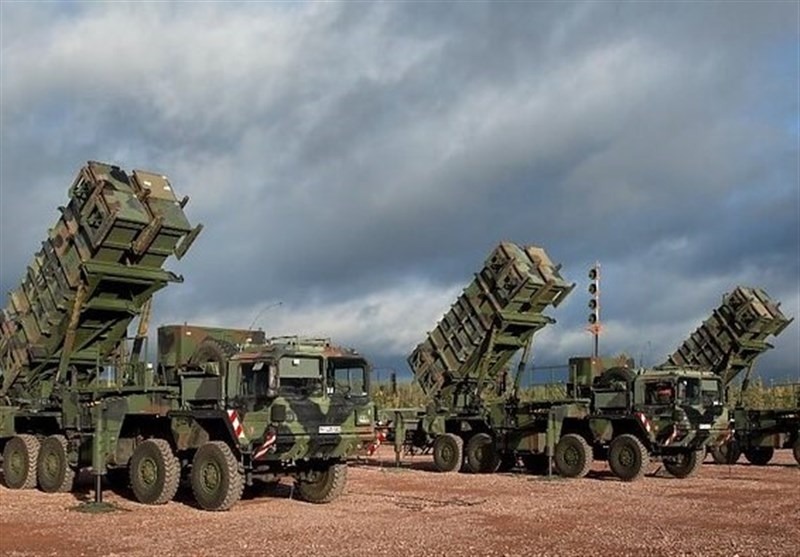
As noted by the Times, the U.S. has used more than 1,500 Patriot interceptors, with the current stock falling below 1,700 missiles, highlighting the pressure on American reserves.
Despite President Donald Trump's administration's efforts to accelerate production, Washington may need over two years to replenish its Patriot missile inventory, coinciding with delays in weapon deliveries to U.S. clients in Europe and Asia.
Stocks of certain long-range precision missiles, including ATACMS and precision strike missiles, have also faced significant strains. These weapons are crucial for any potential military confrontation with Russia or China.
Reuters reported that the U.S. has nearly depleted its stock of some long-range precision missiles, alongside substantial portions of Patriot, THAAD, and about half of its Tomahawk missiles.
According to The New York Times, Joint Chiefs of Staff Chairman General Dan Keen had warned Trump before the war about the risks of depleting inventories. However, the president proceeded with the offensive, anticipating a brief confrontation.
The domestic shortages have also affected Ukraine. President Volodymyr Zelensky noted that the amount of air defense missiles his country received from allies has decreased to about one-third compared to 2025.
In Asia, the redeployment of Tomahawk missiles, long-range munitions, and hundreds of interceptors, along with an aircraft carrier and advanced destroyers, to the Middle East has raised questions about Washington's ability to handle a sudden military crisis in the Indo-Pacific, particularly around Taiwan or on the Korean Peninsula.
The concerns extend beyond military inventories to the credibility of the U.S. security umbrella. Officials fear that waning conventional capabilities could lead Japan and South Korea to reassess their reliance on American protection.
Conversely, the Trump administration denies any ammunition crisis, asserting that U.S. forces have the necessary firepower for presidential orders, while the White House emphasizes that defense companies are rapidly expanding production capacities.
Analysts, however, believe Moscow and Beijing are closely observing U.S. consumption rates, production levels, and the time needed to replenish used missiles, relying on budget data, defense company announcements, and intelligence.
In this context, Tom Karako from the Center for Strategic and International Studies warned that the scale of depletion threatens an entire generation of American conventional deterrence capabilities, at a time when Washington may need years to rebuild part of its arsenal.
The report concludes that prolonging the conflict with Iran could strategically favor Russia and China by widening what is described as the U.S. 'window of weakness' and forcing Washington to distribute its military capabilities across three main theaters: the Middle East, Europe, and Asia.