


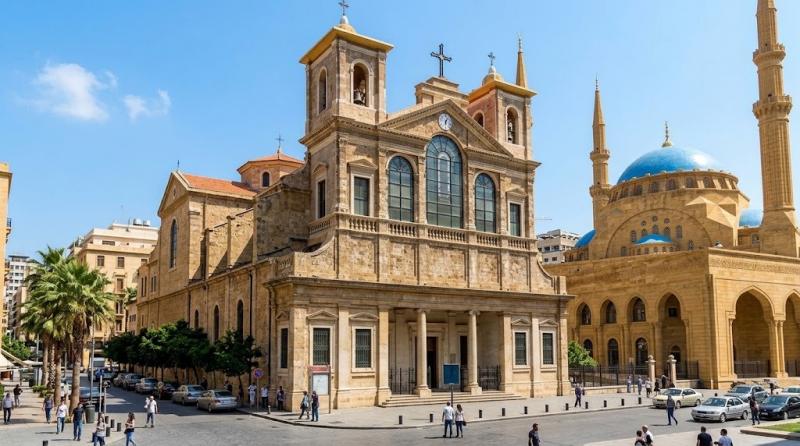
Beirut is renowned for its diverse religious and historical landmarks, with Saint George Maronite Cathedral standing out as a prime example. This cathedral is not just a place of worship; it is a historic site that has witnessed the many political and social transitions of Lebanon.
Located in the heart of Beirut, the cathedral features a European-inspired architectural style, and its history traces back to an earlier church from the 18th century. Saint George has maintained its religious, national, and cultural significance, making it a must-see for anyone exploring downtown Beirut.
What Makes Saint George Maronite Cathedral So Famous?
As a central spiritual hub for the Maronite diocese in Beirut, the cathedral is much more than a large church. It plays an integral role in major religious celebrations and ceremonies.
The Rich History of Saint George Cathedral
The cathedral's roots go back to a previous church initiated by Khoury Mikhael Fadel in the mid-18th century, with construction starting in 1753 and completing in 1755. Over the years, renovations and expansions were necessary to accommodate the growing Maronite community.
Bishop Joseph Debs commenced the construction of the current cathedral in 1884 due to space constraints of the older structure. Inspired by Rome's Basilica of Santa Maria Maggiore, he hired Italian expert Joseph Maggiore for its design. The cathedral was completed and its first mass was celebrated on Palm Sunday in 1894.
Architectural Highlights of the Cathedral
Design and Structure
The cathedral's architectural design exhibits European church influences, particularly that of Santa Maria Maggiore in Rome. This unique style makes it stand out among Beirut's cityscape, reflecting a significant phase in the city's 19th-century religious architecture.
Interior Space
Spanning approximately 62 meters in length and 24-25 meters in width, the cathedral accommodates around 1,000 seated attendees, with additional space for standing and balcony views. The interior is adorned with artistic and decorative elements, elevating its aesthetic and religious value.
The Impact of War on the Cathedral
The Lebanese civil war inflicted severe damage on Saint George Cathedral, leaving only its primary columns standing. A major reconstruction began in 1997, with the cathedral reopening on April 24, 2000, in a festive mass.
Why Saint George Cathedral Remains a Beacon in Beirut
Religious Significance
The cathedral is essential to the religious life of Beirut's Maronite community, hosting numerous key celebrations and events beyond its local parish.
National Importance
Historically tied to many national events, the cathedral has been a witness to different eras in Lebanese history, playing a role in both religious and national ceremonies.
Cultural Presence
Beyond its religious function, the cathedral has also served as a cultural hub, associated with intellectual gatherings and forums involving prominent Lebanese authors and thinkers.
Nearby Attractions to Explore
Downtown Beirut
The cathedral’s location allows visitors to include it in a tour of historic and cultural sites in downtown Beirut.
Mohammad Al-Amin Mosque
Situated near the cathedral, the mosque contributes to the architectural diversity and cultural richness of Beirut’s religious landscape.
Martyrs' Square
Another key attraction is the nearby Martyrs' Square, one of Beirut’s most notable historical sites.
Why Visit Saint George Cathedral?
Saint George Cathedral remains an essential part of Beirut’s cultural and religious fabric, embodying a mix of historical significance, distinctive architecture, and a prime location. It offers a perfect starting point for exploring the city's sacred and historical sites, alongside the Mohammad Al-Amin Mosque and Martyrs' Square.
See Also: