


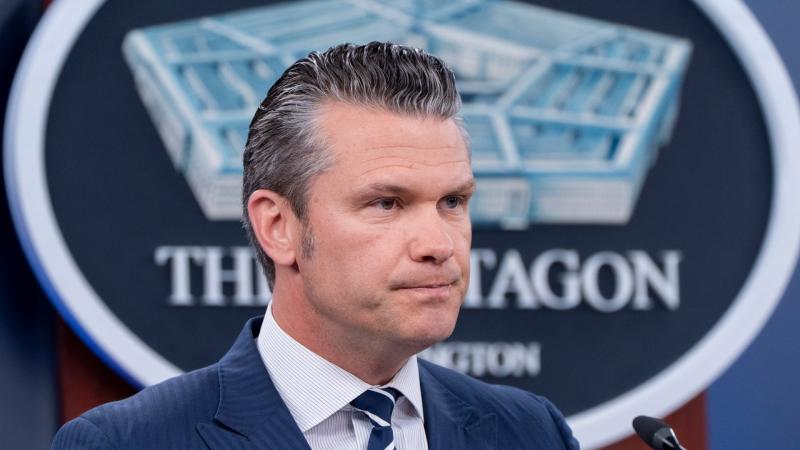
Recent appointments by U.S. Secretary of Defense Pete Hegseth to the Defense Policy Board have raised concerns about potential conflicts of interest. This follows revelations of investment ties between two board members and the investment firm 1789 Capital, where Donald Trump Jr. is a partner. The firm invests in defense technology companies receiving billions in government contracts and funding.
According to the British newspaper "The Guardian," board member Marc Andreessen owns the firm "Andreessen Horowitz," abbreviated as "A16Z," which collaborates with 1789 Capital in investing in several tech and defense companies, including "Anduril Industries," "Hadrian," and "SpaceX."
Another board member, Blake Masters, holds board memberships in three companies linked to 1789 Capital.
These relationships gain additional sensitivity due to Donald Trump Jr.'s involvement as a partner in the fund, whose managed assets reportedly increased from about $150 million in 2024 to $3.5 billion by May.
Simultaneously, companies invested in by both 1789 Capital and "A16Z" have received billions in government contracts and loans since President Donald Trump returned to the White House.
Foremost among these companies is "Anduril," which led "A16Z" to a $5 billion funding round in May 2026, raising the company's valuation to around $61 billion following a U.S. Army contract potentially worth $20 billion.
According to "CNN," "Anduril" received approximately $1.25 billion in federal funds during the first 500 days of Trump's second term.
Joint investments also include "Hadrian," a company specializing in manufacturing components for weapons systems, which secured a $900 million partnership with the U.S. Navy in March 2026 as part of a broader $2.4 billion plan to build components for nuclear submarines, along with an additional military contract worth $80 million.
These intertwined relationships raise questions about the independence of the Defense Policy Board, which advises Pentagon leadership on strategy and national security matters.
Scott Amey from the "Project on Government Oversight" warned that commercial interests of members in such committees could lead to concerns over possible exploitation of governmental information or influence to gain advantages for businesses or related entities.
Hegseth restructured the Defense Policy Board in June 2026, after dissolving it in April 2025, appointing 15 new members under the chairmanship of former U.S. Trade Representative Robert Lighthizer.
This situation has placed the board under increased scrutiny in Washington, amid questions about the line between advising military leadership and investment interests in companies heavily reliant on government contracts.