


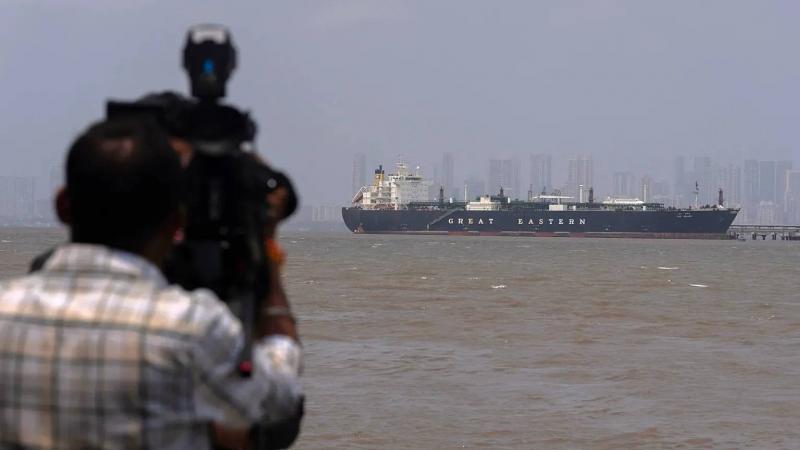
Concerns are mounting among Gulf countries that Iran's control over the Strait of Hormuz might transform from a mere pressure tool into a permanent reality, reshaping energy movements in the region. This comes amidst the collapse of oil exports through this crucial passage and stalled negotiations with Tehran, with limited options available – all fraught with fears of reverting to open warfare, threatening the entire region's energy infrastructure.
According to a report by journalist Eli Leon in the Israeli newspaper "Maariv," Gulf energy-producing nations are arriving at a grim conclusion: Iran's hold over the Strait of Hormuz may become permanent, causing disruptions to oil and gas exports and global energy supplies indefinitely.
The core dilemma for these nations is that a potential alternative—returning to open conflict—could be far more catastrophic and bloody.
A report from the "Wall Street Journal" highlights how the current situation has revealed Iran as more aggressive, while the region has limited options to grapple with this new reality, crucial to global energy security.
Gulf states competing with Iran are not enthusiastic about the current talks to reopen this vital waterway, viewing any agreement as implicitly acknowledging Iran's oversight over vessel entry into the strait.
Nevertheless, Gulf officials regard the agreement as the "lesser of two evils" compared to the possibility of a new military confrontation between Iran and the United States, which could directly endanger energy facilities and infrastructure in Arab states.
These fears further grow as negotiations to resume shipping through the Strait of Hormuz hit an impasse.
Iran demands economic concessions alongside a total ban on American and Israeli warships entering the strait.
Conversely, the United States rejects any agreement that allows Iran to impose restrictions on navigation freedom.
Amidst this tension, oil prices have risen, with Brent crude futures trading at approximately $87 per barrel this week.
Simultaneously, the strait continues to face disruptions due to repeated Iranian attacks, as reported.
The UAE announced at least four of its ships faced attacks from Tehran last week while attempting to pass through the strait.
Saudi Arabia, trying to maintain its export capacity by directing oil overland to a Red Sea port, encountered attacks on this alternate route executed by Yemen's Houthis.
The escalation even reached Egypt, where a drone targeted a gas tanker in Damietta, signaling the threat scope of Iran's confrontation extends beyond the Strait of Hormuz.
This drastic reality has sharply impacted energy exports, with crude oil exports via the Strait of Hormuz dropping to about 2.2 million barrels a day last week, down from about 8.5 million barrels daily a month ago.
In response to this significant decline, Gulf countries are exploring emergency plans to bypass the strait and reduce dependency on it, including expanding pipelines to the Red Sea and Gulf of Oman and increasing investments in oil storage facilities outside the region.
However, these alternatives require time to implement, and meanwhile, Gulf economies remain deeply tied to developments in Hormuz.
So, the question for Gulf States has shifted from when tankers will resume normal passage to whether Tehran will succeed in making its grip on the strait a long-lasting reality, leaving a crucial global energy artery stuck between a tough agreement or a costly confrontation feared by all.