


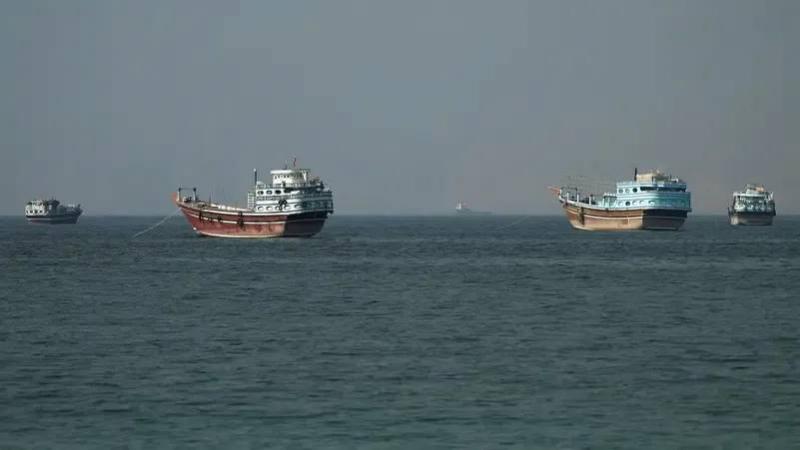
Following recent clashes over Iranian attacks on vessels in the Strait of Hormuz, an American official announced on Sunday evening that both the US and Iran have agreed to halt their attacks. This development follows the signing of a memorandum of understanding between the two countries, aiming to de-escalate tensions in the Gulf.
The official further noted that "technical discussions are scheduled to continue concerning all areas of the memorandum," adding that "both sides will stop their attacks for now, and ships can move freely" within and around the Strait of Hormuz.
Tehran Insists on Management
Meanwhile, Tehran continues to insist on controlling the strategic strait through which one-fifth of the world's oil and gas shipments pass. Iran seeks a final agreement over its "management" and has hinted at the possibility of imposing "service charges" for overseeing navigation alongside Oman.
The situation remains unclear, especially since the US-Iranian memorandum of understanding, signed on June 18, mentioned keeping the strait open without charges or restrictions for a 60-day period. During this time, discussions are expected regarding this vital navigational route and the potential for Iran to manage it in coordination with Oman and Gulf countries.
However, no definitive resolution has been reached, particularly as all Gulf states oppose imposing any restrictions or fees on maritime movement.
What About International Law?
While Iran and Oman control the banks of the Strait of Hormuz, the United Nations Convention on the Law of the Sea 1982 guarantees the right of "transit passage" in straits used for international navigation, such as Hormuz, connecting the Gulf to the world.
This convention, which Tehran has not ratified, states that "all ships and aircraft" have the right of "unimpeded transit passage." It also affirms that this "freedom of navigation and overflight" should be for the sole purpose of continuous, expeditious transit.
The strait was reopened last week after Tehran had restricted navigation since the start of the US-Israeli war on February 28, a move that shocked global markets, causing significant disruptions in energy supplies and leading to a sharp rise in oil prices.
Iran has only allowed vessels to pass along a single route near its shores, threatening to target any ship that violates these directives.
Iranian Foreign Minister Abbas Araghchi emphasized yesterday that "the exclusive responsibility for managing the strait lies with his country, without any interference from other parties or nations."
While Washington has advocated for a southern route along the Omani coast, Tehran insists on a northern passage through its waters under its control, ultimately aiming to impose fees for using the strait, according to Reuters.