


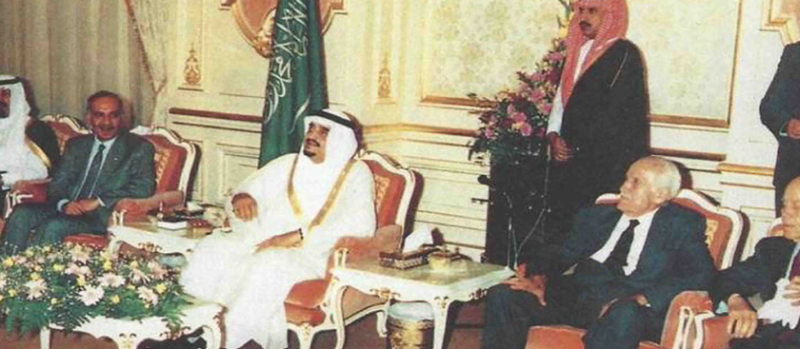
Over thirty years have elapsed since the creation of the 'Document of National Accord' in Taif, Saudi Arabia, in 1989. Today, this agreement remains the cornerstone and primary regulator of political stability and peace in Lebanon. The Taif Agreement was not just a means to end a protracted fifteen-year civil war; it represented a masterful reimagining of coexistence, affirming Lebanon's firm Arab identity and entrenching the principle of 'no victor, no vanquished,' thereby safeguarding the country's unique pluralism.
The true significance of the Taif Agreement lies in its ability to shift Lebanon from sectarian conflict to institutional governance. It redistributed constitutional powers to achieve a delicate balance among Lebanon's factions. Executive power was no longer centralized solely in the presidency; it was shared with the Council of Ministers collectively, fostering genuine state management partnership. This balance is a way of life premised on Muslim-Christian parity, independent of demographic changes, making Lebanon a model for interfaith and intercultural dialogue in a region often marked by division.
Despite occasional criticisms of the agreement and calls for alternatives like a 'constituent assembly' or federalism, the underlying issue has always been its 'flawed implementation' and selective adherence to its clauses, not the text of Taif itself. Those advocating for alternatives risk igniting a Pandora's box of endless civil strife. Taif's clauses were never applied in a comprehensive, national spirit. Key reformist elements, such as establishing a Senate to address sectarian concerns while electing a Parliament beyond sectarian limits, have been neglected, impeding progress toward a modern civil state.
Clinging to the Taif Agreement today is not an obsession with the past but a crucial necessity for the future. Amid current crises and ongoing political stalemate, Taif serves as the remaining safeguard preventing institutional collapse. It is neither a religious text, but a social contract meant to evolve through its constitutional mechanisms rather than external forces. Implementing broad administrative decentralization, passing a modern electoral law, and fulfilling structural reform clauses will pave the way for Lebanon to transition from a 'state of sects' to a 'state of citizenship.'
Ultimately, the Taif Agreement acts as the Arab and international shield protecting Lebanon's unity, sovereignty, and independence. Attempts to undermine it in light of changing power dynamics risk plunging the country into uncertainty. The current priority is not to seek alternative frameworks that further divide the nation but to reaffirm the spirit and text of Taif as the only roadmap to rescuing Lebanon and restoring its political and economic stability.