


By Editor-in-Chief Ibrahim Reihan
Writing about the Lebanese Army as it marks its 81st anniversary, one seeks words unsullied by the prevalent dust. Lebanon is no ordinary nation, and the army in Yarzeh is not merely a military institution engaged in routine tasks funded by the defense budget. It stands as the "last safety valve" in a country that has long mastered the dance at the edge of the abyss.
On August 1, 2026, the occasion is not just a ceremonial celebration with parades and medal distributions; it is a heavy contemplation in the Lebanese book of woes. In a nation where financial structures have collapsed, political institutions fragmented, and sects have turned into hidden or masked states, this institution remains the singular bastion viewing the entire map, exceeding the alleys, neighborhoods, and entrenchments.
The Man of the Moment Amid Tempests
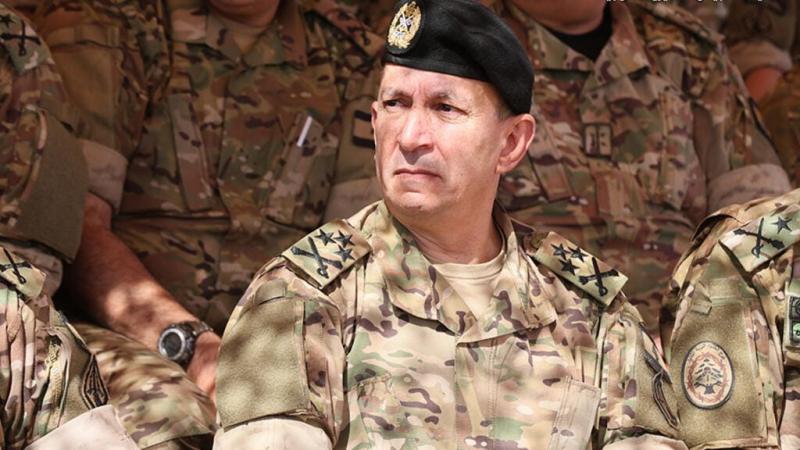
Army Commander General Rudolf Haykal stands at the helm of this fortress at one of the most critical and complex moments in Middle Eastern history. A quiet man well-versed in the southern geography and its frontline terrains, he commanded the South Litani Sector, knowing the secrets of planning and tactics when he managed military operations in Yarzeh.
General Haykal took over not in times of ease but in pivotal moments demanding a rare blend of resilience and diplomacy; the resilience of a guardian who refuses to surrender amid continuous Israeli assaults and breaches, and the diplomacy of a leader understanding that maintaining internal civil peace is Lebanon’s primary line of defense.
In his Yarzeh office, there’s no room for error. Ill-intentioned observers from all sides seek a misstep, and speculators at home and abroad await a clash moment. Yet, since assuming command, Haykal has shown a clear grasp of the equation: The army’s mission is not to be dragged into internal conflicts but to safeguard the national ceiling so it doesn’t collapse on everyone. When faced with the challenge of deploying south of the Litani and implementing international understandings and resolutions to curtail arms, his stance was as clear as daylight: fulfill the national duty with high responsibility, ensuring the military mission doesn’t ignite internal strife.
The South Litani and the Badge of Honor
Looking at the south today, the Lebanese soldier stands firm amid the hammer of repeated Israeli attacks and the anvil of political tensions. The army’s deployment south of the Litani River, completing its sovereignty stabilization plan, is not merely an item in a resolution like 1701 but a practical embodiment of statehood. The soldier on a border town checkpoint, earning a salary eroded by economic crises, stands not because of material resources but due to the robust national doctrine coursing beneath the uniform.
General Rudolf Haykal’s approach in managing the southern file and arms control demonstrates strategic acumen. He knows that the military institution's true power lies not only in its formidable arsenal but in its "popular legitimacy" and national unity surrounding it. The current leadership has successfully established a delicate balance: maintaining close coordination with international forces (UNIFIL), upholding Lebanon's absolute rights to its land and sovereignty, while simultaneously safeguarding the social fabric from slipping into discord.
Why Support Yarzeh?
In the Middle East, plagued by open wars and conflicts, many military institutions turned into tools for regimes or factions. Only the Lebanese Army remains "the nation’s army," not "the ruler’s army," and "everyone’s umbrella," not "a party in conflict."
Standing by the army today and backing its commander, General Rudolf Haykal, is not a political choice to accept or reject but an existential necessity. Weakening the military institution or doubting its leadership at this critical phase is akin to shooting at the last safety net preventing a plunge into the abyss. Political forces of all stripes must recognize that outsmarting the army or luring it into tight spots will only result in the ruin of vacancy. Supporting the army requires providing the financial and logistical means for officers and soldiers risking their lives, along with political cover allowing the military leadership to advance its plans to protect borders and maintain internal security.
A Final Word
On its 81st anniversary, the Lebanese Army sends a silent yet resounding message: "We are here to keep Lebanon." In Yarzeh, General Rudolf Haykal continues to steer through the storm with the wisdom of a sage and the resolve of a leader.
The regional rules may change, and international power balances may shift, but the constant in this complex Middle Eastern equation is that Lebanon cannot afford to forgo its army. Saluting soldiers who patiently sow the seeds of tomorrow, and a wise leadership knowing that crossing into a complete state begins at the soldier's boot on the border.