


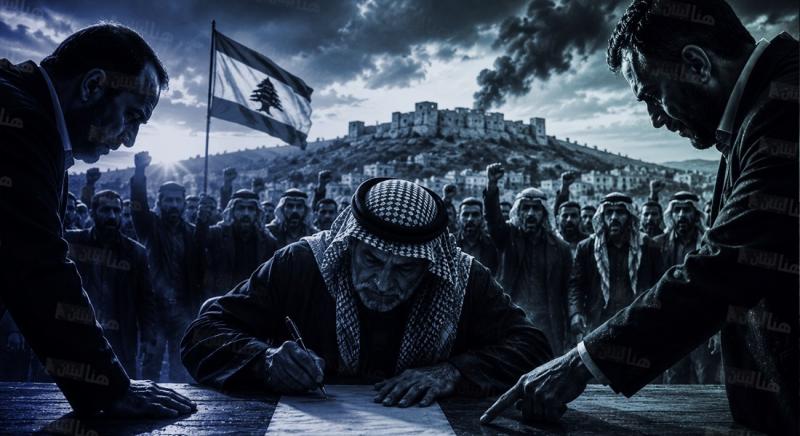
Khaleed Zain Al-Din, editor-in-chief of the Euro-Arab International Journal, has revealed efforts to bypass traditional political landscapes in Lebanon via the tribes and families in the Bekaa and Akkar regions amid the escalating economic and financial crisis.
Zain Al-Din told 'Wardna' that these movements are not being conducted through direct official communication from the U.S. administration; instead, they are managed through intermediaries and civil society organizations. These entities aim to engage tribal leaders in Baalbek-Hermel and Akkar by offering financial aid, health cards, scholarships, and logistical support, intending to spark a transformation in the local populace and a shift away from prevailing political choices.
He noted that the tribal influence in the Bekaa has historically aligned with the Shia duo (Hezbollah and Amal Movement), while the tribal weight in Akkar and Fayhaa leans towards Hariri's political school of thought. However, the impending economic blockade and the longstanding failures of parties in power to achieve true development in Baalbek-Hermel have generated public discontent, leaving these communities vulnerable to external pressures and inducements.
Regarding the internal tribal reactions, Zain Al-Din disclosed his exchanges with several key figures, revealing diverse opinions. Some voices reject any interaction with external schemes, while others show conditional flexibility, stating that the upcoming phase and interests demand a new openness.
This group envisions that if Washington guarantees a complete Israeli withdrawal, reconstruction of damaged areas, and return of displaced residents, they are willing to visit the U.S. Embassy and embark on a new phase of engagement, regardless of traditional political leadership stances.
Zain Al-Din concluded by cautioning that Lebanon is heading towards a challenging security and political period, with various parties poised to exploit internal tensions as leverage before any settlement or political renewal in the region is achieved.