


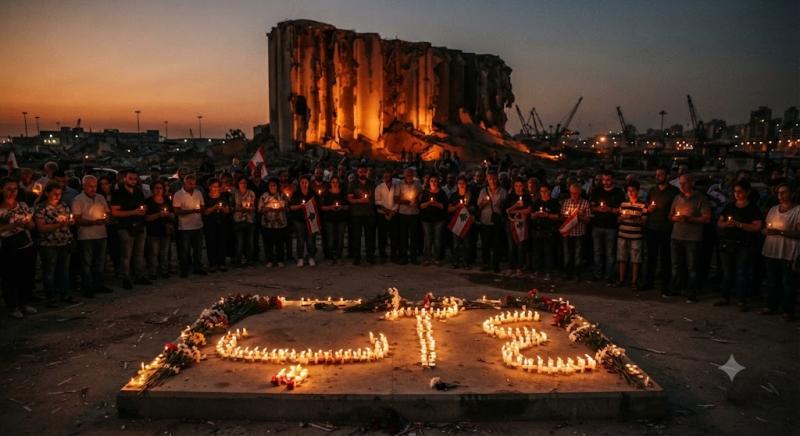
The image of the red cloud that enveloped the Beirut skyline that evening is still vivid in my memory. Every time I look up, I see it again and hear the relentless wailing of sirens from ambulances and fire trucks. That fateful day changed everything forever. I can still recount the scene as if it happened yesterday. People were running in the streets, screaming, crying, trying to comprehend the unimaginable event. Some said it was an Israeli airstrike on the capital, others said it was an explosion, as various stories circulated before the harsh truth was revealed.
On that day, a fire broke out in Warehouse 12 at the Beirut Port, where about 2,750 tons of ammonium nitrate had been stored since 2013, despite repeated warnings about its dangers. In mere minutes, one of the largest non-nuclear explosions in modern history occurred, killing over 220 people, injuring more than 6,000, and obliterating entire neighborhoods. The city was left bleeding, with souls that remain shattered. They knew these materials were there. Warnings were issued, but no action was taken. The ammonium nitrate was left in the heart of the capital for years until it exploded, stealing dreams and loved ones, and leaving a city still seeking justice.
It was said that the investigation would reveal the truth within five days. That was the promise of a state that failed to keep its word. Five days turned into six years, with the truth languishing in drawers while justice awaits liberation. Six years have passed, and a heartbroken mother still sits each year staring at the clock, hoping its hands won't reach 6:07 pm. If only time would pause before that moment, saving the souls and bringing her children back home. But each year, she realizes time has moved on, while justice remains stagnant.
Throughout these years, the judicial investigation into the Beirut Port explosion has faced numerous obstructions, including lawsuits and judicial disputes, and the refusal of several political and security officials to appear in court, leading to prolonged paralysis of the investigation. In March, the lead investigator Tarek Bitar concluded his investigations, forwarding the case, involving around 70 defendants, to the public prosecutor in preparation for an indictment. However, no final indictment or trials have materialized, nor have any judgments been issued, and there are no longer any detainees in relation to the case.
Over time, all detainees initially held after the explosion, including administrative, security officials, and employees, have been released, leaving the case unprecedentedly without any arrests despite the magnitude of the disaster and the human and material losses it caused.
International legal efforts have also seen little progress, with the Bulgarian court rejecting the extradition of the owner of the ship "Rhosus," which transported the ammonium nitrate to Beirut, complicating the pursuit of those responsible outside Lebanon. Over the years, the port incident has receded from the forefront of Lebanese priorities, not because its wounds have healed, but due to Lebanon’s immersion in successive crises that have shifted the country's focus. Since late 2023, the war with Israel, resulting in destruction, displacement, and thousands of casualties, has dominated public attention, while the ongoing economic and financial crisis continues to strain the country and its citizens amid ongoing political disagreements and institutional deadlock.
Each year, victims' families, and survivors return to the same place. They carry photos of their loved ones and stand before the port and in Beirut’s streets, not only to commemorate but to renew a vow made from day one: this issue will not be forgotten, nor will it become a dossier in the archives of neglect. Governments may change, priorities may shift, and the country may fall into new crises, but August 4th will remain etched in the memory of the Lebanese as the day an entire city exploded, dreams shattered, and time stopped at 6:07 pm.
As for justice... it remains overdue.