


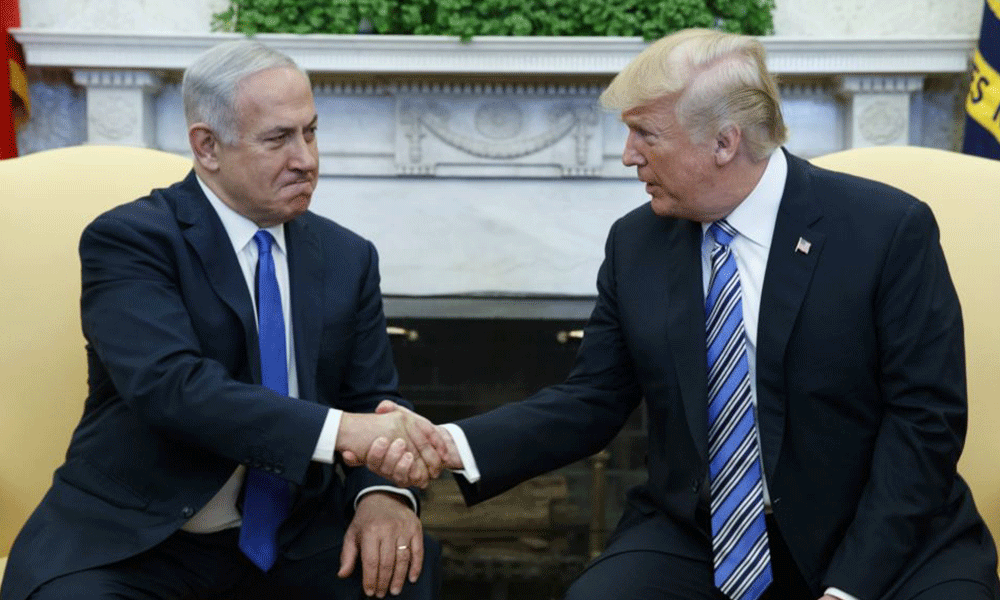
Israeli Prime Minister Benjamin Netanyahu's office is eagerly seeking a meeting with U.S. President Donald Trump, aiming for an early meeting this week right after Trump's return from the NATO summit in Turkey. However, the president's commitments at the summit make the exact timing uncertain. Efforts are being made to hold the meeting at the White House shortly after, with the possibility of it being postponed to next week.
According to Israeli sources cited by Yediot Aharonot, Netanyahu has several objectives for this meeting. Key among them is repairing the trust that was damaged with Trump following the conflict with Iran, presenting intelligence before the resumption of U.S.-Iran negotiations, discussing normalization progress with Arab countries, and persuading Washington not to sell F-35 fighter jets to Turkey.
If held, this will be the eighth meeting between the two leaders since Trump's return to the White House. Their last encounter on February 11 in the White House Situation Room was deemed pivotal by Israeli reports. During the meeting, Netanyahu presented Israel's plans regarding the conflict with Iran, including scenarios related to the potential toppling of the Iranian regime, which American officials reportedly considered immature and unrealistic.
Rebuilding Trust with Trump
The report highlights that one of Netanyahu's main motivations for a prompt meeting is to rebuild trust with Trump. This comes as those close to Trump believe Netanyahu's assessments regarding the Iran conflict were flawed, and some even think Trump holds Netanyahu accountable for its failure.
Israel asserts that Mossad's plans were not about toppling the regime during the conflict but over subsequent months, contingent upon a series of actions that Washington did not undertake, such as using Kurdish opposition to attempt regime change in Iran.
Israel also seeks to present its intelligence before resumption of negotiations between Washington and Tehran on a permanent agreement.
According to the report, Israel wants the U.S. to maintain several demands, notably:
- Removal of enriched uranium stockpiles from Iran.
- Denying Iran the right to enrich uranium.
- Inclusion of the ballistic missile program in the agreement.
- Including the cessation of Iranian support for allied factions in the region as part of the agreement.
The report indicates that Israel believes Washington has shown flexibility on some of these issues, which Tel Aviv aims to adjust before negotiations begin.
Lebanon and Gaza
Netanyahu is also expected to discuss the Lebanese situation, attempting to ease U.S. pressure for Israel to withdraw from the security strip.
Regarding Gaza, Netanyahu aims to assert that any reconstruction process must be preceded by disarmament of the area and dismantling of Hamas. The report notes that Washington currently does not support a comprehensive Israeli military operation to achieve this goal and continues its communications with the group.
Normalization and Security Cooperation
Netanyahu also plans to discuss opportunities to expand normalization agreements with Arab countries and negotiate a new security memorandum with the United States.
According to the report, the security relationship between the two countries might shift from direct U.S. military aid to a model based on partnership and cooperation in technology and defense industries.
Syria and Turkey
The two sides are also expected to address the Syrian issue amid American wishes to revive negotiations between Damascus and Tel Aviv.
Netanyahu will also attempt to persuade Trump against proceeding with the sale of F-35 fighter jets to Turkey due to increasing tensions between Ankara and Israel.