


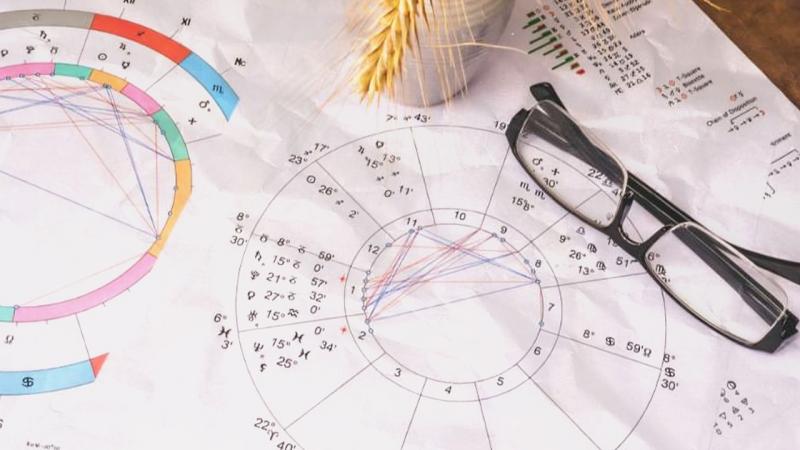
The astrological birth chart is a topic that captivates astrology enthusiasts. Many believe it provides a comprehensive insight into personal traits, emotional tendencies, and thought patterns, as well as potential life challenges.
The birth chart goes beyond just determining one’s sun sign. It encompasses a complex interplay of elements such as planetary positions, astrological houses, and their angles. Understanding these elements aids astrology enthusiasts in gaining a more detailed picture of themselves and those around them.
What is an Astrological Birth Chart?
An astrological birth chart, or natal chart, is a circular diagram depicting the positions of the sun, moon, and planets at the moment of a person's birth, based on their birth date, time, and location. Astrologers believe these positions influence various aspects of personality and life.
Each birth chart is unique, even among people born on the same day, due to differing birth times and geographical locations, affecting the ascendant and astrological house distribution.
The Three Major Personality Anchors
The Sun Sign
Represents the core identity and general traits of an individual. It reflects aspects of the ego, ambitions, and ways of expressing oneself.
The Moon Sign
Reflects the inner world, emotions, and psychological needs. It helps in understanding how one handles emotions and what they need for security and comfort.
The Ascendant (Rising Sign)
The ascendant is the sign rising on the eastern horizon at birth. It is thought to represent the first impression one gives to others, including appearance and social interaction style.
The Meanings of Planets in the Birth Chart
Planets play a crucial role in interpreting the birth chart, each symbolizing distinct psychological or behavioral aspects.
Mercury
Associated with thinking, logic, intelligence, and communication. It also relates to learning style and decision-making.
Venus
Represents love, beauty, and romantic relationships, as well as personal taste and material and financial interests.
Mars
Symbolizes energy, drive, and passion, indicating how one deals with anger, competition, and goal achievement.
Jupiter
Known as the planet of expansion, luck, and opportunities, linked to travel, higher education, philosophy, and personal growth.
Saturn
Represents responsibility, discipline, challenges, and life lessons. It's considered the planet pushing maturity and skill acquisition.
The Twelve Astrological Houses
The birth chart is divided into 12 houses, each representing different life aspects.
First House: Relates to self, appearance, and new beginnings. Always starts from the ascendant.
Second House: Reflects money, personal possessions, and individual values.
Third House: Pertains to communication, siblings, primary education, and short travels.
Fourth House: Represents family, roots, home, and sense of belonging.
Fifth House: Symbolizes creativity, hobbies, romance, and children.
Sixth House: Linked to health, daily work, habits, and routine.
Seventh House: Reflects partnerships, serious relationships, and marriage.
Eighth House: Symbolizes transformations, shared resources, and profound matters.
Ninth House: Associated with long journeys, higher education, and intellectual openness.
Tenth House: Known as the house of career, ambition, social status, and achievements.
Eleventh House: Represents friendships, groups, future goals, and aspirations.
Twelfth House: Relates to the subconscious, isolation, hidden matters, and spirituality.
Understanding Planetary Angles and Connections
The birth chart features lines connecting planets, with astrologers believing these lines reveal energy relationships within the personality.
- Blue lines indicate harmony and easy energy flow.
- Red lines signify challenges and conflicts requiring awareness and careful handling.
Interpretation of these connections relies on the type of angle and the planets' influence, making each birth chart unique.
How to Read a Birth Chart?
To understand a birth chart, one needs complete birth information, including the date, precise time, and location. Specialized software or websites can create the chart.
Begin by reading the sun, moon, and rising signs before examining planetary positions and astrological houses. Finally, explore angles and connections for a comprehensive picture.
In conclusion, astrology remains a fascinating field for many, and the birth chart is one of its most renowned tools. Recognizing its components offers enthusiasts a broader understanding of concepts like signs, planets, and houses.
See also: What is an Astrological Birth Chart?
Famous Theories Proven Wrong by Science
Horoscope Predictions for June 2026: Love, Career, and Money