


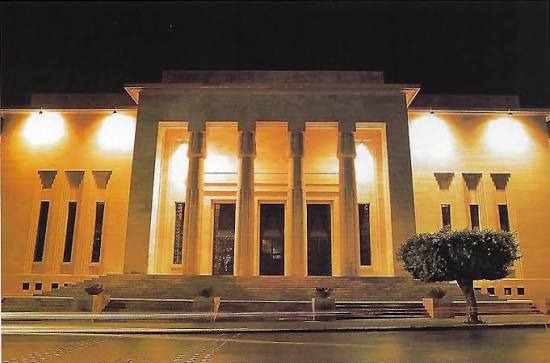
The National Museum of Beirut is Lebanon's most significant archaeological museum, home to thousands of artifacts that trace the country’s history from prehistoric times to the Islamic era.
This cultural landmark was not established by chance but through dedicated efforts to preserve Lebanese heritage in one location, bringing together the country's greatest archaeological discoveries.
Despite suffering significant damage during the Lebanese civil war, the museum managed to safeguard most of its artifacts, thanks to extraordinary measures taken by archaeologists and staff. Today, it stands as a symbol of Lebanese cultural identity and one of the Middle East's foremost museums.
The Conception of the Museum
The idea of establishing a national museum in Lebanon emerged after World War I, as archaeological discoveries increased across the country, necessitating a permanent place to house these treasures.
In 1923, the Friends of the Museum Committee was founded by Bechara El Khoury, later Lebanon's first president after independence, to raise funds for establishing a national museum to preserve discovered artifacts for future generations.
Architectural Design Selection
During the French mandate period, a competition was held in the late 1920s to design the museum. The winning design by French architect Pierre Leprince-Ringuet, in collaboration with Lebanese architect Antoine Nahas, featured a blend of modern Egyptian style and Art Deco elements, using yellow Lebanese limestone which gave the building its distinctive character it retains today.
Construction Beginnings
Construction began in 1930 on a plot provided by the Municipality of Beirut near the horse racing track. The project's large scale meant several years were needed to complete it, designed to include spacious exhibition halls, storage for artifacts, and facilities for restoration and maintenance work.
Museum Opening
Completed in 1937, the museum was set to welcome visitors in 1938, but global political tensions preceding World War II delayed its opening. On May 27, 1942, the museum finally opened officially in the presence of Lebanese President Alfred Naqqache, becoming the official national museum of Lebanon and a repository for the country's most important archaeological collections.
How Did the Museum Survive the Civil War?
This was arguably the most dramatic period in the museum's history. During the outbreak of the Lebanese civil war in 1975, the museum found itself on the green line dividing East and West Beirut, making its surroundings one of the most dangerous areas in the capital.
In response, Lebanon's antiquities director Prince Maurice Shehab and his team implemented unprecedented measures to protect the artifacts by:
- Encasing large sarcophagi and statues in reinforced concrete.
- Moving smaller items to fortified basement storages.
- Hiding many artifacts in special boxes to protect them from theft and shelling.
Despite the building enduring significant damage, these extraordinary precautions helped most of the artifacts survive.
Restoring the Museum
After the war, the Lebanese government worked with local and international cultural institutions on a comprehensive project to restore the museum. Initiated in 1995, its efforts included repairing the building, restoring and cleaning artifacts, and reorganizing exhibition halls.
The ground floor was reopened in 1997, the first floor in 1999, and the Maurice Shehab Hall in 2011, with the basement reopening fully in 2015 after restoration work was completed.
Current Museum Collections
Today, the National Museum of Beirut houses nearly 100,000 artifacts, about 1,300 of which are on display, showcasing various civilizations that have inhabited Lebanon, including:
Rare Phoenician sarcophagi, Roman statues, Byzantine mosaics, Maronite mummies, as well as jewelry, coins, and items from the Phoenician, Greek, Roman, and Islamic civilizations.
Why is the National Museum of Beirut Important?
The museum is not just a place for showcasing artifacts, it serves as a living record of Lebanon’s millennia-long history. It symbolizes the Lebanese people’s ability to preserve their cultural heritage, transforming from a frontline building during the war into a key cultural center visited by thousands annually.
See Also:
Famous Museums in Byblos
Famous Museums in Baalbek
Famous Historic Landmarks in Beirut