


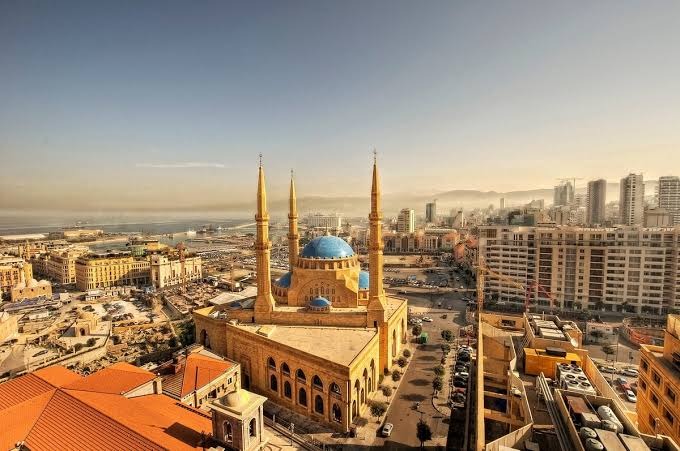
The Mohammad Al-Amin Mosque in Beirut is one of the most renowned religious and architectural landmarks in the Lebanese capital. It is not only a religious hub but also a significant part of Beirut's architectural and historical cityscape.
Located prominently near Martyrs' Square, the mosque stands out in the skyline of Beirut.
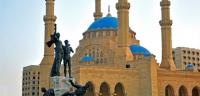
The mosque catches the eye with its distinctive design, blue domes, and four minarets, reflecting a diverse range of Islamic architectural influences.
The modern history of the mosque is linked to the reconstruction of central Beirut and the late Lebanese Prime Minister Rafik Hariri, who laid the foundation stone and funded its construction.
Where is Mohammad Al-Amin Mosque Located?
Situated in the heart of Beirut near Martyrs' Square, the mosque is located in one of the most significant historical and urban areas of the capital.
Its location near prominent landmarks makes visiting the mosque an opportunity to explore the old city and the urban facade of the capital.
The History of Mohammad Al-Amin Mosque
The Beginning as a Religious Corner
The roots of the site date back to the 19th century when it hosted a religious corner associated with Sheikh Abu Nasr Al-Yafi, serving prayer, meditation, and religious education.
Over time, the growing population and congregation necessitated the construction of a larger mosque to accommodate the increasing numbers befitting its central Beirut location.
Building the Current Mosque
After years of preparation, fundraising, and acquiring nearby properties, the mosque’s construction resumed post the Lebanese Civil War.
The foundation stone of the current structure was laid in 2002, with construction beginning the following year and the mosque officially opening in 2008.
Who Built the Mohammad Al-Amin Mosque?
The construction of the mosque is closely linked to the late Rafik Hariri, who laid the foundation stone in 2002 and funded its construction.
After his assassination in 2005, Hariri was buried near the mosque in Martyrs' Square, linking the site further to his memory along with its religious and architectural significance.
What Distinguishes the Design of Mohammad Al-Amin Mosque?
The Blue Domes
The blue domes are a standout visual feature of the mosque, earning it the nickname the Blue Mosque.
These domes are prominently visible, adding a distinctive silhouette to the central Beirut skyline.
The Four Minarets
The mosque boasts four towering minarets that are integral to its exterior design.
The minarets draw clear inspiration from Ottoman architecture, integrating elements from various phases of Islamic architectural evolution.
Ottoman Style
The mosque's exterior predominantly features Ottoman architectural style, while the interior details and decorations exhibit Mamluk and other Islamic influences.
This diversity is visible in the domes, minarets, arches, decorations, and materials used in interior adornments.
What Can You Find Inside Mohammad Al-Amin Mosque?
Interior Decorations
The mosque's interior is marked by decorative elements that lend it a distinct artistic ambiance, including marble, wood, stained glass, engravings, and Islamic motifs.
The main hall is adorned with details related to the domes and arches, while magnificent chandeliers and carpets add to the luxury of the interior design.
Main Prayer Hall
The spacious main prayer hall, with a large central dome, is surrounded by architectural elements inspired by Islamic and Ottoman styles.
Designed to hold thousands of worshippers, the mosque ranks among the largest in Lebanon in terms of size and capacity.
Integration with Roman Ruins
During the excavation and construction at the mosque site, archaeologists unearthed part of a major Roman road known as Decumanus Maximus and artifacts relating to ancient Beirut.
This discovery highlights the historical depth of the area encompassing the mosque, showcasing successive urban developments over centuries.
Proximity to Martyrs' Square
The mosque is closely linked to Martyrs' Square, one of the most recognized plazas in central Beirut.
The presence of the mosque near the square adds historical and urban significance to the area, making it part of tours exploring central Beirut and its landmarks.
Mohammad Al-Amin Mosque as a Tourist Landmark
Besides its religious function, the mosque attracts those interested in architecture and history when visiting Beirut.
The building is noteworthy for its striking design, central location, and proximity to significant landmarks in downtown Beirut, adding to its connection with modern Beirut's history.
What Can You See Near Mohammad Al-Amin Mosque?
Martyrs' Square
Combine a visit to the mosque with a stroll in Martyrs' Square to explore one of central Beirut's historical plazas.
Saint George Maronite Cathedral
Located near the mosque, Saint George Maronite Cathedral and the mosque create a distinctive architectural and religious scene in central Beirut.
Downtown Beirut
Continue your tour through the streets of downtown Beirut to discover buildings, plazas, and areas that have witnessed significant phases of the capital's history.
Why is Mohammad Al-Amin Mosque Worth Visiting?
The mosque is distinguished by a blend of elements making it unique among Beirut's landmarks. It is both a prominent religious site and an architectural and historical landmark.
Its blue domes and four minarets offer a strong visual presence, while its interior details and proximity to historical sites in central Beirut add cultural value to the visiting experience.
See also:
How to Reach Mohammad Al-Amin Mosque from Beirut
Best 3-Day Tour Schedule in Lebanon