


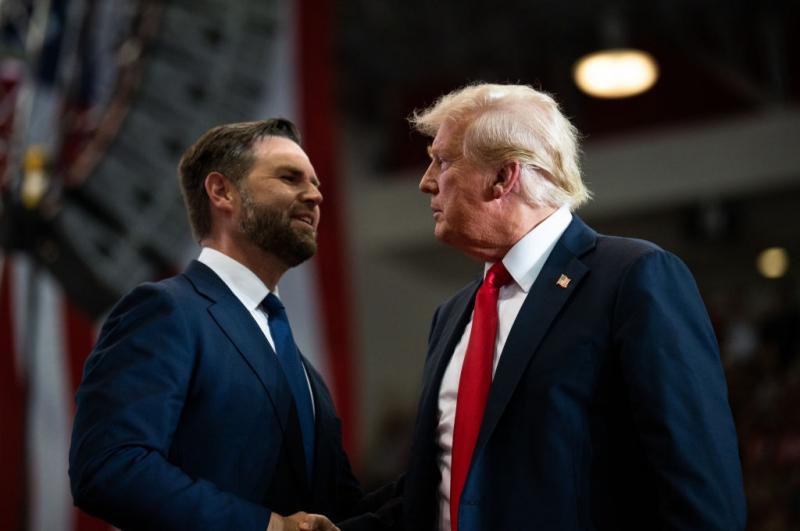
Recent American media reports have highlighted differing priorities between President Donald Trump and his Vice President J.D. Vance regarding U.S. policy on Iran. The focus varies between preventing Tehran from acquiring nuclear weapons and striving to lower fuel prices by restoring free navigation through the Strait of Hormuz. However, the White House denies any internal conflict within the administration.
The Washington Post reported that Trump's and Vance's statements on Iran revealed a divergence in the objectives that should lead Washington's actions in the coming period, especially amidst ongoing war repercussions and disrupted navigation and energy supplies.
According to the paper, Vance views reducing fuel prices as a primary administrative priority, a goal directly linked to reopening the Strait of Hormuz for navigation and ensuring the normal flow of oil.
This issue holds domestic significance for the U.S. administration, given the impact of energy market disruptions on fuel prices and inflation, which in turn exerts economic pressure on American consumers.
Conversely, Trump consistently emphasizes that preventing Iran from obtaining a nuclear weapon is America's foremost goal, a stance he reiterated in recent comments about the war and future dealings with Tehran.
Iran, on its part, denies any ambitions to develop a nuclear weapon, yet its nuclear program remains one of the key issues Washington insists on addressing in any potential settlement.
The Washington Post viewed the differing priorities in Trump and Vance's statements as potentially indicative of a lack of a fully unified vision on the core of U.S. policy toward Iran, despite both agreeing on the necessity to pressure Tehran.
Nevertheless, the White House was quick to dismiss such interpretations. Deputy Press Secretary Ana Kelly affirmed that there are “absolutely no disagreements” between the President and Vice President regarding Iran.
Kelly stated that Trump has been clear that Iran must not acquire a nuclear weapon, and all administration members support this goal, adding that Vance is implementing the President's program.
Vance, addressing a question about internal differences, confirmed that he follows Trump's directives but acknowledged ongoing “discussions and deliberations” within the presidential team about future steps.
These deliberations don’t necessarily imply an overt political disagreement between the two men, but rather highlight the multiple considerations influencing U.S. decision-making on Iran.
While Trump's rhetoric focuses heavily on the nuclear issue, Vance appears more concerned with the economic repercussions of the war and the Strait of Hormuz crisis, notably their impact on U.S. energy prices.
This discussion of prioritization emerges as the U.S. administration faces critical decisions regarding the next phase, with stymied negotiations with Tehran and ongoing tension at Hormuz, paralleling Washington's intent to intensify economic pressures on Iran.
The question remains whether the difference between Trump and Vance is merely a distribution of priorities within the administration or reflects a deeper divergence on the path Washington ought to take in managing its confrontation with Iran.