


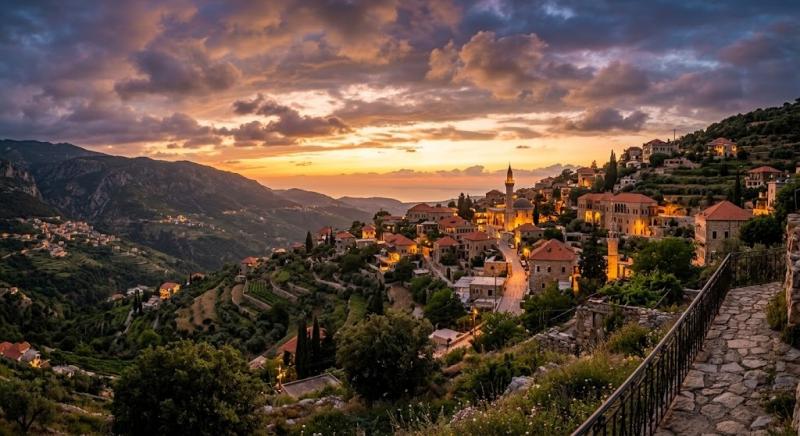
Deir el-Qamar holds a special place in Lebanon's history. It is not just a typical town in the Chouf region; it was once a major political, administrative, and cultural center in Mount Lebanon.
Between its stone alleyways and traditionally styled Lebanese houses, the stories of the Maan and Shihab princes intertwine with the history of the old markets, places of worship, and palaces that remain integral to the town's identity.
Today, Deir el-Qamar attracts visitors interested in historical, natural, and cultural tourism. A single tour can reveal various phases of Mount Lebanon's history.
The town features a cohesive architectural weave that has preserved much of its traditional character, making it a significant subject in UNESCO's heritage preservation files.
Where is Deir el-Qamar Located?
Deir el-Qamar is located in the Chouf district within the Mount Lebanon Governorate. It is one of the prominent historical towns in the region.
The town is famous for its mountainous location and proximity to several key tourist sites in Chouf, notably Beit ed-Dine, making it a popular choice for those wishing to explore the history of Lebanese princedom and architecture.
Why is it Called Deir el-Qamar?
The origin of the name Deir el-Qamar is one of the most intriguing questions related to the town's history.
The name literally means "Moon Monastery" or "Monastery Associated with the Moon." There are several narratives regarding this name, none of which can be treated as definitively historical.
An enduring folklore tale suggests a group of monks discovered a ruined monastery in the area and rebuilt it by moonlight, hence the name.
Another interpretation links the name to older documentations suggesting ancient roots and possibly a symbolic association with the moon and a temple dedicated to it, offering a different denotation to the name.
What is the History of Deir el-Qamar?
Deir el-Qamar's history stretches over centuries, appearing in historical records during the medieval era and reaching its political zenith under the Ma'an emirate.
Between the 16th and 18th centuries, the town became a significant governing hub in Mount Lebanon, closely associated with the Maan and later Shihab princes, catalyzing political, economic, and cultural prosperity and leaving a lasting imprint on its architecture.
According to UNESCO documents, the town notably flourished under the rule of Emir Fakhr-al-Din II, who advanced its infrastructure and architecture, a process sustained during the Shihab emirate, marking Deir el-Qamar as a pivotal part of Mount Lebanon’s history.
Deir el-Qamar: Capital of the Princes
The title "Capital of the Princes" is attributed to Deir el-Qamar due to its role as a seat of governance and princely residence during significant periods in Mount Lebanon’s history.
It served as a political and administrative hub under the Ma'an dynasty and sustained its importance in the Shihab reign, becoming a center for markets, trade, and crafts.
Historical sources indicate Deir el-Qamar was a focal point for raw silk gathering and trade, as well as other activities linked to traditional crafts and markets, contributing to its prosperity through various historical phases.
What to See in Deir el-Qamar?
Deir el-Qamar holds a plethora of attractions that make it an ideal destination for lovers of Lebanese history, heritage, and architecture.
Old Square of Deir el-Qamar
The old square is a major draw in the town, integral to its historical urban fabric.
Visitors can witness the distinct architectural style of Deir el-Qamar, where stone buildings, old markets, and religious places coexist, showcasing the historical and social diversity the town has known over centuries.
Palace of Emir Fakhr-al-Din I
This palace is linked to the Ma'an dynasty's history and reflects the political role Deir el-Qamar played during the princedom.
Previously adapted for various cultural and heritage uses, the building today houses a wax museum displaying Lebanese historical figures and milestones.
Palace of Emir Youssef Shihab
One of the town’s noteworthy historical structures, tied to the Shihab dynasty.
The building holds historical and architectural value, having served as the local municipality headquarters in later stages.
Emir Fakhr-al-Din Mosque
This mosque is a prominent historical landmark, representing the religious diversity that Deir el-Qamar experienced.
Historical accounts mention the mosque as part of a neighborhood encompassing both Islamic and Christian landmarks.
Lady of the Hill Church
Among Deir el-Qamar's significant religious sites, essential to its historical and architectural landscape.
It is strategically located near the square, forming a key stop in exploring the heritage area.
Old Synagogue
Remarkably, Deir el-Qamar houses a 17th-century synagogue, testament to the religious diversity of the town throughout various historic periods.
Old Markets
Deir el-Qamar was a major commercial and artisanal center, with its market history forming part of its heritage identity.
Historical sources depict markets for various crafts, including woodcraft, shoemaking, silk, and jewelry, reflecting the economic activities that flourished there.
Wax Museum
The Wax Museum in Deir el-Qamar offers a distinct cultural experience, showcasing key figures and milestones in Lebanese history, adding a cultural dimension to visiting the town.
What is Deir el-Qamar Known For?
Deir el-Qamar's renown stems from various aspects that set it apart from many Lebanese towns, such as:
- Its political history as a major center under the Maan and Shihab dynasties.
- Traditional stone palaces and buildings.
- The old square and historic markets.
- Religious diversity reflected in the town's landmarks.
- Authentic Lebanese architectural character.
- Connection to silk history and crafts in Mount Lebanon.
- Proximity to Beit ed-Dine and other notable Chouf attractions.
These elements have collectively made Deir el-Qamar a key heritage destination in Lebanon.
Who Are the Residents of Deir el-Qamar?
Throughout its history, Deir el-Qamar has seen a diversity of religious and social groups, a hallmark of its prosperity periods.
Historical records cite the presence of Muslims, Christians, Druze, and Jews in Deir el-Qamar, exemplifying multi-community interaction within one political and commercial hub.
Currently, Christians form the majority among registered voters, mainly Maronites, alongside Greek Catholic Presbyterians. Distinct from registered voters, the actual resident population presents varied demographic statistics.
What Families Reside in Deir el-Qamar?
Deir el-Qamar is home to many families, with its rich history and social diversity making it challenging to compile a comprehensive list of all families, including both resident and descendant families.
Notable family names in its history include the Shamouns, Naims, and Bazas, known in historical, political, and social records connected to the town.
Shamoun Family
The Shamoun family is among Deir el-Qamar's most notable, producing figures like the late Lebanese President Camille Chamoun, a significant political player in Lebanon's modern history.
Naim Family
The Naim family has ties to Deir el-Qamar, with historical and social involvement in local and national affairs documented in various records.
Baz Family
The Baz surname appears in the town's history, linked to cultural institutions and potentially linked to notable figures like Saad Baz of 19th-century historical accounts.
How Did Deir el-Qamar Exemplify Diversity?
Deir el-Qamar is distinguished for having worship places and communities from different faiths and sects.
Diversity is reflected through its churches, mosque, and synagogue within its historical layout, granting it a unique cultural and social significance in the history of Mount Lebanon.
Thus, Deir el-Qamar's history transcends political narratives, as its social and religious past is central to its identity.
What Can You Do in Deir el-Qamar?
Visitors can explore Deir el-Qamar within a day, particularly if focusing on its main historical landmarks.
A recommended route includes starting at the old square, strolling through heritage lanes, visiting palaces, religious landmarks, and historic markets before heading to adjacent Chouf sites.
When is the Best Time to Visit Deir el-Qamar?
The town can be visited in most seasons, though spring, early summer, and autumn are ideal for outdoor exploration.
Winter offers a different ambiance for mountain enthusiasts, though weather conditions may affect ease of travel.
Is Deir el-Qamar Family-Friendly?
Yes, Deir el-Qamar is suitable for family trips, especially for families seeking a blend of history, nature, and serene exploration.
The town's character provides insight into Lebanese history through its palaces, squares, and heritage buildings.
Why is Deir el-Qamar Significant in Lebanon's History?
Deir el-Qamar's significance lies beyond being a mountain town; it played a notable political, economic, and cultural role during key periods in Mount Lebanon history.
Its architectural development links to the Ma'an and Shihab emirates, preserving part of this legacy today.
Therefore, alongside Beit ed-Dine, Deir el-Qamar offers insight into the development of architecture and governance.
Was Deir el-Qamar Ever Lebanon's Capital?
Historically, Deir el-Qamar was a crucial political center and emiress headquarters in certain eras, distinct from its role as a capital in the modern Lebanese state sense.
Can Deir el-Qamar and Beit ed-Dine be Visited in the Same Day?
Yes, due to their close proximity, it’s possible to combine visits to Deir el-Qamar’s historical sites with exploring Beit ed-Dine in a single Chouf region trip.