


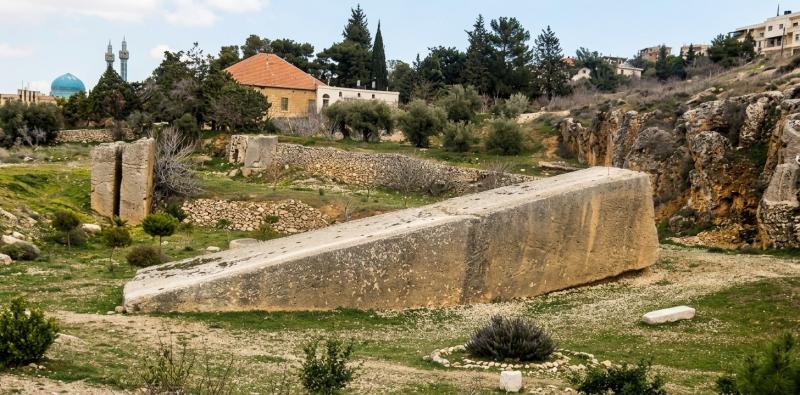
The massive stone of Baalbek remains one of the most intriguing engineering mysteries that has captivated archaeologists, historians, and engineers worldwide. The city of Baalbek in Lebanon houses some of the largest carved stone blocks known from the ancient world, leading many to wonder how ancient builders managed to extract, transport, and precisely place these giant stones millennia ago.
Though numerous legends and stories attribute the construction of the Baalbek temple to giants or supernatural forces, modern archaeological and engineering studies suggest these accomplishments were achievable through the principles of engineering, physics, and advanced construction techniques available at the time. However, much of the execution details are still debated, making the Baalbek stone a fascinating architectural secret to this day.
What is the Massive Stone of Baalbek?
The term 'massive stone of Baalbek' refers to the enormous stone blocks found at the Baalbek archaeological site, the most famous of which include:
-Trilithon stones. Three massive stones that are part of the podium of the Temple of Jupiter, each weighing around 800 tons.
-Stone of the Pregnant Woman. A colossal stone block still in the ancient quarry, estimated to weigh about 1,000 tons, one of the largest carved stones from the ancient world.
Other larger blocks were also discovered in the quarry that were never transported, indicating that the project included even heavier stones that were ultimately unused.
Why are Baalbek Stones a Remarkable Engineering Achievement?
The site's uniqueness lies in the challenge of handling stones of this size, even with modern equipment. During Roman times, such undertakings relied on manpower and animal force, utilizing the principles of engineering and mechanics.
Furthermore, the challenge extended beyond the extraction of the stones; it involved transporting them from the quarry to the construction site, then precisely placing them within the temple's foundations, requiring highly accurate engineering planning.
How Were the Baalbek Stones Transported?
No historical documents describe the process in detail, but researchers have proposed several hypotheses based on archaeological and engineering evidence.
1. Utilizing the Quarry's Location and Gravity
One critical factor may have been the quarry's location, slightly elevated compared to the temple podium, allowing easier movement utilizing the natural land slope rather than lifting stones upward.
Control over the movement speed was likely managed with ropes and primitive braking systems to prevent the massive stone from becoming uncontrollable.
2. Using Giant Wooden Sleds
Research suggests that Romans might have used large wooden sleds instead of traditional carts, as wheels would have been subjected to immense pressure under such weight. The stone would be secured atop a sturdy wooden platform, with the sled pulled using ropes, and materials like wet clay, water, or grease applied to reduce friction and ease the slide over a prepared path.
Recent archaeological experiments have shown that using sleds with friction-reducing methods allows for the efficient transport of massive stone blocks, challenging previous expectations.
3. Levers, Pulleys, and Winches
The builders didn't rely solely on muscle power; they applied mechanical principles known in Roman times, likely employing wooden levers, compound pulleys, and large winches, which amplify exerted force, enabling the movement of heavy loads by large groups of workers and animals.
Progress was likely gradual, with the stone being secured after each stage to prevent slipping or loss of control.
4. Creating Temporary Roads and Ramps
Transporting a stone weighing hundreds of tons required a stable ground to support the weight. Researchers believe engineers created a paved path with stones and compacted soil between the quarry and temple podium, and constructed temporary earthen ramps for approaching the construction site.
This technique allowed horizontal movement of the stone to its final position without having to lift it completely with cranes, making the operation more feasible from an engineering standpoint.
Is the Transportation Method Still a Mystery?
While supported by scientific hypotheses, the precise method used at each stage is not definitively resolved, and no Roman document describes how the stones were extracted, transported, or placed. Researchers rely on studying site remnants, quarries, tool marks, and known construction techniques of the era.
No reliable archaeological evidence supports the narratives attributing Baalbek's construction to giants, supernatural beings, or lost civilizations, with such ideas remaining within the realm of myths and unverified hypotheses.
Why Wasn't the Stone of the Pregnant Woman Moved?
Some researchers believe it was left in place due to flaws or cracks appearing during carving or because the construction plans changed before its transport. Others suggest the project halted before its need arose, explaining why it remains in the quarry today.
Amazing Facts about the Massive Stone of Baalbek
-Baalbek houses some of the largest stone blocks used in ancient construction.
-Each Trilithon stone weighs about 800 tons.
-The Stone of the Pregnant Woman is estimated to weigh around 1,000 tons.
-The quarry is slightly elevated compared to the temple podium.
-The exact transportation method remains under study by archaeologists and engineers.
-The site is a prominent architectural achievement in Roman civilization.
Why Do Engineers Still Study the Site?
Baalbek's significance lies not only in the stone sizes but in project precision using tools available nearly 2,000 years ago. Researchers continue to study the site to understand ancient transport, lifting, and building techniques, utilizing this knowledge to interpret engineering advancements throughout history.
In conclusion, the massive stone of Baalbek symbolizes ancient engineering genius, whether through the colossal Trilithon stones or the Stone of the Pregnant Woman that still rests in the quarry, a testament to an extraordinary architectural project.
Although much of the transportation and installation details remain scientifically debated, most modern studies indicate that builders relied on a combination of meticulous planning, gravity, wooden sleds, levers, and earthen ramps rather than supernatural techniques. Thus, Baalbek stands as one of the greatest testaments to the ancient human capability to execute engineering projects beyond the perceived limits of their time.
See Also:
Temple of Jupiter in Baalbek: Amazing Facts about the Largest Roman Temples
What to Do in Baalbek? 10 Experiences You Can't Miss
What to Do in Administrative Beirut? 10 Places and Activities You Can't Miss