


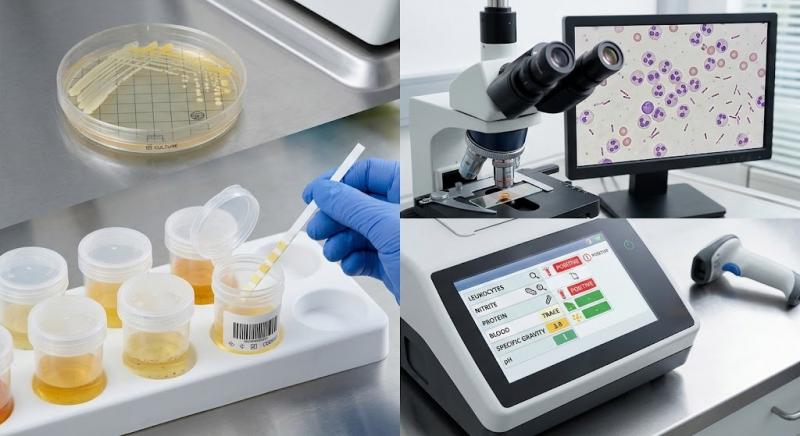
The urinalysis is the primary and most common test when suspecting a urinary tract infection (UTI). It can reveal indicators such as white blood cells, bacteria, nitrite, and blood in the urine.
On the other hand, a urine culture is used to identify the bacteria causing the infection and determine its type. The results help doctors choose the most effective antibiotic when necessary.
Neither test is universally better than the other; each serves a different purpose. Often, evaluations begin with a urinalysis, while a urine culture is requested based on symptoms, test results, and health status.
What is Urinalysis?
Urinalysis is a laboratory examination of a urine sample used to detect several indicators that may help diagnose UTIs and other issues.

What Does Urinalysis Reveal?
The analysis can check for:
-White blood cells.
-Red blood cells.
-Bacteria.
-Nitrite.
-Leukocyte esterase.
-Blood in the urine.
Other changes in urine composition.
The presence of these indicators can increase the likelihood of a UTI. However, urinalysis results must be interpreted alongside symptoms and medical history, as the test alone doesn't always provide a definitive diagnosis.
What is a Urine Culture?
A urine culture is a lab test where a urine sample is placed in conditions that allow any existing bacteria to grow.
Its importance lies in not only indicating a potential infection but also helping identify the type of bacteria causing the infection and the most suitable antibacterial drugs for treatment.
Accuracy Comparison: Urinalysis vs. Urine Culture
The choice relies on the question posed.
For identifying indications of a UTI, urinalysis is essential and useful.
For confirming a bacterial infection and identifying the bacteria, the urine culture provides specific information.
When is Urinalysis Sufficient?
Urinalysis might suffice initially when symptoms are simple and clear, with no need for further tests.
Urinalysis is prompted by symptoms like:
-Burning or pain during urination.
-Frequent urination.
-Urgent need to urinate.
-Lower abdominal pain or pressure.
-Changes in urine color.
-Blood in urine.
Importance of Urine Culture
Doctors may request a urine culture when identifying the bacteria causing the infection or selecting the right antibiotic is necessary, especially in recurrent infections or persistent symptoms.
Collecting Urine Sample Correctly
The method of collection affects the accuracy of results, so it's crucial to follow laboratory or doctor's instructions.
Typically, it's a midstream urine collection after cleaning the genital area to minimize contamination.
Does Urinalysis Require Fasting?
Urinalysis generally doesn't require fasting, but specific instructions might apply depending on concurrent tests requested.
Significance of White Blood Cells in Urine
High levels may suggest an infection, but not always bacterial, so results must be viewed with other test elements and symptoms.
Nitrite in Urine
Nitrite presence indicates bacteria that convert nitrate to nitrite, serving as an indicator alongside leukocyte esterase in UTI testing.
Watch also: