


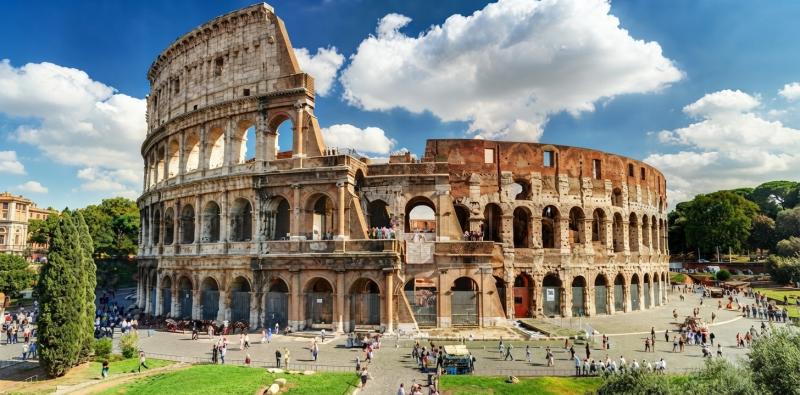
Rome serves as an ideal tourist base to explore a city that encapsulates long chapters of European history within its streets and squares. From the Colosseum, which is tied to the history of the Roman Empire, to the Pantheon and Baroque squares, Italy's capital offers a unique blend of ancient relics and modern life.
Rome's allure goes beyond its Roman ruins. It extends to the heart of the Vatican, historic churches, gardens, and museums. Consequently, travelers can create a diverse itinerary that combines culture, photography, relaxation, and discovering Italian cuisine, with many attractions accessible on foot.
Must-Visit Landmarks in Rome
Rome's major tourist spots span archaeological sites, historic squares, religious monuments, and gardens. Here are the top attractions to include on your itinerary:
1. Colosseum
The Colosseum is at the forefront of must-visit landmarks in Rome. As one of the city's most iconic symbols and a structure closely linked to the history of the Roman Empire, it was built to host public spectacles, including gladiator battles, and now attracts tourists worldwide.
A visit to the Colosseum offers insight into public life in ancient Rome and the advanced architecture that enabled the structure to accommodate vast numbers of spectators. Pair it with a tour of the Roman Forum and Palatine Hill for a complete journey through ancient Rome.
{{PLACEHOLDER_0}}2. Roman Forum & Palatine Hill
The Roman Forum and Palatine Hill offer direct insight into the political, social, and religious life of ancient Rome. The area is dotted with temple ruins, government buildings, roads, and structures that highlight the site's significance across Roman history.
Palatine Hill, with its elevated position, offers views of the city and surrounding archaeological sites, making it a favorite for history enthusiasts and photographers.
3. Pantheon
The Pantheon is one of the most remarkable and admired Roman structures, boasting a resilient concrete dome. Its interior presents a unique architectural experience, especially when admiring its domed ceiling with the central oculus allowing natural light. Its location in the historic center adds to its accessibility while exploring Rome's ancient streets.
4. Vatican Museums & Sistine Chapel
The Vatican Museums are key cultural and artistic destinations in Rome, housing extensive collections of paintings, sculptures, and artifacts amassed over centuries. Visitors can explore different eras of European art history.
The Sistine Chapel stands out as a must-visit stop, especially for its artworks by Michelangelo. Allocate ample time to comfortably explore the complex due to the numerous halls and artworks it contains.
5. St. Peter's Basilica
Located in the heart of Vatican City, St. Peter's Basilica is renowned for its grandeur and architectural details that combine marble, art, and lavish decor. Its massive dome is a notable architectural feature. Visitors can explore the basilica's interior and the surrounding St. Peter's Square, making the visit particularly significant for history, art, and religious architecture enthusiasts.
6. Trevi Fountain
The Trevi Fountain is a prominent tourist attraction and a Baroque masterpiece in Rome known for its intricate sculptures and water displays, making it one of the most photographed sites in the Italian capital.
The fountain is associated with a famous tradition involving tossing a coin into its waters, symbolizing a return to Rome. The lively atmosphere around the fountain makes early morning or less crowded visits preferable.
7. Piazza Navona
Piazza Navona offers one of the most delightful open experiences in central Rome, blending historical architecture with cafes, restaurants, and street performers. The square's rectangular design is highlighted by its beautiful fountains and eye-catching works of art, including the Fountain of the Four Rivers by Gian Lorenzo Bernini. Piazza Navona is perfect for relaxation, photography, and enjoying the Roman ambiance.
8. Spanish Steps
The Spanish Steps are renowned as a popular meeting spot in Rome located in a vibrant area filled with squares, shops, and cafes. The historic staircase connects Piazza di Spagna to the elevated area with the Trinità dei Monti church. The lively atmosphere and proximity to numerous key streets and sites make the Spanish Steps a fitting stop on a walking tour of Rome's historic center.
9. Castel Sant'Angelo
Offering a unique blend of Roman history, military fortifications, and papal history, Castel Sant'Angelo started as an imperial mausoleum before becoming a fortress and castle linked to the Vatican and city's history. Its location near the Tiber River provides scenic views of the river and parts of Rome. This visit is a great choice for those seeking a different aspect of the capital's history beyond squares and churches.
{{PLACEHOLDER_1}}10. Villa Borghese Gardens
After long tours of ruins and museums, the Villa Borghese Gardens offer a refreshing space amid nature. The garden features expansive green spaces, pathways, and tranquil settings, making it an ideal choice for families, couples, and walking enthusiasts. The area also includes the Borghese Gallery, known for its art collections of paintings and sculptures, combining art and nature in one visit.
How to Plan a Tour in Rome
To maximize time, it's best to group sites by proximity rather than traveling randomly across the city. Dedicate a day to exploring the Colosseum, Roman Forum, and Palatine Hill, while combining the Pantheon, Trevi Fountain, Piazza Navona, and Spanish Steps in a walking tour of the historic center.
Conversely, dedicate separate time for the Vatican and its surroundings, especially if your itinerary includes the Vatican Museums, Sistine Chapel, and St. Peter's Basilica. Meanwhile, Villa Borghese Gardens can be part of a more relaxed itinerary following hours of touring archaeological sites.
Best Time to Visit Rome
Rome can be visited year-round, but spring and fall usually offer pleasant weather for exploring streets, squares, and open sites. Summer sees heavy tourist traffic and higher temperatures, while winter provides an opportunity to enjoy the city with fewer crowds in some periods.
It's also important to book tickets for popular attractions in advance, as demand can be high during tourist seasons.
In conclusion, Rome seamlessly blends history, art, architecture, and culture in a manner hard to find in any other city. Visitors can start their day among Roman Empire ruins and end it in a historic square surrounded by cafes and Italian eateries. Iconic landmarks like the Colosseum, Pantheon, Trevi Fountain, and the Vatican define the city's unique tourist identity.
For this reason, choosing the top 10 tourist spots in Rome as a starting point helps travelers uncover key facets of the Italian capital. There's potential to add museums, neighborhoods, markets, and restaurants based on trip duration and personal interests. Planning tours by district is optimal for saving time and enjoying Rome at a comfortable pace.
See also
Top 10 Tourist Attractions in Barcelona