


Ibrahim Rihan (Editor in Chief)
Flawed as it may be under the shadow of occupation, this U.S.-brokered deal is the only viable mechanism to stop the slaughter, reclaim territory, and restore the state.
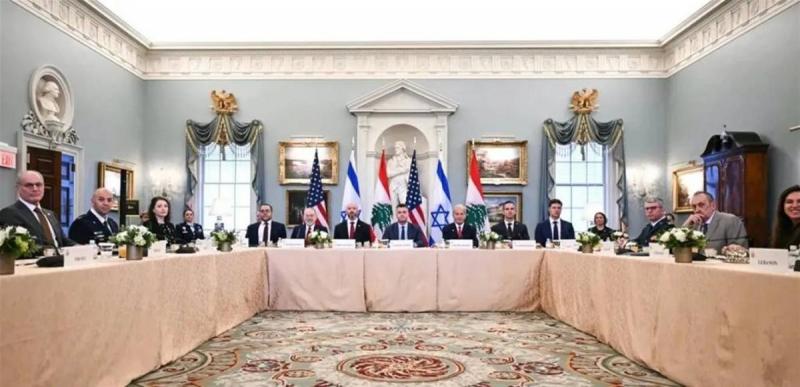
The signing of the "Three-Party Framework" agreement between Lebanon and Israel in Washington has understandably provoked a storm of anxiety across a bruised nation. Brokered under the watchful eye of the U.S. State Department, the deal arrives at an hour of existential peril: Lebanon is enduring a devastating military invasion, its southern villages are occupied, and its economy is virtually non-existent. To many, any agreement signed under such duress feels unpalatable. Yet, a cold, clear-eyed assessment of Lebanon’s immediate survival dictates a different conclusion. This framework is not a capitulation; it is a brutal, necessary, and deeply pragmatic lifeline designed to pull the country back from the edge of total annihilation.
In the theater of realpolitik, moral absolutism is a luxury Lebanon simply cannot afford. The primary, undeniable virtue of the Washington agreement is that it establishes an immediate, structured path toward halting the slaughter. For months, Lebanese civilians have borne the catastrophic brunt of an asymmetrical war. By initiating the "experimental security programme," the framework creates a tangible diplomatic mechanism to freeze hostilities. It provides a vital pause that allows hundreds of thousands of internally displaced persons to begin the agonizing journey back to their homes, while opening the gates for urgently needed international humanitarian aid and reconstruction funds.
Crucially, the agreement offers a phased, legally recognized blueprint for the restoration of Lebanese sovereignty. The critics who dismiss the pilot zones in the south as an Israeli trap miss the broader strategic value of the mechanism. For the first time since the outbreak of this latest conflict, there is a signed commitment to an Israeli military withdrawal, tied directly to the deployment of the Lebanese Armed Forces (LAF). By positioning the national army as the sole legitimate security guarantor in these zones, the framework incrementally shifts the balance of power back to the state. It allows the LAF to reassert its constitutional mandate, proving to the international community that the Lebanese state is both willing and capable of governing its own territory.
Furthermore, the agreement addresses the harsh economic reality that Lebanon cannot rebuild itself in a vacuum. The inclusion of international oversight and the stabilization of the security environment are essential prerequisites to unlock global financial confidence. Without a formalized framework endorsed by Washington, international donors and financial institutions would continue to treat Lebanon as a toxic, lawless zone. This agreement provides the minimum threshold of stability required to attract foreign investment, revitalize basic infrastructure, and breathe life back into a suffocating economy.
To reject this framework in the name of ideological purity is to choose the continuation of an unwinnable war that would leave Lebanon completely pulverized. The agreement does not solve the region’s deep-seated geopolitical crises, nor does it wipe away the trauma of occupation. What it does, however, is give a collapsing nation the structural breathing room to survive.
Ultimately, the Washington framework must be viewed not as a permanent settlement, but as an indispensable tool of crisis management. It halts the immediate terror of bombardment, establishes a precedent for Israeli withdrawal, and empowers the Lebanese army. In a world of deeply imperfect choices, this agreement represents the only realistic path toward salvaging what remains of Lebanon's sovereignty and securing a future for its people.