


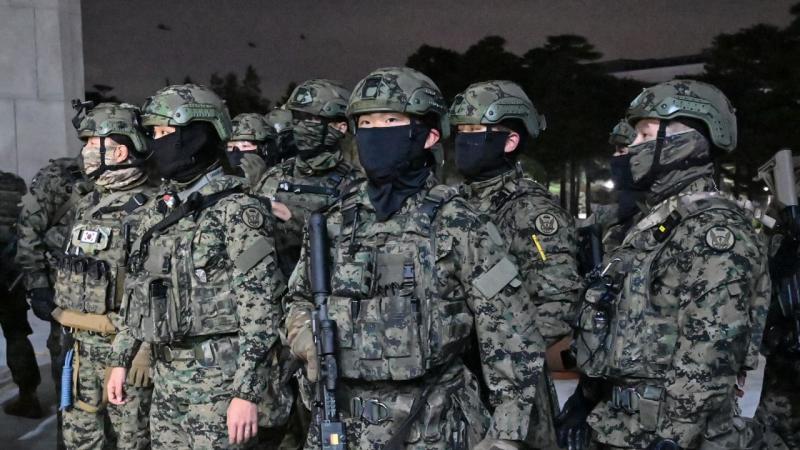
The ranking of world armies is one of the most closely monitored military indicators annually, reflecting countries' defensive and offensive readiness levels. This classification considers a wide range of criteria beyond the mere number of soldiers or military expenditure.
Global Firepower's ranking system is based on over 60 indicators covering manpower, air, naval, and land capabilities, defense budgets, military industries, logistical capacities, natural resources, and geographical positioning, providing a comprehensive picture of each nation's military strength.
How Are the World's Strongest Armies Ranked?
The ranking doesn't rely solely on the possession of nuclear weapons, instead taking into account multiple factors including:
- Number of armed forces personnel.
- Size of land, air, and naval forces.
- Annual defense budget.
- Military technology.
- Domestic defense industries.
- Logistical capabilities.
- Naval fleet.
- Air power.
- Natural resources.
- Geographical location.
Furthermore, the ranking considers a country's capacity to sustain military operations during conflicts.
Top 10 Largest Armies in the World 2026
1. United States
The United States continues to top the list of the world's strongest armies due to its substantial defense budget, massive aircraft carrier fleet, advanced air force, global military base network, superior military technology, space capabilities, and intelligence systems.
2. Russia
Russia holds the second position globally, thanks to its extensive nuclear arsenal and significant ground forces, along with advanced missile and defense systems. Despite economic challenges, it remains a leading military power worldwide.
3. China
China ranks third with the largest active military force by personnel. Beijing is continually enhancing its naval and missile forces, investing heavily in modern military technologies and artificial intelligence.
4. India
India occupies the fourth position globally, leveraging its vast armed forces and ongoing modernization programs that include fighter jets, submarines, and air defense systems. It also focuses on bolstering domestic defense industries to reduce import reliance.
5. South Korea
South Korea ranks fifth, possessing one of Asia's most advanced armies, distinguished by advanced missile defense systems and robust military industries, with high readiness amid Korean Peninsula security tensions.
6. France
France is the foremost military power within the European Union, boasting advanced defense industries including fighter jets, nuclear submarines, and warships, alongside independent nuclear capabilities and widespread military deployment.
7. Japan
Japan continues modernizing its Self-Defense Forces by investing in modern aircraft, warships, and missile defense systems, focusing heavily on maritime security and enhancing its defensive capabilities.
8. United Kingdom
The United Kingdom maintains its status among the strongest global armies, with an advanced naval force, modern aircraft carriers, and efficient air force, playing a pivotal NATO role.
9. Turkey
Turkey has made significant strides in recent years through advancements in domestic defense industries, especially drones, armored vehicles, and missile systems, possessing one of the region's largest armed forces.
10. Italy
Italy concludes the top ten global armies list, benefiting from updated air and naval forces and active participation in NATO operations and international missions.
Strongest Arab Armies 2026
Egypt
Egypt leads the Arab military ranking, placed within the world’s top 15 armies, owing to its diverse arsenal and strong land, air, and naval forces.
Saudi Arabia
Saudi Arabia ranks second among Arab nations, wielding one of the most advanced air forces in the region, with substantial investment in air and missile defense systems.
Algeria
Algeria is third in the Arab world, relying on a large ground force and advanced defense systems, coupled with ongoing military equipment upgrades.
What Factors Contribute to a Stronger Army?
Military ranking isn't just about troop numbers but also hinges on:
- Military technology development.
- Quality of training.
- Defense budget size.
- Local military industries.
- Naval and aeronautical capabilities.
- Air defense systems.
- Logistics strength.
- Rapid deployment and response ability.
- Combat readiness.
Thus, some nations with smaller troop numbers may outperform those with larger forces due to advanced military technologies.
Does the Ranking Depend on Nuclear Weapons?
While nuclear weapons reinforce deterrence, the Global Firepower ranking doesn't solely rely on them. It assesses a state's overall military strength from various operational, economic, and logistical aspects, balancing numerous distinct indicators beyond just nuclear capabilities.
In Conclusion, the world's strongest army ranking for 2026 highlights the persistent dominance of the United States, followed by Russia, China, and India. Meanwhile, countries like Turkey and South Korea continue enhancing their status through investments in technology and defense industries.
In the Arab world, Egypt maintains its position as the leading military power, followed by Saudi Arabia and then Algeria, amidst ongoing military modernization programs in the region.
See Also