


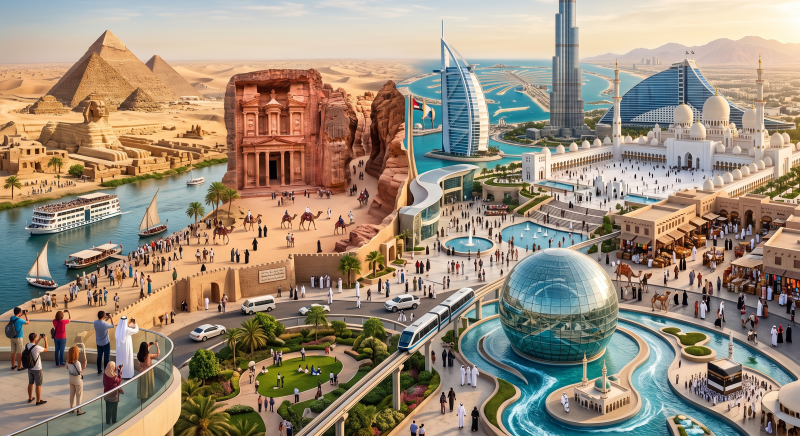
The Middle East is no longer just about religious landmarks or historical sites. It has evolved into a global destination offering diverse experiences that include entertainment, adventure, beach tourism, shopping, culture, and international events. Significant investments have transformed the tourism sector, making the region a rival to the world's top destinations.
In recent years, several Middle Eastern countries have witnessed substantial tourist growth due to better infrastructure, expanded aviation networks, and simplified entry procedures, alongside massive tourism projects that have attracted travelers worldwide.
Most Visited Middle Eastern Nations:
Saudi Arabia: A Blend of Religious and Modern Tourism
Saudi Arabia leads as the most visited Middle Eastern country, thanks to its religious significance for millions of pilgrims annually, paired with its evolving entertainment and cultural tourism sector.
The Vision 2030 initiative has bolstered Saudi Arabia’s status as a global tourist destination by developing numerous sites such as the historic AlUla and the Red Sea tourism projects, alongside major events hosted in cities like Riyadh and Jeddah.
The diversity of Saudi experiences attracts visitors seeking cultural tourism, natural adventures, and modern entertainment.
UAE: The Modern Tourism Capital of the Region
The UAE, especially cities like Dubai and Abu Dhabi, attract millions with their unique blend of luxury, entertainment, and global experiences.
Renowned for landmarks like Burj Khalifa and the Museum of the Future, along with world-class shopping centers, luxury resorts, and international events, the UAE remains a top spot for tourists from all continents.
Its aviation advancements and accessibility further solidify its standing as a leading global tourist destination.
Egypt: Millennia of History and Captivating Beaches
Egypt maintains a prominent position among the most visited Middle Eastern countries for its rich cultural heritage, attracting millions with its pyramids, temples, and historic sites, especially for historical and ancient culture enthusiasts.
Beyond artifacts, Egypt is known for its Red Sea resorts like Sharm El Sheikh and Hurghada, offering diving, relaxation, and marine activities.
The enhancement of museums and archaeological sites has amplified its appeal, making Egypt a renewed destination for visitors.
Turkey: Bridging East and West
Spanning Asia and Europe, Turkey stands out as a major tourist destination near the Middle East, attracting a large number of tourists with its cultural and natural variety.
Istanbul, with its historical landmarks and markets, alongside destinations like Cappadocia and Antalya, provides diverse experiences in nature and entertainment.
Competitive prices, diverse accommodation options, and travel convenience boost Turkey's popularity among tourists.
Qatar: Rapid Tourism Growth Post-World Cup
Qatar has seen a significant tourism surge, particularly after hosting the 2022 World Cup, enhancing its global presence and attracting millions.
The country has developed numerous cultural and tourism facilities, such as the Qatar National Museum, Souq Waqif, and Katara, alongside modern hotels and resorts catering to visitors' needs.
Doha has become a pivotal hub for tourism and international events in the region.
Jordan: Historical and Natural Experiences Combined
Jordan offers a mix of ancient civilizations and unique nature, making it a crucial destination in the Middle East.
The Petra World Wonder is a major tourist draw, alongside Wadi Rum, the Dead Sea, Jerash, and Aqaba.
Jordan attracts visitors seeking medical, adventure, and cultural tourism.
Oman: A Natural and Heritage Destination
Oman stands out with its serene nature and diverse landscapes, maintaining its authentic heritage.
Sites like Green Mountain, Salalah, Wadi Shab, and Ras Al Jinz attract nature and adventure seekers away from city crowds.
Lebanon: Sea, Mountains, and Cuisine Tourism
Despite economic challenges, Lebanon retains its tourism allure with diverse coastal cities, mountain villages, and historical sites.
Beirut, Byblos, Batroun, Jounieh, and Jeita Grotto are popular spots, coupled with Lebanon's cuisine and cultural experiences.
Bahrain and Kuwait: Growing Gulf Tourism
Bahrain and Kuwait continue to develop tourism through cultural and entertainment events, commercial centers, and modern landmarks.
Bahrain attracts visitors with Formula 1 races, traditional markets, and tourist islands, while Kuwait enhances internal tourism through entertainment and cultural destinations.
Why the Middle East is Attracting More Tourists
Several factors have increased regional visitor numbers, including:
- Investment in major tourism projects.
- Development of airports and transport networks.
- Simplified visa processes.
- Hosting global events.
- Diverse options between religious, cultural, and leisure tourism.
- Increased investments in hotels and resorts.
- Global promotional campaigns.
The Future of Tourism in the Middle East
Current trends indicate continued tourism growth in the region, with ongoing new projects and economic diversification through tourism.
Competition among Middle Eastern destinations is expected to intensify, with many countries aiming to offer varied tourism experiences combining technology, culture, nature, and entertainment.
See Also:
Most Indebted Countries in the World