


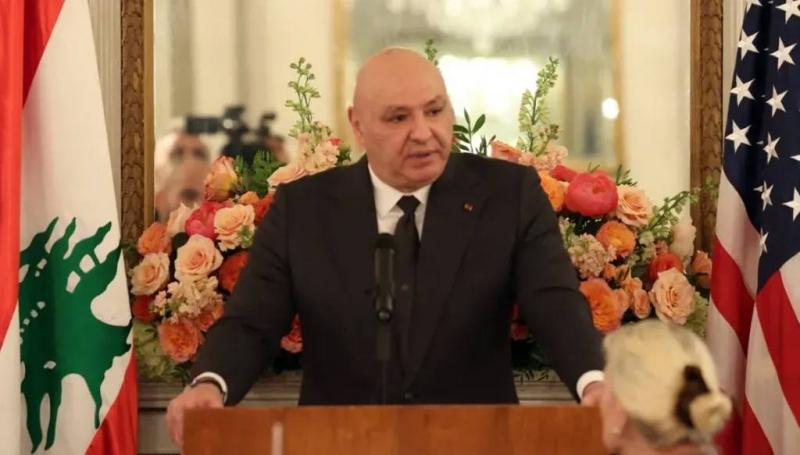
On the final day of his official visit to the United States, Lebanese Ambassador to Washington, Nada Hamadeh Moawad, hosted a dinner to honor President Joseph Aoun and First Lady Naemat Aoun at the ambassador's residence. The event was attended by members of the Lebanese delegation and numerous U.S. officials, including Energy Secretary Chris Wray, World Bank President Ajay Banga, Senate Foreign Relations Committee Chairman James Risch, multiple senators and congress members, and other high-ranking officials.
Ambassador Moawad welcomed President Aoun and the guests, noting the significance of this visit in reinforcing the historical ties between Lebanon and the United States, and working towards Lebanon's sovereignty, security, and prosperity.
President Aoun expressed his joy at the strong turnout, emphasizing the deep-rooted friendship between Lebanon and the U.S., which predates Lebanon's modern statehood. He highlighted the longstanding educational influences, including the American University of Beirut founded in 1866, and underscored the substantial Lebanese diaspora in America.
Aoun praised America's investment in the Lebanese military and institutions and acknowledged the shared historical and cultural destiny of both nations. Lebanon's contributions to civilization—from the Phoenician alphabet to modern literature and sciences—were emphasized.
Addressing the challenges faced by Lebanon, Aoun highlighted the devastation from wars, economic collapse, and political paralysis, but also underscored the resilience of Lebanon's democratic spirit. He called for a cohesive state with a single army safeguarding all citizens, emphasizing his mission to end hostilities and establish peace with Israel.
Aoun noted the unprecedented opportunity for Lebanon to redefine its regional and global relations. He stressed ongoing reforms and the efforts to combat corruption, aiming to restore confidence in Lebanese institutions, supported by a robust partnership with the U.S. under President Trump's leadership.
He acknowledged the complex issue of Hezbollah's disarmament, proposing a strategy of demilitarization, disbanding, and reintegration, reliant on the Lebanese Army's exclusive control and backed by economic growth.
The dinner event also facilitated discussions on Lebanon's situation and how the U.S. could aid in restoring Lebanon's image and strategic role in the Middle East.