


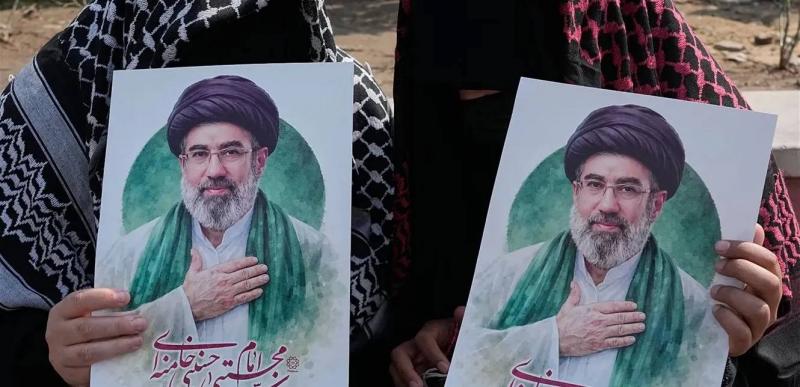
The Jerusalem Post reported that the Iranian regime fears its own people more than it fears American military strikes, suggesting that this should form the basis of the US strategy if Washington seeks to end the rule of the Islamic Republic.
The newspaper noted that the United States has so far focused on targeting military installations and infrastructure, along with exerting economic pressures. However, these efforts alone are insufficient to overthrow the regime. It explained that while the destruction of power stations and oil refineries may gradually escalate public anger, it also gives Iranian authorities time to adapt, blame external forces for the crisis, and maintain their security grip.
Based on this, the newspaper proposed five steps it considers a faster path to achieving this goal without deploying American troops inside Iran.
The first step, according to the newspaper, is to demand Tehran provide verifiable public proof that Iran's supreme leader, Mojtaba Khamenei, is still alive and capable of performing his duties. It noted that all statements attributed to him since February 28 have been in written form only, without any visual or audio appearances, raising questions about his health and decision-making ability. Washington should declare it will not continue any negotiations with Tehran until reliable evidence is provided, as the regime's inability to meet such a demand could create an internal legitimacy crisis that may exceed the impact of military strikes.
The second step involves allowing Israel broader freedom to continue its military operations against Hezbollah in Lebanon. The newspaper argued that the party is not just an ally of Iran but is one of its main military arms in the region, and weakening it directly impacts Tehran's ability to extend its regional influence, noting that this also serves Israel's security and Lebanon's future.
In the third step, the newspaper urged the US administration to make a direct appeal to Iranians to return to the streets and resume protests, while providing them protection by deterring Iranian security forces. It also suggested holding those responsible for suppressing demonstrators accountable, targeting them if they commit offenses against protesters.
In the fourth step, the newspaper argued that the priority should shift from targeting civilian infrastructure to targeting the Revolutionary Guard and Basij forces, as they are the main tools the regime relies on to suppress protests. It noted that Israel had adjusted its tactics during earlier phases of the conflict, focusing on sites and points belonging to these entities rather than infrastructure, considering this approach more effective as it directly weakens the repressive structures, giving protesters more room to act.
The fifth step called for tightening economic pressure by urging Pakistan to close land trade routes leading to Iran, which the newspaper said have mitigated the impact of US sanctions. It argued that the continuation of these routes undermines the effectiveness of the sanctions, calling on Washington to exert public pressure on Islamabad and highlight its role in reducing Tehran's economic isolation.
The newspaper concluded that the downfall of the Iranian regime, from its perspective, is not achieved by expanding the scope of infrastructure destruction but by targeting the regime's legitimacy, security apparatus, and regional influence tools. Combining these steps, it suggested, would accelerate the reach of a "post-current regime Iran."
Source: "Lebanon 24"