


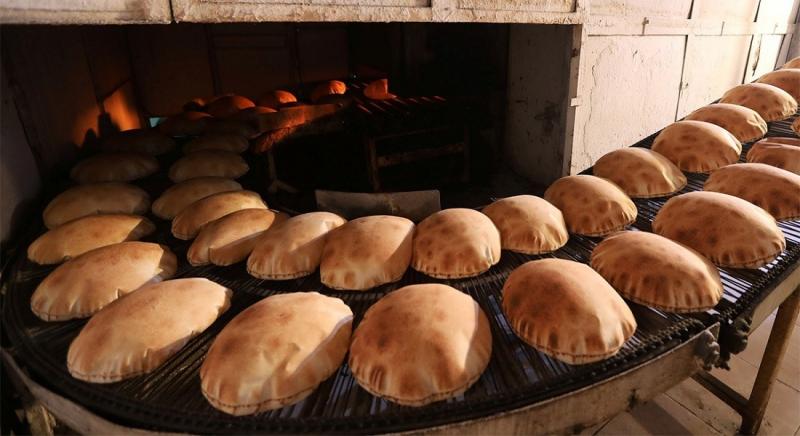
The Union of Bakery and Oven Syndicates in Lebanon has expressed its support for recent measures announced by the Ministry of Labor, in coordination with the General Directorate of General Security. These measures aim to regulate the status of Syrian workers in Lebanon, ensuring compliance with Lebanese laws and protecting the labor market while fostering social security.
In a statement, the union declared its backing for any steps taken by the Lebanese state to formalize the status of foreign workers, particularly the Syrian workers in the bakery sector, through obtaining work permits, regularizing their residency, and subjecting them to the provisions of the National Social Security Fund. This approach is intended to safeguard the rights of the state, institutions, and workers alike.
The union criticized the three-month timeframe as insufficient to resolve a complex issue that has accumulated over more than fifty years. The situation hasn't arisen due to a transient circumstance or a recent breach but has been compelled by successive exceptional conditions faced by Lebanon, including wars, economic crises, and financial and monetary collapse. Additionally, the prolonged dysfunction of public administrations and difficulties in completing administrative procedures are compounded by a significant number of workers entering Lebanon irregularly or losing their legal status due to compelling circumstances.
It emphasized that addressing an issue of this magnitude cannot be accomplished within a short period because the bakery sector is crucial to national food security. Any disruption in its operation would have severe repercussions for citizens' lives and the country's stability. The statement highlighted the enormous burdens borne by bakeries over recent years, which no other sector has shouldered. Amidst wars resulting from Israeli aggressions, notably in the South, Southern Suburbs, and Bekaa, bakeries continued to operate under direct threat to ensure bread supply despite extensive damage and significant material and moral losses suffered by their owners and workers.
The union highlighted ongoing security and military hazards, with missile and bombardment being prevalent in the region, posing extraordinary challenges for institutions in these areas, making it impractical to impose additional burdens within tight timelines. Furthermore, most bakeries are witnessing a decline in production and sales, unprecedented operational cost increases, and rising financial burdens, with no official programs to compensate damages from wars or economic collapse. Implementing legal, administrative, and financial measures of this scope requires adequate time and a practical execution plan.
In its commitment to the success of the government initiative, the union called for a transitional plan not shorter than one year to gradually organize the workers' status. This would allow for the completion of processes for work permits, residency, social security registration, and regularization of non-compliant workers, ensuring continuity in bread production and distribution without disruption.
It concluded by urging that this issue be addressed with a spirit of collaboration and partnership among the Ministry of Labor, the General Directorate of General Security, the National Social Security Fund, and the Bakery and Oven Syndicates' Union to arrive at practical and implementable solutions without risking a labor shortage or the closure of some bakeries, hence jeopardizing Lebanese food security.
Lebanese Bakery Union Supports Regulation of Syrian Workers
Share