


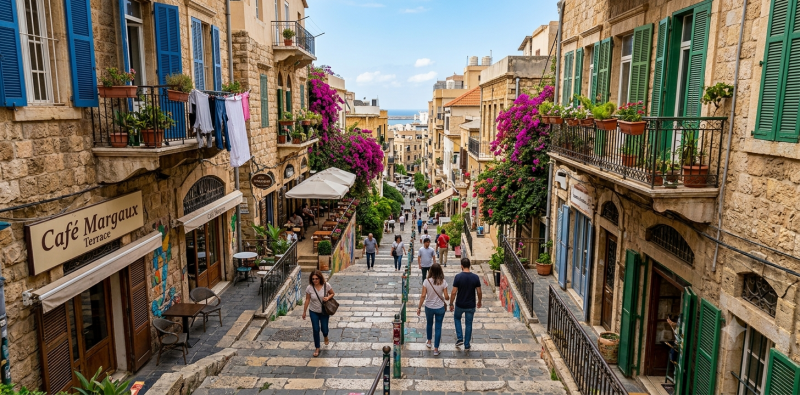
The St. Nicholas Stairs, also known as the Art Staircase, stands out as one of the most famous cultural and tourist attractions in Lebanon's capital, Beirut. Over past decades, this historical staircase has transformed into an open space that blends art, heritage, and daily life, becoming a favored spot for artists, photographers, and tourists from around the globe.
Beyond its historical significance, the St. Nicholas Stairs plays a vital role in hosting cultural events and connecting some of Beirut's most notable heritage neighborhoods, making it a prominent symbol of the city's cultural identity.
An Outdoor Hub for Art and Culture
The St. Nicholas Stairs is well-known for hosting various art and cultural events throughout the year, earning the nickname Art Staircase among Beirut's locals. The stairs feature open exhibitions of painting, photography, sculpture, and handicrafts, along with live music performances and diverse cultural events that create a unique atmosphere blending creativity with everyday life.
Additionally, these activities provide local artists a platform to showcase their work, reinforcing the stairs' status as an open cultural hub.
Why Are the St. Nicholas Stairs So Famous?
A Haven for Cinema and Art Lovers
The cultural activities at the St. Nicholas Stairs extend beyond art exhibitions; the location also hosts independent and documentary film screenings as part of outdoor festivals and cultural events. These events attract audiences both from within Lebanon and abroad, turning the stairs into a space that converges cinema, visual arts, and music right at the heart of the capital.
A Bridge Between Gemmayzeh and Sursock
The St. Nicholas Stairs serve as an important geographic and cultural link between Gemmayzeh, known for its vibrant restaurants, cafes, and nightlife, and the Sursock neighborhood, renowned for its historic mansions, tranquil streets, and cultural institutions. Consequently, thousands of visitors traverse the stairs while exploring these areas, offering them a unique perspective of Beirut's dual identity: lively and rich in heritage.
Authentic Lebanese Architecture
Surrounded by traditional buildings reflecting Beirut's architectural style, the stairs are flanked by structures featuring the iconic triple-arched windows, ornate iron balconies, and classic stone facades. These elements have become part of the visual identity of the Lebanese capital. Climbing plants, grape vines, and jasmine trees adorning the balconies further add a charming touch, blending the beauty of nature with the allure of the old city.
A Favorite for Photography Enthusiasts
The unique design and picturesque views have made the St. Nicholas Stairs a prime spot for photographers in Beirut. Visitors are keen to capture shots among the stone steps, heritage houses, and art pieces, especially during early morning or just before sunset when the lighting is ideal.
A Symbol of Beirut's Resilience
The St. Nicholas Stairs, along with surrounding buildings, suffered significant damage following the Beirut Port explosion in 2020. However, initiatives by youth, NGOs, and volunteers quickly worked to clean and restore the area, transforming the stairs into a symbol of Beirut's ability to recover and preserve its cultural heritage despite challenges.
Best Time to Visit the St. Nicholas Stairs
The stairs are accessible year-round, but the experience is particularly special during:
- Weekends with art and cultural events.
- Spring and fall for the pleasant weather.
- Early morning for photography away from crowds.
- Just before sunset to enjoy the natural lighting.
Nearby Attractions Worth Visiting
After exploring the St. Nicholas Stairs, consider visiting nearby attractions like:
- The lively Gemmayzeh district with its famous eateries and cafes.
- The heritage-rich Sursock neighborhood.
- Sursock Museum of Modern Art.
- The Mar Mikhael area, known for dining and nightlife.
- Gouraud Street, one of Beirut's renowned streets.
Ultimately, the St. Nicholas Stairs deserve their reputation as one of Beirut’s iconic landmarks. They are more than just a passage connecting historic neighborhoods; they are a space that brings together art, heritage, culture, and authentic Lebanese architecture. With its events, exhibitions, and unique ambiance, it remains an essential destination for anyone wishing to discover the true cultural face of the Lebanese capital.
See also: Best Places to Start a Tourist Project in Lebanon