


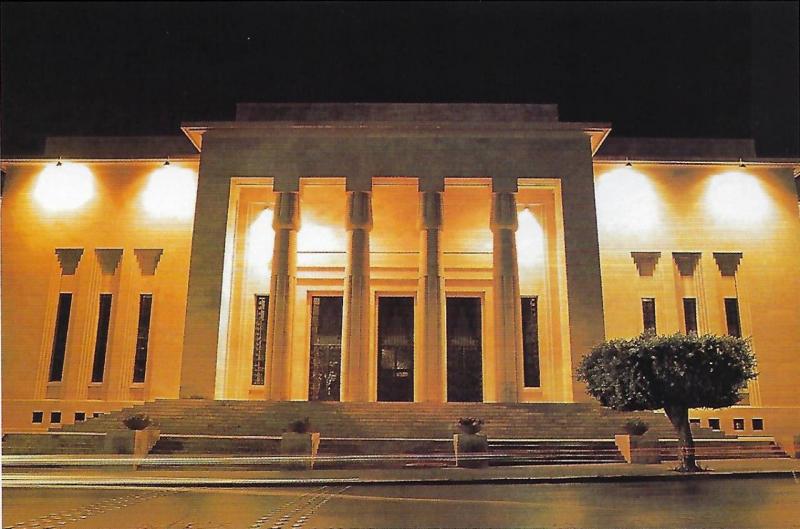
The Beirut National Museum stands as Lebanon's premier archaeological museum, serving as a guardian of the nation's historical memory. Home to ancient treasures reflecting thousands of years of civilizations that thrived in Lebanese territories, the museum draws thousands of visitors annually from both Lebanon and across the globe with its unique collection highlighting Phoenician, Roman, Byzantine, Islamic, and other heritages.
Beyond being a tourist destination, the museum is a crucial cultural and scientific institution preserving national identity. It houses approximately 100,000 artifacts, with about 1,300 on display, while the remainder are stored in high-standard preservation facilities.
History of the Beirut National Museum
The concept of the museum began in 1923 to protect artifacts unearthed from various Lebanese locations from loss. After years of dedication, the museum was officially opened on May 25, 1942, under the patronage of then-President Alfred Naccache.
Moreover, the museum became the primary reference for Lebanese antiquities, continually receiving new discoveries from archaeological sites nationwide.
Surviving the Lebanese Civil War
The museum faced one of its toughest times during the Lebanese Civil War from 1975 to 1990, positioned directly on the “Green Line” that divided Beirut. Despite substantial damage, curator Prince Maurice Chehab orchestrated one of the region's most remarkable heritage rescue operations.
Large items were encased in concrete for protection from shelling, while smaller artifacts were hidden in secret vaults until the war's end. Thanks to these efforts, most of the collection was preserved, making the museum a global example of cultural heritage protection during conflict.
Restoration and Reopening
Post-war, extensive restoration unfolded over years to restore the building and artifacts to their original conditions. The museum reopened the ground and first floors to the public in 1999, while the basement was opened in 2016 after a development and restoration project supported by the Italian government.
Today, the museum offers a modern experience blending traditional displays with interactive technologies, enriching visitors' understanding of Lebanese history.
Architectural Design of the Beirut National Museum
The museum boasts a unique architectural design that combines Egyptian Revival style with classical French touches. Built from Lebanese yellow limestone, it exudes a majestic appearance.
Designed by architects Antoine S. Nahas and Pierre Leprince-Ringuet, the building features massive columns and spacious halls, evoking the grandeur of celebrated civilizations.
What Can You Find at the Beirut National Museum?
Spread across three main floors, the museum offers a chronological journey from prehistory to the Mamluk era.
Ground Floor
This level features 83 large artifacts, including sarcophagi, statues, mosaics, and steles.
Highlights include:
- King Ahiram’s sarcophagus, dating to the 10th century BC, bearing the oldest known Phoenician inscription.
- Marble statues of Eshmun children, showcasing renowned Phoenician artistry.
- A vast collection of Roman and Byzantine mosaics.
- Large stone sarcophagi and statues discovered at various Lebanese sites.
First Floor
This section displays around 1,243 artifacts organized chronologically to reflect the evolution of various civilizations.
Exhibits include:
- Pottery.
- Ancient tools and weapons.
- Coins.
- Gold jewelry and ornaments.
- Ivory figurines.
- Terracotta statues.
- Items from the Bronze and Iron Ages, Greek, Roman, Byzantine, Islamic, and Mamluk periods.
Explanatory plaques in three languages detail the history of each piece, aiding understanding for international visitors.
Basement
Opened in 2016, this section is devoted entirely to funerary artifacts, exploring burial rituals in ancient civilizations.
The basement includes:
- The world's largest collection of sculpted Phoenician anthropoid sarcophagi made of white marble.
- Three natural mummies from the 13th century AD, discovered in the Assi El Hadath cave in Wadi Qadisha, still preserved in their original clothing.
- Diverse funerary objects showcasing the evolution of burial practices over millennia.
Notable Artifacts in the Museum
The museum boasts some of Lebanon's most famous artifacts, including:
- The sarcophagus of King Ahiram.
- Statues of Eshmun's children.
- Phoenician marble sarcophagi.
- Roman and Byzantine mosaics.
- Natural mummies.
- Phoenician gold jewelry.
- Ancient coins.
- Rare pottery.
- Bronze and ivory statues.
Visitor Information
Situated at the intersection of Damascus Road and Abdullah Yafi Avenue in Beirut, the museum is easily accessible from all areas of the city. It is open to visitors from Tuesday to Sunday between 9:00 AM and 5:00 PM, closed Mondays and public holidays.
Additionally, the museum provides explanations in Arabic, French, and English and features a 45-minute documentary narrating the museum's and its collection's rescue during the civil war.
Why Visit the Beirut National Museum?
The museum is more than just a showcase of artifacts; it offers a comprehensive journey through Lebanon’s long history. Each hall presents stories of civilizations that have left their mark on this region, from the Phoenicians who spread the alphabet, through the Greeks and Romans, to Islamic civilization.
Furthermore, the opportunity to view rare artifacts, unparalleled elsewhere, makes it an essential stop for anyone interested in history, culture, and tourism in Lebanon.
In conclusion, the Beirut National Museum remains one of the Middle East's most important cultural and archaeological landmarks. It unites history, architecture, and cultural heritage under one roof.
With its diverse collection and inspiring story of heritage preservation during conflict, the museum is an indispensable destination for anyone wishing to uncover Lebanon’s rich history and understand the civilizations that have shaped its identity over millennia.
See Also
Most Famous Traditional Markets in Baalbek