


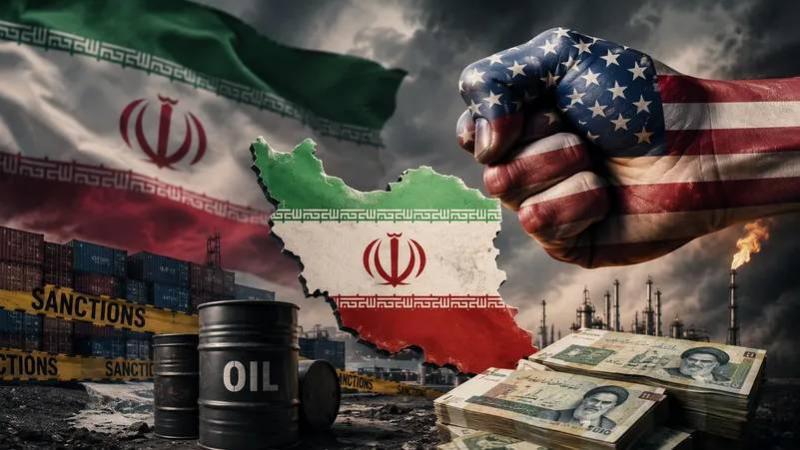
The Trump administration believes that economic sanctions might be more effective than military strikes in weakening Iran's regime. Despite recent U.S. bombing campaigns grabbing major headlines, Washington's ongoing financial pressures on Tehran are perceived as a more substantial long-term strategy.
According to a report by Axios, senior officials in the U.S. administration view Iran's accelerating economic crisis as a signal that continued sanctions and a naval blockade might eventually push Tehran to make concessions in negotiations.
An American official told Axios that the Iranian leadership "wants the bombing to stop, but they want the money more," indicating that Tehran prioritizes alleviating economic stresses and lifting U.S. sanctions.
Worsening Economic Crisis
The report highlights U.S. intelligence estimates and publicly available data pointing to a deepening economic crisis in Iran, including a fuel shortage despite Iran's large oil reserves.
A U.S. official noted that financial pressures are beginning to affect Iran's ability to fund its allies. Intelligence has reportedly detected complaints within Iran about the difficulties in paying affiliated fighters.
The official also expressed concerns about stresses on Iran's banking sector, with potential runs on banks, ongoing gasoline shortages, and reduced liquidity. He noted that Iranians "are more afraid of the U.S. Treasury Department than the Pentagon."
Negotiations Through Mediators
This comes after President Trump announced that Iran requested a meeting for a new deal's discussion, a claim denied by Iranian Foreign Ministry spokesman Ismail Baghiy.
Despite Tehran's denial, the report confirms that communications continue between the two sides through mediators from Oman, Qatar, and Pakistan to stabilize a ceasefire into a more sustainable truce.
The discussions reportedly focus on granting Iran and Oman a more significant role in managing the Strait of Hormuz, potentially providing extra revenue and inspired by the cooperative model seen in the Straits of Malacca and Singapore.
An American official clarified that there is division within Iran regarding this proposal, while Washington insists any deal must include Iran relinquishing remaining nuclear materials, refusing economic benefits for threatening international navigation.
"Maximum Pressure"
The report notes that the Trump administration has reactivated the "maximum pressure" policy, imposing sanctions on over a thousand individuals, ships, and planes, targeting Iran's oil trade, informal financial networks, arms purchases, and shipping industry.
Conversely, analysts told Axios that the economic war might take longer to achieve its goals compared to military options, and ongoing confrontation could incur political and economic costs for the U.S. administration, especially if energy prices rise.
Nevertheless, White House spokeswoman Karoline Leavitt emphasized that the U.S. president prefers a diplomatic solution but "keeps all options on the table" if Iran continues activities Washington deems a threat to Strait of Hormuz navigation or its allies.
The report states these assessments reflect the views of U.S. officials and sources within the administration, while Iran maintains that sanctions have not impeded its oil exports and dismisses the U.S. narrative about economic pressures influencing its political or military stances.