


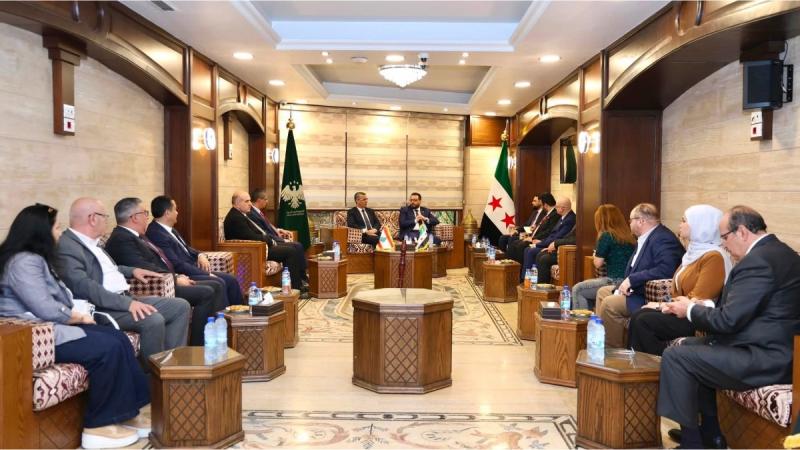
In an effort to enhance Arab agricultural cooperation and develop the partnership between Lebanon and Syria, Lebanese Minister of Agriculture Nizar Hani visited Damascus, Syria, leading an official delegation. The delegation included the Director-General of the Ministry of Agriculture, Engineer Louis Lahoud, the Minister's Office Director Samer Al-Khound, and Advisor Fadi Ghanem, with Lebanese Ambassador to Syria, Henry Coston, joining them.
Minister Hani initiated his visit by participating in the opening of the international agriculture, food, and industry exhibition "AgriTEK Syria," alongside Syrian Minister of Agriculture, Engineer Basil Sowidan, and Syrian Minister of Economy and Industry, Dr. Nidal Al-Sha'ar. The event was attended by various Arab and international officials as well as representatives from UN organizations and economic and agricultural entities.
Minister Hani took part in the ministerial dialogue session titled "Toward Shaping the Future of Agriculture and Food Security in the Arab East," alongside the Syrian ministers and other key representatives like the FAO's Acting Representative in Syria, Perro-Tomaso Perri, and WFP's Deputy Head of Programs, Jerry Soni.
The participants discussed major challenges facing the agricultural sector in the region, including climate change impacts, natural and water resource management, food security enhancement, farmer resilience support, agricultural value chain development, and investment in modern agricultural technologies. They also emphasized the importance of regional integration and coordination among Arab East countries to create more crisis-resistant food systems.
During his address, Minister Hani emphasized that "food security is no longer a developmental option but a foundational element for economic and social stability and national sovereignty." He highlighted the need for transitioning from coordination to actual partnership that involves sharing expertise, knowledge, and resource integration.
Hani remarked, "The future of agriculture in the Arab East is built through cooperation, not competition, and through integration, not isolation. Lebanon believes in building sustainable regional partnerships centered on innovation, sound management of natural resources, farmer support, and enhanced agricultural trade to achieve food security and foster more sustainable rural development."
Additionally, Hani mentioned the Lebanese Ministry of Agriculture's ongoing plans to modernize the agricultural sector, emphasizing climate-smart agriculture, improving production quality, and enhancing advisory and digital services. This comes alongside expanded cooperation with international organizations and Arab states.
Following the session, Lebanese and Syrian ministers toured the exhibition pavilions to observe the latest agricultural technologies, food industries, and production-related innovations. Minister Hani praised Lebanon's participation in the exhibition, stating it "reflects the vitality of the Lebanese agricultural sector and its competitiveness despite challenging conditions, confirming the quality and reputation of Lebanese products in Arab markets."
The next day, Minister Hani held an extensive meeting with his Syrian counterpart, Engineer Basil Sowidan, in the presence of Syrian Ambassador to Lebanon, Iyad Hazzah, Lebanese Ambassador to Syria Henry Coston, and official delegations from both countries. The discussion focused on enhancing agricultural cooperation, aligning agricultural policies, sharing expertise, developing plant and animal production, boosting technical and scientific cooperation, and removing obstacles to agricultural trade between the countries.
Syrian Minister Sowidan affirmed that "the fraternal relations between Syria and Lebanon provide a solid foundation for agricultural cooperation," outlining plans for modernizing agricultural advisory services, expanding the use of modern irrigation technologies, renewable energy, and legislative improvements.
Minister Hani underscored that "integration between the agricultural sectors of Lebanon and Syria offers a strategic opportunity for both nations," stressing the need for practical steps to foster agricultural trade and protect producers' interests. He highlighted the importance of preparing a comprehensive agricultural protocol to regulate product flow, unify technical and administrative procedures, facilitate truck crossings, and reduce congestion at border crossings, especially during vegetable and fruit seasons, thus promoting smooth agricultural trade.
He added, "Historical and fraternal ties between Lebanon and Syria form a solid base for productive and sustainable agricultural cooperation, opening new horizons for farmers and enhancing investment in agriculture to fortify food security and economic development in both countries."
Minister Hani also extended a formal invitation to his Syrian counterpart to participate in the Agri Lebanon exhibition, affirming the importance of continuing and expanding agricultural partnership efforts.
Director-General Lahoud outlined the work of the joint technical agricultural committees between Lebanon and Syria, focusing on technical and scientific cooperation and unifying technical procedures, especially in laboratory testing approvals and standardization.
These committees include the Water Basin and Fisheries Committee, Food Manufacturing Committee, Scientific Research Committee, Agricultural Strategies Committee, Agricultural Advisory Committee, Plant Health and Pesticides Committee, and the Animal Health and Production Committee.
Both parties agreed to continue the work of these committees and activate their periodic meetings, contributing to strengthened agricultural integration, production development, and facilitation of agricultural trade, to benefit both nations and enhance regional food security.
At the conclusion of his visit, Minister Hani extended his gratitude and appreciation to the Arab Center for the Studies of Arid Zones and Dry Lands (ACSAD) for their support, coordination, and efforts in organizing successful meetings and logistical and technical preparations, which achieved the visit's objectives and strengthened joint Arab agricultural cooperation.