


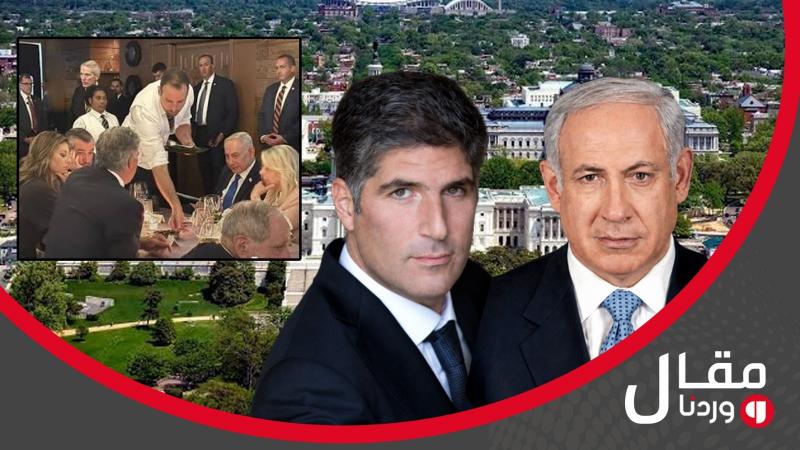
The recent media and judicial furor surrounding the Lebanese entrepreneur and banker Anton Sehnaoui, following his presence at a social and political event in Washington that included American and international figures, is merely another chapter in the long-standing trend of political immaturity and objectionable populism practiced in Lebanon for decades. Reducing the presence of a prominent Lebanese economic figure at international gatherings to the realm of 'prepared charges' and 'field trials' not only insults Sehnaoui as an individual but also exposes the isolationist mindset and outdated legislative system that keeps Lebanon shackled in the past.
Realpolitik and Washington Dynamics
First, it is essential to dismantle the context in which the supposed realism has been misrepresented. Anton Sehnaoui did not broker secret treaties, sell military secrets, or engage in deals harmful to the national interest. He was simply in Washington, the center of global decision-making, at a social invitation honoring a prominent American political figure, where dozens of international personalities from various spectra meet. Portraying the presence of a Lebanese businessman with cross-continental interests at a banquet attended by numerous invitees as a 'clear offense' reflects gross ignorance of how lobbies work and the dynamics of international relations.
Law of 1955: A Legislative Relic in the Age of Globalization
The core of the issue lies in reliance on the 'Israel Boycott Law' enacted in 1955. This law was written under entirely different geopolitical circumstances, seventy years ago, during a time when the world was divided by classical frameworks, and before technology, open markets, economic blocs, and digital integration existed. Maintaining a legal text designed for the mid-20th century and blindly applying it in 2026 is a form of intellectual and legal absurdity.
1. Clashing with capital movement and globalization: How can a state seeking to attract investments and soliciting international loans criminalize its citizens and investors for a mere intersection of complex pathways in international forums? Financial companies and banking institutions today operate within global compliance systems overseen by Washington, Paris, and London, and imposing populist restrictions on them isolates the Lebanese banking sector entirely from the global financial system.
2. Selectivity and policy-driven administration: The experience has shown that this law is no longer used to protect the country's security but has become a tool for internal bids and political and financial score-settling. While agreements and oil and gas field demarcations managed under international oversight are overlooked, this law is wielded like a sword over the head of a Lebanese businessman, artist, or academic who happens to be present at an international venue!
The National Interest Above Blind Ideology
The modern concept of national sovereignty is not built on inflated slogans and repressive laws that stifle the citizenry. It is built on economic capability, institutional strength, and the protection of national capital. The region has changed entirely, and many countries have redefined their national interests based on realism, pragmatism, and sustainable development, while some in Lebanon insist on keeping the country hostage to museum-like texts from the '60s and '70s. Criminalizing communication or presence in international spaces has prevented no threat, reclaimed no rights, and built no economy. It only contributed to brain drain, scared off capital, and deepened the suffocating economic crisis afflicting the Lebanese people.
What is Needed: Legislative Courage and the Abolishment of Outdated Law
Defending Anton Sehnaoui in this case is not merely about protecting one individual but defending the concept of a modern state that shields its citizens, investments, and global presence. It is time for the parliament and the vibrant forces in Lebanese society to muster the political and ethical courage to abolish the 'Israel Boycott Law' of 1955 or at least to revise and update it in alignment with international treaties and economic reality, and to eliminate any provision used to stifle voices or break economic and national pillars. Lebanon will not heal by breeding enemies from among its successful children nor by stifling individual initiatives in the corners of populist trials. Recovery begins by recognizing reality, updating laws, and replacing the logic of accusation and delusion with the logic of higher interests and genuine citizenship.