


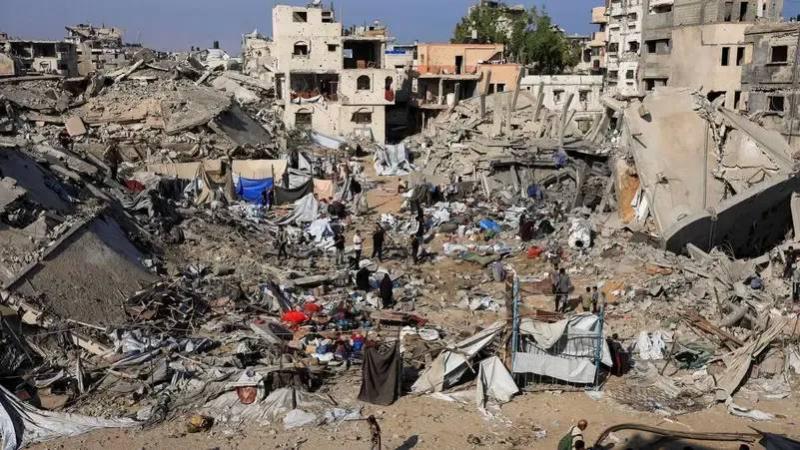
Hamas leader Ghazi Hamad confirmed that the movement's acceptance of a comprehensive peace agreement came after consultations with various Palestinian factions, aiming to end the war and rescue Palestinians from the dire humanitarian conditions in Gaza. He emphasized that the movement made political concessions to achieve this goal but will not abandon its political project.
In an interview with "Al Arabiya," Hamad stated that the agreement was reached under "difficult and harsh" conditions facing the Palestinian people, noting that the priority was to save the population and halt the ongoing humanitarian suffering that has been unfolding for months.
He added that the consultations conducted by the movement with Palestinian factions aimed at reaching a unified national stance supporting the agreement and enhancing its chances of success. He stressed that the decision was not made unilaterally but came after intensive discussions with Palestinian forces.
Hamad explained that the movement "chose to make concessions to save the Palestinian people," while asserting that these concessions do not imply abandoning national rights or the political goals of the movement. He stated, "We will not abandon our pursuit of achieving our Palestinian people's goals," pointing out that the agreement addresses the current reality and does not alter the movement’s fundamental political positions.
Weapons contingent on commitment by all parties
Regarding one of the most sensitive clauses of the agreement, Hamad confirmed that the handover of Hamas's weapons will not occur immediately or unilaterally but will be part of the reciprocal implementation of the agreement. He explained that the execution of this clause will be contingent on all parties' adherence to the agreed terms, indicating a timeline for implementing various phases of the agreement, including those related to weapons and security arrangements.
He added that the agreement includes the establishment of an international monitoring committee tasked with overseeing the implementation of commitments and ensuring all parties adhere to the terms, providing a mechanism for oversight and assurances during the transitional phase. This mechanism aims to ensure balanced implementation of the agreement without burdening any party with its obligations before others fulfill theirs.
Hamas will remain a political player
He stressed that the agreement does not entail dissolving or ending the existence of Hamas, clarifying that the movement will remain in place and continue its political activities in the upcoming phase.
Hamad added that the movement's renunciation of managing the Gaza Strip is not new, stating that Hamas has previously proposed relinquishing executive power to a technocratic government tasked with managing civil affairs, considering the current agreement an extension of these proposals, not a sudden shift in the movement’s position.
Israeli withdrawal and international force negotiations
Hamad revealed that the agreement stipulates Israel's withdrawal from the entire Gaza Strip, per a timeline to be agreed upon by the parties during the implementation phases.
Conversely, he noted that clauses related to deploying an international force in the strip have not yet been finalized and require more consultations and discussions among the concerned parties to define the nature of this force, its tasks, and its working mechanism, affirming that the agreement came after demanding negotiations.
Ghazi Hamad's statements come following the announcement of a draft comprehensive peace agreement, which includes starting implementation within 14 days of parties' approval, transferring Gaza Strip management to an independent national committee, halting military operations, deploying an international stabilization force, launching a reconstruction plan, along with dismantling arms and reorganizing the security system.
There has been no official Israeli approval on all details of the agreement yet, as some clauses, including the mechanism for deploying the international force and the Israeli withdrawal schedule, remain under consultation among the parties and mediators, awaiting the final announcement of the agreement's form and implementation mechanisms.