


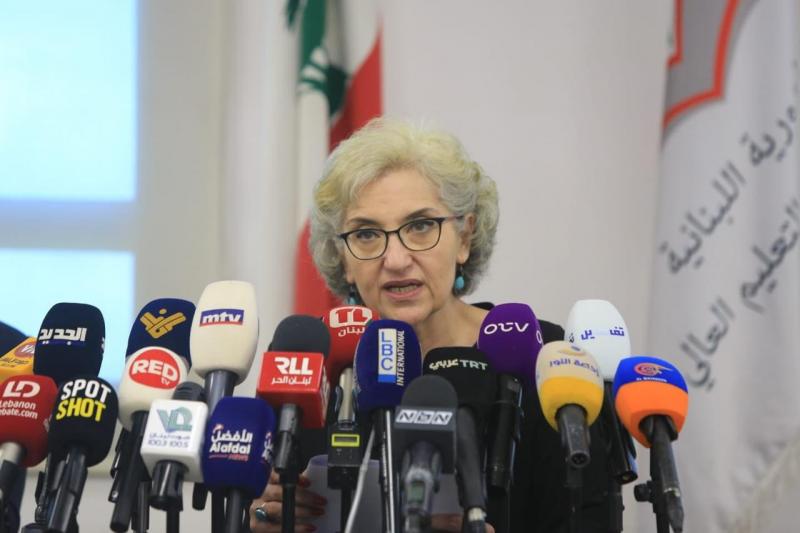
In a significant move, Minister of Education and Higher Learning Reema Karam launched the Learning Continuity Plan for the academic year 2026–2027, themed 'Every Local Community Has a School, and Every Learner a Space for Learning.' The announcement was made during a press conference held at the ministry's meeting hall, attended by Director-General Fadi Yarak, Hayam Isaac of the Educational Center for Research and Development, other relevant heads of the ministry, educational regions, and media representatives.
Minister Karam highlighted a prevalent question in many Lebanese households: "Where will our children learn at the start of the school year? Will their schools have the capacity to enroll them?"
She addressed these concerns by stating the main objective to commence the school year in September’s first half with in-person learning in schools meeting safety requirements, while temporarily resorting to remote learning in areas affected by hostilities, pending further assessments for ensuring safe in-person learning.
Karam urged parents to communicate with the primary schools informing them of their children’s current locations to aid in decisions about equipping school facilities and arranging student placements to ensure continued education.
The Minister assured, "No building that hasn't been cleared through a technical inspection or confirmed safe will be reactivated until all verification processes are complete." She reiterated, "These decisions impact every Lebanese family; today, I will detail the national plan enabling these decisions’ execution."
Reflecting on Lebanon’s recent crises, from economic collapse to warfare and displacement, Karam acknowledged the challenges posed in maintaining students' right to learn during school disruptions.
She emphasized that treating every crisis as unprecedented is no longer sufficient, and the state should not start anew with every emergency, nor leave schools and families facing challenges alone. From this standpoint, the Ministry is launching the learning continuity plan, providing a framework for sustaining learning in official schools amid crises, prefixed with procedures on school assessments, priority determinations, decision-making, and alternatives for secure learning continuation.
Prepared since the early months of the ongoing conflict, the plan reflects an understanding that preparation precedes crises, leading the Ministry to develop unified decision-making mechanisms based on accurate field data, adaptable to changing conditions.
Minister Karam addressed communities in southern Lebanon, acknowledging the challenges and efforts by students, teachers, and school administrators in keeping education ongoing amidst adversity. She emphasized the state’s role in offering clear solutions, denoting the plan's guiding principles: safety, learning continuity, local community preservation, and data-based decision-making.
Transitioning planning approaches, the Ministry has abolished isolated school dealings, recognizing crises affect entire communities. This shift promotes school networks to share resources while retaining their identity, informed by operational files detailing student numbers, teacher allocations, building conditions, and accessibility.
Minister Karam showcased operational maps used to manage school clusters within Nabatieh, emphasizing safety and capacity checks before relocating students, and the importance of realistic relocations.
She assured that varying solutions do not equate to differing rights, with schools in affected southern regions transitioning to remote learning until thorough evaluations conclude, safeguarding students' association with their original schools.
Encouraging communication from parents about children’s locations supports plan accuracy. Schools doubling as shelters won’t automatically reopen for education without clear, strict standards ensuring safely separated functions.
Minister Karam emphasized the multipronged focus on safe, secure, organized education resumption beginning September 15, pending proper assessments, maintenance, and safe accessibilities. Flexibility remains integral within this plan for adjustments dictated by circumstances, ensuring continuous learning spans across logistical and educational needs.
The Ministry pledges to efficiently implement this plan through centralized, updated databases, comprehensive monitoring systems, and collaborative partner involvements, including civil society and educational bureaus. This strategic initiative underlines collaborative partnerships essential for plan execution.
Minister Karam called for public reliance on official information sources, her assurances underscoring transparency and accountability in achieving the plan's goals, focusing on the continuity of learning spaces as anchors of education, solidarity, and national unity amidst adversity.