


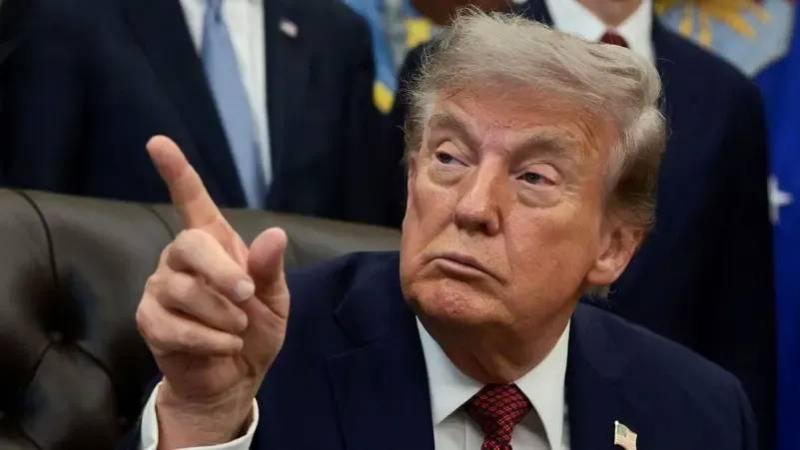
U.S. President Donald Trump announced the cancellation of a planned military strike on Iran following a request from Tehran and other Middle Eastern nations, emphasizing that American forces were ready to execute the attack.
In a post on Truth Social, Trump stated the U.S. was "armed and fully ready" to launch an unprecedented military assault on Iran, highlighting a military preparedness level "unseen since World War II."
He explained that Iran and several Middle Eastern countries appealed to Washington to delay the strike as they approached what he termed "milestones of an agreement" that may pave the way for resolving the crisis.
Proposed Agreement
Trump revealed that the proposed agreement involves the immediate and full reopening of the Strait of Hormuz and the termination of Iran's perceived nuclear threat. He stated that he agreed to cancel the attack "in the best interest of the world, Iran's future, and prosperity," contingent upon reaching a final agreement swiftly.
He confirmed that Israel has also committed to this initiative, urging all parties to finalize the agreement promptly.
Military Readiness
Trump's remarks came after media reports surfaced about the U.S. and Israel preparing extensive strikes on Iranian energy-related facilities pending his final decision.
CBS News reported, citing U.S. sources, that Washington and Tel Aviv had coordinated plans for a military campaign targeting Iran's energy infrastructure, as Trump discussed military options in a meeting with top administration officials.
Trump previously stressed that the U.S. would maintain pressure on Iran until it returns to "serious negotiations," warning that Iran would pay a hefty price if it escalates the situation.
Diplomatic Movements
Meanwhile, regional states including Saudi Arabia, Qatar, Turkey, and Pakistan intensified their communications to de-escalate tensions between Washington and Tehran in recent days.
Iranian Foreign Minister Abbas Araghchi cautioned that any new U.S. or Israeli military actions would meet a "decisive and proportional" response. Iran's foreign ministry asserted Tehran would utilize all measures to protect its national security and interests.
U.S. media reported that Qatari and Omani mediators engaged in intense contact with U.S. and Iranian sides to reopen the Strait of Hormuz and set the stage for negotiations, with initial progress reported but no official agreement yet.
Hormuz at the Core
The Strait of Hormuz remains central to the current crisis, with a significant portion of global oil exports passing through it. Recent weeks saw escalating tensions as the U.S. intensified naval operations and imposed restrictions on Iran-linked shipping, while Tehran repeatedly threatened retaliation against any attacks on its assets or interests.
If diplomatic efforts successfully secure the understanding mentioned by Trump, it could represent a significant shift in the crisis trajectory. However, any final agreement depends on the approval of all parties and enforcement of the negotiated security and political commitments.