


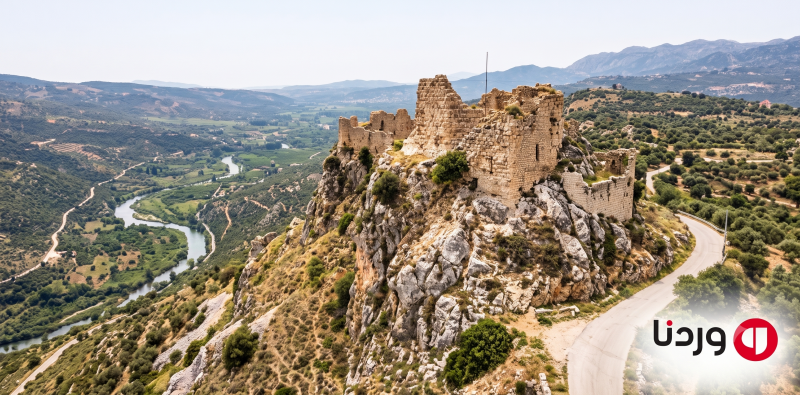
Shaqif Castle, prominently situated among Lebanon's historic fortresses, has been recognized by UNESCO for its significant historical and cultural value. Far more than a mere relic, this castle serves as a living testament to the diverse civilizations and empires that have influenced southern Lebanon over the ages.
Benefiting from its elevated position, Shaqif Castle has historically played a crucial defensive and military role, maintaining much of its architectural charm throughout the centuries.
Recently, the castle was included in the UNESCO World Heritage site "Forts of Jabal Amel," underscoring its global cultural and historical importance. This international acknowledgment emphasizes the necessity of preserving such heritage sites amidst contemporary challenges facing endangered monuments.
Location of Shaqif Castle
Shaqif Castle is located in the Nabatieh Governorate of southern Lebanon, near the village of Arnoun. Perched on a towering rocky hill approximately 700 meters above sea level, it oversees the Litani River, the plains of Marjayoun, and vast stretches of southern Lebanon.
History of Shaqif Castle
Dating back to the medieval period, historical records suggest that Shaqif Castle has been used for defensive purposes since earlier times, undergoing significant expansion during the Crusader era. Among the Crusaders, it was known as Beaufort Castle, or the "beautiful castle," thanks to its majestic location and sweeping views. Over the centuries, control of the castle switched hands between various powers, including the Ayyubids, Mamluks, and Ottomans, until it became one of Lebanon's notable historical fortresses in modern times.
The Historical Importance of Shaqif Castle
The castle gains its historic significance from several factors, notably its strategic defensive position and its military design that reflects the evolution of medieval fortification techniques. It served as a key vantage point for monitoring trade and military routes, contributing to the protection of the southern region during different historical periods.
Distinctive Architecture of Shaqif Castle
Reflecting the military building styles of the medieval era, the castle boasts:
- Massive stone walls
- Watchtowers for surveillance and defense
- Narrow internal passages
- Rainwater collection cisterns
- Rooms for accommodating soldiers and storing supplies
- Defensive openings for monitoring surrounding movements
Despite parts of the castle sustaining damage over past decades, many of its original architectural elements remain intact.
UNESCO World Heritage Listing
The global spotlight turned to Shaqif Castle following UNESCO's announcement of its inclusion in the "Forts of Jabal Amel" World Heritage Site. Additionally, the site has been listed under the World Heritage in Danger status, emphasizing its exceptional cultural and historical value and highlighting the need to protect this human heritage from continuing threats.
Why is World Heritage Listing Important?
Listing a site as a World Heritage acknowledges its universal importance, encouraging international collaboration on its protection, restoration, and documentation. Moreover, being listed as endangered aims to draw attention to the site's challenges, rallying global support for its preservation for future generations.
Why Does Shaqif Castle Attract Visitors?
The castle’s panoramic views offer sweeping vistas of southern Lebanon, permitting visitors a glimpse into one of the Middle East's most significant military fortresses. Explorers enjoy navigating its ancient stone walls and pathways, uncovering architectural details that showcase the ingenious construction of the past era, alongside capturing photographs from its heights where lush nature melds with rich history.
Interesting Facts About Shaqif Castle
- Also known as Beaufort Castle
- One of the largest historical castles in southern Lebanon
- Constructed on a rocky hill providing expansive regional views
- Played a pivotal role in several wars and conflicts through history
- Included on UNESCO's World Heritage List in 2026
Why is it Called Shaqif Castle?
The name "Shaqif" relates to the rocky site where the castle was constructed, also historically known as Beaufort Castle during the Crusader period.
Can Shaqif Castle Be Visited?
Visiting depends on prevailing conditions and official mandates in the region. Visitors are advised to consult local guidelines before planning a trip.
The Importance of World Heritage Listing
This listing underscores the site's historical and cultural significance and aims to enhance conservation efforts as part of global human heritage.