


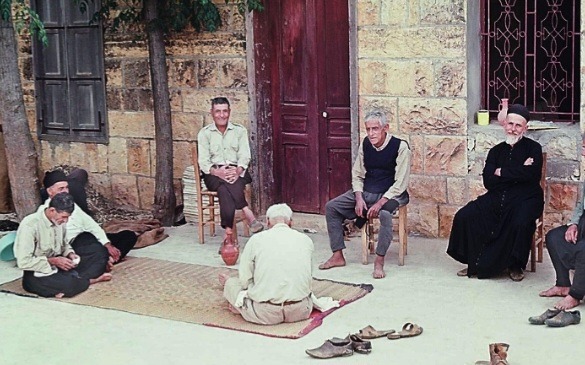
Lebanese proverbs are an integral part of the cultural heritage. They capture the wisdom of ancestors and reflect the Lebanese society's way of thinking in various life situations. Despite their brevity, these proverbs embody deep meanings about patience, work, human relationships, and coping with difficult circumstances.
Passed down through generations, Lebanese proverbs are still commonly used in daily conversations to express specific situations in a smart and simple way. In this article, we explore a collection of famous Lebanese proverbs, explaining their meanings and connotations.
8 Famous Lebanese Proverbs and Their Meanings
1- "Those who feel ashamed die"
Meaning:
This proverb is used when some people abandon shame or modesty or act inappropriately without any sense of embarrassment.
Connotation:
It expresses how some individuals have lost their sense of responsibility or shame about their actions.
2- "A bird in the hand is worth more than ten on the tree"
Meaning:
It means securing something certain and guaranteed is better than waiting for something uncertain, no matter how great.
Connotation:
The proverb advises realism and avoiding risking what one possesses for uncertain promises or potentials.
3- "Neighbor before home"
Meaning:
This emphasizes the importance of choosing neighbors before choosing a place to live, as relationships with neighbors significantly affect one's comfort.
Connotation:
It reflects the value of social relationships and cooperation among people in Lebanese society.
4- "Every rooster crows at his own dung heap"
Meaning:
It means a person might feel powerful and in control in an environment they know or have influence in.
Connotation:
Used to describe people who show their strength only when in their own domain.
5- "Came to apply kohl, blinded her eyes"
Meaning:
It's said when someone tries to fix a problem but worsens it due to poor handling or lack of experience.
Connotation:
Warns against intervening in matters without knowledge or making rash decisions.
6- "Titi Titi, as you went, you came back"
Meaning:
This means things remained the same without any change or outcome despite the effort.
Connotation:
It expresses efforts that did not lead to any progress.
7- "Ask an experienced person, not a wise one"
Meaning:
This suggests that the experience of someone who has lived through a situation may be more beneficial than theoretical advice.
Connotation:
Emphasizes the significance of practical experience and real-life lessons.
8- "Strike while the iron is hot"
Meaning:
This emphasizes the need to seize opportunities at the right moment before they fade away.
Connotation:
Encourages quick decision-making when conditions are favorable.
The Importance of Lebanese Proverbs in Popular Culture
Lebanese proverbs are not just old phrases but part of the cultural and social identity. They:
- Transfer ancestors' experiences to new generations.
- Summarize life situations in few words.
- Help understand society's nature and customs.
- Are used in daily conversations to convey ideas or advice.
Lebanese proverbs reflect the humor and wit of the Lebanese people, often combining wisdom with a sarcastic style.
Why Are Lebanese Proverbs Still Relevant Today?
Despite changes in lifestyle, popular proverbs remain relevant as they relate to recurring situations in people's lives, such as:
- Interacting with others.
- Making decisions.
- Facing challenges.
- Assessing people.
- Learning from experiences.
These proverbs provide a concise description of situations one might encounter daily.
Conclusion
Lebanese proverbs represent a rich popular memory filled with wisdom and experience. They are not just inherited words but short lessons carrying deep meanings about life and people, allowing us to explore an essential part of Lebanese tradition that continues to thrive in daily conversations.