


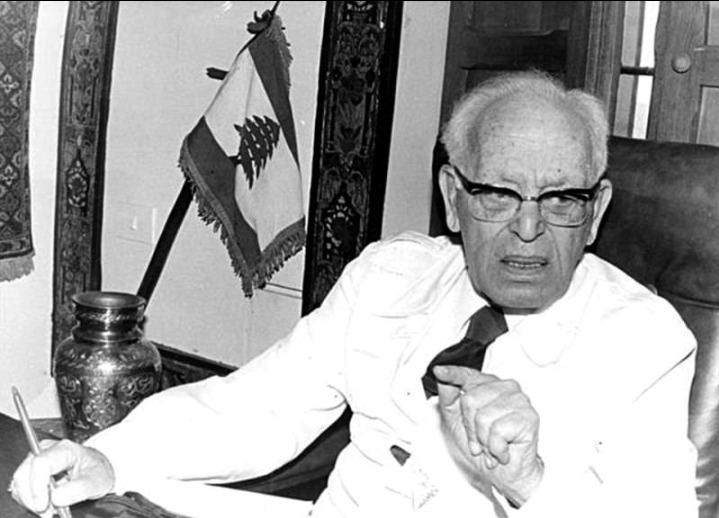
Presidents of the Lebanese Republic have played pivotal roles in shaping the state's identity and political direction since independence. Each leader faced different challenges, ranging from institution building and economic enhancement to managing internal crises and dealing with regional and international changes.
Opinions about each president's performance may vary, but several have left indelible marks on Lebanon's history through administrative reforms, political agreements, or decisions that had lasting impacts on the country.
7 Presidents Who Marked Historical Turning Points in Lebanon
1. Bechara El Khoury
Bechara El Khoury was Lebanon's first president post-independence in 1943, playing a crucial role in establishing Lebanon's independence from the French mandate.
Among his achievements:
- Co-drafting the National Pact alongside Riad Al Solh.
- Laying the foundations of Lebanon's political system after independence.
- Strengthening international recognition of the Lebanese state.
Despite these accomplishments, his tenure ended with his resignation in 1952 following widespread political protests.
2. Camille Chamoun
Camille Chamoun served as President from 1952 to 1958. During his time, Lebanon witnessed remarkable economic growth, and tourism and investments flourished, earning it the nickname 'Switzerland of the East'.
Highlight features of his era:
- Boosting the economy and investments.
- Developing infrastructures.
- Revitalizing the tourism sector.
However, his presidency concluded amidst a significant political and security crisis in 1958.
3. Fouad Chehab
Fouad Chehab is considered one of the most influential modern Lebanese presidents, focusing on state institution-building and public administration improvement.
Key accomplishments:
- Establishing the Civil Service Board.
- Supporting the formation of the National Social Security Fund.
- Enhancing monitoring and administrative bodies.
- Contributing to the founding of the Central Bank of Lebanon.
The reforms he led became known as Chehabism.
4. Suleiman Frangieh
Suleiman Frangieh held the presidency during a sensitive period in Lebanon's history.
Significant events during his tenure:
- Escalating political divides.
- The outbreak of the Lebanese Civil War in 1975.
- Increasing regional interference in Lebanese affairs.
Despite the difficult circumstances, his term remains one of the most impactful in the country's history.
5. Elias Sarkis
Elias Sarkis was elected during the civil war and worked to maintain state institutions amid division and armed conflicts.
Notable aspects of his presidency:
- Preserving the continuity of state institutions.
- Managing economic and financial files under exceptional conditions.
- Striving for political consensus among Lebanese factions.
6. Bachir Gemayel
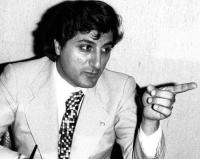
Bachir Gemayel was elected President in 1982 during a highly complex phase in Lebanon's history.
He was widely popular among a segment of the Lebanese but was assassinated days after his election, before assuming his constitutional duties, making him one of the most remembered political figures in Lebanese memory.
7. Elias Hrawi
Elias Hrawi assumed the presidency following the Taif Agreement, leading the country through the end of the civil war.
Notable achievements:
- Overseeing the implementation of the Taif Agreement.
- Dissolution of most armed militias.
- Initiating the reconstruction phase.
- Supporting the return to work of state institutions.
Why Did These Presidents Leave a Mark on Lebanese History?
The impact of these presidents is tied to pivotal stages that Lebanon encountered. Their tenures saw events that altered the country's course, from independence and institutional development to political unrest and civil war, followed by peace and reconstruction phases.
Their decisions and policies contributed to shaping the political and administrative system whose effects are still felt today.
Can They Be Considered the Most Influential?
There is no complete historical consensus on which Lebanese presidents were the most influential, as assessments of political figures vary with different standards and perspectives. However, the names highlighted in this article are among the most notable presidents whose terms were linked to critical historical junctures that left a clear mark on modern Lebanese history.
Summary
Lebanon has experienced complex historical phases, and the presidents played a critical role in managing these periods. From independence and state institution-building to wars and crises and leading reconstruction phases, despite differing assessments of each president's legacy, these seven remain some of the most prominent figures in Lebanese history.
See Also