


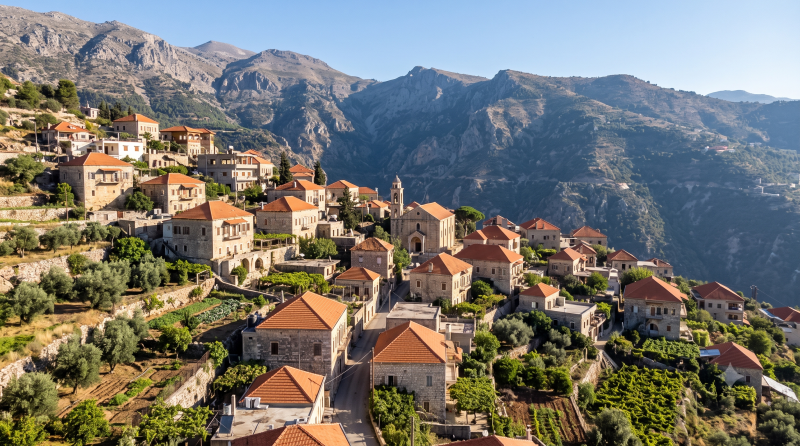
Lebanon's geographical diversity offers a rich rural landscape where villages are nestled among mountains, valleys, and forests, many of which retain old stone houses, traditional streets, and historical landmarks.
The beauty of these areas is especially noticeable in spring and summer, while some mountain villages transform into winter destinations as snow covers the peaks.
The charm of Lebanese villages is not only attributed to nature but also to the rich history, local architecture, cuisine, and traditional customs that add a unique touch to the experience. Here are five villages and towns that stand out as top rural destinations worth visiting in Lebanon.
Lebanon's Most Beautiful Villages:
1. Bsharri
Bsharri is located in northern Lebanon within a distinctive mountainous area, known for the views of the Qadisha Valley and the Forest of the Cedars of God, offering significant natural and touristic importance.
The surrounding area is one of Lebanon's premier mountain destinations, and the town is linked to the history of the poet Khalil Gibran, whose museum is nearby. Bsharri offers an experience that combines mountain nature, outdoor activities, and cultural heritage.
2. Hasroun
Known in the Bsharri district for its mountainous nature, traditional houses, and expansive views of the Qadisha Valley. The town is characterized by cedar trees, gardens, and green spaces.
It also preserves a traditional architectural style that makes exploring it different from modern tourist destinations. It is a suitable village for those who want to combine serenity, nature, and the discovery of old Lebanese villages.
3. Ehden
Located in the Zgharta district at a relatively high altitude, Ehden becomes one of the known mountain destinations in northern Lebanon during the summer.
Surrounded by forests and natural areas, it provides suitable conditions for hiking and enjoying mountain views. Ehden is also close to the Ehden Nature Reserve, featuring significant floral and faunal diversity.
4. Douma
Situated in the Batroun district, Douma is distinguished by its traditional red stone houses and architectural style that has preserved much of the old town's identity.
Surrounded by mountains and orchards, its streets and old buildings offer visitors a glimpse into rural Lebanese architecture. Douma is a notable destination in northern Lebanon for lovers of historical villages and tranquility.
5. Deir el Qamar
Located in the Chouf district, Deir el Qamar is one of the most prominent historical towns in Mount Lebanon. It is famous for its stone buildings, old squares, churches, and historical landmarks.
It has played a significant political and cultural role during various stages of Lebanon's history. The town offers visitors an opportunity to explore old alleys and learn about traditional Lebanese architecture.
What Makes Lebanese Villages Special?
Lebanese villages are distinguished by a clear diversity between coastal and mountain areas, but elevated villages have a special allure due to their nature, views, and mild summer temperatures. Many of these villages have preserved buildings and architectural styles that reflect the region's history.
Local restaurants, guesthouses, and nature trails are part of the rural tourism experience, and some areas allow activities like hiking, forest exploration, and learning about local products.
Best Time to Visit Lebanese Villages
The ideal time depends on the type of trip. Spring and summer are suitable for exploring mountain villages and nature walks, while autumn can be a special time for those who enjoy calm atmospheres and changing landscapes.
In winter, some elevated villages become destinations for snow lovers and cold climates, provided the roads and weather are checked before heading there.
In conclusion, Lebanon's top 5 beautiful villages combine nature, history, and traditional architecture. Bsharri, Hasroun, Ehden, Douma, and Deir el Qamar stand out as unique rural destinations for anyone looking to discover a different side of Lebanon. Each village offers a unique experience, whether through mountains and forests or old houses and historical sites.
See also:
Saifi Village Guide in BeirutStory of the St. Nicholas Stairs in Beirut