


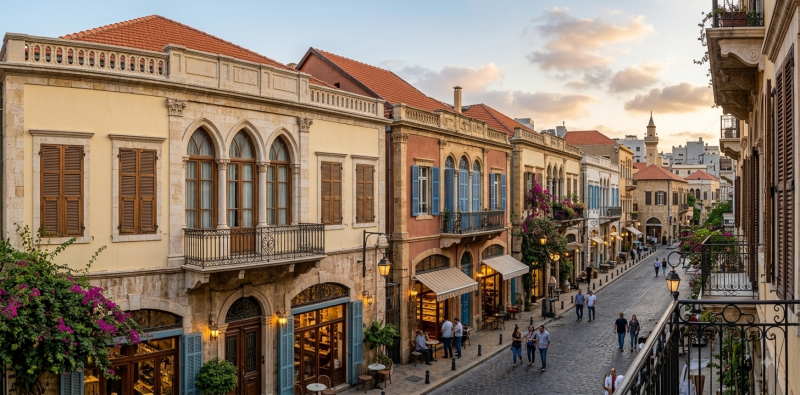
The Gemmayzeh area stands as one of Beirut's most historically rich neighborhoods, showcasing the city's architectural heritage through its ancient houses, stone staircases, and Ottoman-French style buildings, each echoing different eras of the Lebanese capital's history.
Visitors often explore the heritage buildings in Gemmayzeh not just to admire old architecture, but to experience the traditional Beirut lifestyle that blossomed around these homes and streets. With its arched windows, traditional tiles, Roman arches, and wide balconies, Gemmayzeh presents a unique model of architecture that merges local, Ottoman, and European influences.
What Makes Gemmayzeh Architecturally Unique?
Gemmayzeh evolved through successive historical stages, resulting in a diverse architectural landscape. The traditional Beiruti home, characterized by a central hall, wide windows, and elevated balconies, particularly stands out.
The district's proximity to downtown Beirut, Ashrafieh, and the port also contributed to its significance as a commercial and residential hub, which is reflected in its buildings where shops were typically on the ground floor with living spaces above.
Famous Heritage Buildings in Gemmayzeh
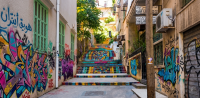
1. St. Nicholas Staircase: An Artistic Passage Between Gemmayzeh and Ashrafieh
The St. Nicholas Staircase is a historic corridor deeply embedded in Gemmayzeh’s urban fabric, connecting it to Ashrafieh. Though not a standalone building, it is flanked by old structures and adorned over the years with art, murals, and climbing plants, making it a magnet for visitors and artists, especially with cultural events often held nearby.
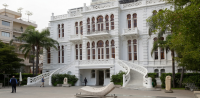
2. Sursock Palace: 19th Century Beirut’s Grandeur
Sursock Palace is a landmark of historical architecture that signifies the legacy of the influential Sursock family. It merges local and European architectural styles with rich details in façades, gardens, and interiors featuring artistic elements like sculptures and stained glass.
3. The Inventor's House: A Model of Traditional Beiruti Homes
The Inventor's House exemplifies the characteristics of ancient Beiruti architecture with its design rooted in the central hall home model, featuring arched windows, and a red-tiled roof, helping visitors understand pre-modern building techniques.
4. Old Régie Company Building: Witness to the Ottoman Era
Near Gemmayzeh’s entrance, lies the Old Régie Company Building, historically tied to Lebanon's tobacco monopoly administration, showcasing Ottoman-era architectural influences.
5. Gouraud Street Façades and Surrounding Heritage Buildings
The identity of Gemmayzeh is reflected in the collection of adjoining buildings on Gouraud Street. These structures, some with shopfronts on the ground floor and residences above, exhibit domed roofs and open balconies offering a blend of commercial and residential architecture.
Beiruti Architecture in Gemmayzeh: A Historical Narrative
Walking through Gemmayzeh reveals a heritage not confined to grand structures alone but evident in details like old wooden doors, arched windows, iron balconies, and traditional tiles, encapsulating the area's identity.
The Impact of Beirut Port Explosion on Gemmayzeh's Heritage
In August 2020, the Beirut port explosion inflicted significant damage on Gemmayzeh, affecting numerous historic buildings. However, this event also sparked extensive efforts for preservation, involving local and international collaborators in restoration projects.
Efforts to Restore Gemmayzeh's Heritage Buildings
Gemmayzeh’s restoration is part of Beirut's broader efforts to revive historical areas, sometimes requiring specialized expertise and materials different from modern construction, supported by cultural institutions, international organizations, and local initiatives.
Gemmayzeh: Between Heritage and Modern Living
Despite its historical essence, Gemmayzeh remains vibrant with cafes, restaurants, and art spaces often housed in repurposed historical buildings, attracting visitors with its blend of the old and new.
Best Way to Explore Gemmayzeh’s Heritage
Exploring Gemmayzeh on foot allows visitors to appreciate its architectural details more intimately than when passing by car, making it a richer cultural experience for those interested in photography, architecture, and history.
In Conclusion, the heritage buildings of Gemmayzeh offer a glimpse into Beirut's rich past with its unique urban texture, where historic mansions, traditional Beiruti houses, and commercial façades co-exist, narrating the city's socio-economic and cultural transitions.
Also See
Best Turkish Language Institutes in Lebanon