


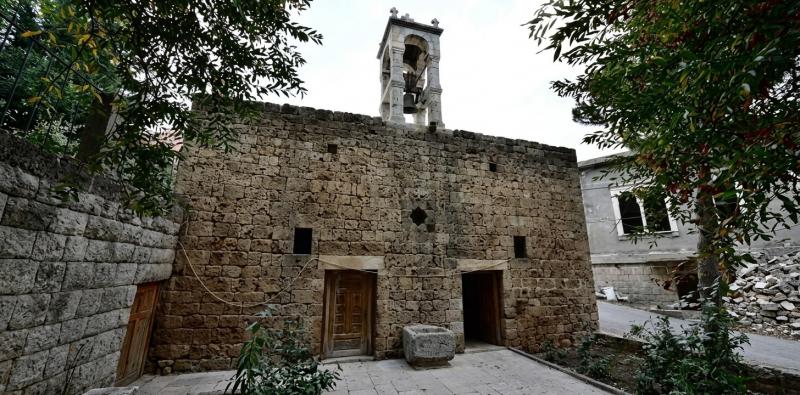
Mar Chalita Church stands proudly in the square of Tannourine Al-Fawqa, in the Batroun District of North Lebanon. This church is not only notable for its religious significance but also due to its cultural and historical importance, as it is surrounded by various natural and archaeological landmarks.
Also known as Saint Artemios Church, the name Mar Chalita is widely used in the region. Being centrally located in the town offers visitors a chance to explore both the religious site and the stunning mountainous surroundings of Tannourine.
The History of Mar Chalita Church
Mar Chalita Church boasts a long history. Local tales and some sources suggest that it stands on the remnants of an earlier religious structure, possibly linked to a former pagan temple.
Some accounts claim the site's history stretches back around 1,600 years. However, accurately dating the current structure involves distinguishing between the archaeological site's history and the church's existing parts. The site underwent multiple phases of construction, reuse, and restoration over several centuries.
Architectural descriptions point to Byzantine elements in the church, with other parts attributed to later Crusader periods through the reuse of stones.
Was the Church Built Over a Pagan Temple?
A popular local legend suggests the church was erected atop an ancient Roman pagan temple, supported by the presence of old stones and architectural elements reused in its construction.
This narrative, however, should be viewed as a historical hypothesis rather than an established fact in all archaeological studies. The reuse of stones is a common practice across Lebanese sites, and the presence of Roman or Phoenician elements doesn't necessarily indicate the whole structure originated from a previous temple.
The potential of an older establishment beneath the church adds to the site's significance, reflecting Lebanon's evolving places of worship through the ages.
Architecture of Mar Chalita Church
The church is characterized by its local stone construction, aligning with the historical architectural style of Lebanese mountain villages. The building features striking architectural elements that intrigue researchers and heritage enthusiasts, encouraging further study of its development.
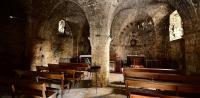
Noteworthy are the two identical apses or a design hinting at a double choir concept, adding uniqueness to the church compared to traditional religious structures.
The reuse of ancient stones also highlights successive phases of construction and renovation, making the building read like a layered historical record.
Symbols and Carvings in the Church
Symbols and stone carvings are compelling aspects of the site. Restoration work has revealed geometric symbols, crosses, and various inscriptions on some of the stones and architectural features.
These symbols are linked to different historical periods, including the Roman and Phoenician eras. However, ascribing specific origins requires specialized archaeological study for historical accuracy.
These elements emphasize the possibility of older stones and structures being incorporated in later construction phases, giving the church not just religious importance but also architectural details crucial for understanding the site's history.
Historic Panels and Bell
The church also houses old religious panels depicting images of Saint George and Mar Chalita, enhancing its artistic and religious value as part of ancient church art traditions.
The current church bell, crafted in 1944 by artisan Faris Al-Naffaa, stands as a symbol of local memory, alongside the stone structure, panels, and other religious elements.
Mar Chalita Church Restoration
The church experienced periods of neglect before restoration efforts were initiated to preserve its heritage elements. Restoration work in the late 20th century helped uncover parts of the building's decorations and symbols.
In 2023, further restoration and rehabilitation work was undertaken on the church and its courtyard, supported by Hungary Helps, according to local sources discussing the project.
Restoration is crucial for historical buildings, as preserving old stones and original features requires different methods compared to modern restorations.
Significance of the Church to Tannourine’s Heritage
The church's importance is not limited to its religious aspects; it represents a piece of Tannourine's architectural and social memory. It has remained integral to the lives of residents through religious celebrations and local events and holds historical value.
Moreover, ancient religious landmarks like this promote cultural tourism in Lebanon’s mountainous regions. Visitors can explore the church during broader trips that include Tannourine’s nature, forests, and historical sites.
With growing interest in rural and cultural tourism, such sites offer experiences beyond traditional landmarks, introducing visitors to village history and evolution over time.
When is Mar Chalita's Feast Day?
Mar Chalita's feast day is celebrated on August 20th annually with religious ceremonies, masses, and feast-related activities in the area. It's a significant occasion for the town's residents, expatriates, and visitors returning to partake in the festivities.
The celebration also provides an opportunity for visitors to learn more about the religious and social traditions tied to the church. Given the summer timing of the feast, it allows for combining a church visit with exploring Tannourine's natural and tourist attractions.
Who is Mar Chalita or Saint Artemios?
Mar Chalita is associated with Saint Artemios, a name present in Eastern Christian heritage and several churches and monasteries across Lebanon.
The saint holds a special place in some folk traditions and historically in some areas has been linked with the protection of farmers and livestock. Details of such traditions vary by region, but the saint's feast remains embedded in the local religious memory.
What Can Tourists Visit in Tannourine?
A visit to Mar Chalita Church can be part of a broader tourist program in Tannourine, known for its natural attractions. The Cedar Forest of Tannourine is among the key destinations, alongside mountain trails and the region's renowned natural scenery.
Visitors can also explore surrounding villages, traditional Lebanese architecture, and indulge in local restaurants and cafes. It's advisable to allocate sufficient time for the trip given the mountainous nature of the region, where distances between sites can be longer than they appear on maps.
Tips for Visiting Mar Chalita Church
Confirm the church's opening hours before your visit, especially if planning to view the interior rather than just the exterior. Respect the site's religious sanctity by wearing appropriate clothing inside.
It's also recommended to visit during the day, particularly for first-time visitors, combining the visit with a walk in Tannourine for a fuller experience. During the August 20th celebrations, expect larger crowds, so arriving early is advisable, keeping traffic and local arrangements in mind.
Why is Mar Chalita Church Worth Visiting?
The church blends religion, history, architecture, and local heritage seamlessly in one location. As part of Tannourine, it fits into a broader tourist experience that includes nature, mountain villages, and forests.
Historic smaller buildings like Mar Chalita Church offer a distinct view of Lebanon's history aside from the globally famous archaeological sites. They showcase how villages maintained their religious and architectural memory through successive generations.
In conclusion, Mar Chalita Church in Tannourine is a religious and heritage landmark that encapsulates an essential piece of northern Lebanon's history. Its stone structure tells stories of successive historical stages, while inscriptions, architectural elements, and panels add to its heritage value.
Recently, modern restoration efforts revitalized interest in the church, preserving it as part of Tannourine's identity. With Mar Chalita's feast on August 20th each year, the church regains its religious and social importance, becoming a gathering point for locals and visitors alike.
See also:
Information about Wadi Yahshoosh in Lebanon
Everything You Need to Know About Jabal Musa Reserve in Lebanon