


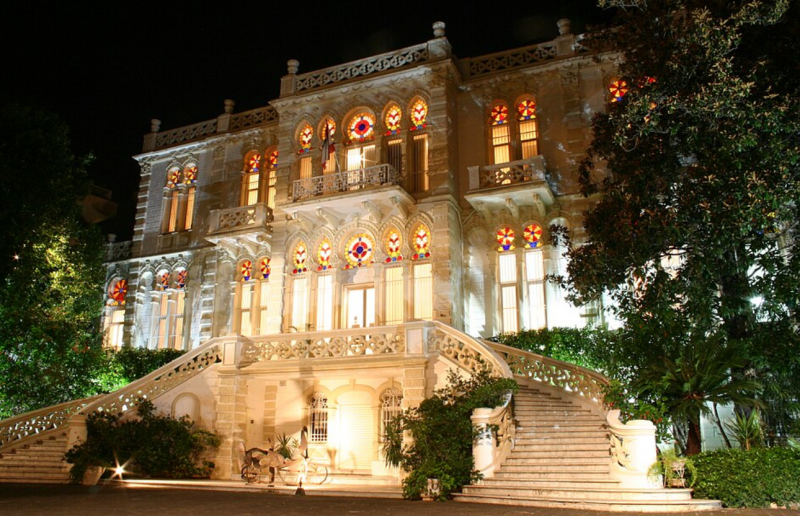
Sursock Museum holds a special place in Lebanon's cultural landscape, not just for the artistic works it showcases, but also for the historical building that houses it. The museum is located in a former residence that belonged to Nicolas Sursock, one of Lebanon's prominent art collectors. After his death in 1952, he left his house to Beirut with the intention of turning it into an art museum.
Since its inauguration in 1961, the museum has become an important venue for Lebanese, Arab, and international art, hosting diverse exhibitions and cultural and artistic programs over the decades. It has maintained its presence throughout Lebanon's challenging times and has undergone expansions and restorations that have reinforced its role as a leading cultural institution in the capital.
Where is Sursock Museum Located in Beirut?
The Sursock Museum is located in the Achrafieh district of Beirut, near the Gemmayzeh neighborhood and St. Nicolas Stairs. The museum's location is notable for its proximity to several renowned cultural and heritage districts in the capital.
The museum sits in an area filled with historical architecture and old neighborhoods, offering visitors the chance to explore another side of Beirut alongside their artistic experience.
Who Was Nicolas Sursock?
Nicolas Sursock was a Lebanese art collector who became associated with supporting art and culture in Lebanon. After his death in 1952, he donated his home to the city to be converted into an art museum, focusing on exhibiting Lebanese, Arab, and international works. The museum officially opened its doors in 1961 after years of preparations.
When Did the Sursock Museum Open?
The Sursock Museum first opened its doors on November 18, 1961, with the Autumn Salon being one of the first events hosted there. The Autumn Salon provided an influential space for Lebanese artists to showcase their work, featuring leading names such as Shafic Abboud, Etel Adnan, and Mona Hatoum, among others, over the years.
What Makes Sursock Museum Special?
Historical Architecture
The museum building itself is a major attraction, being the former home of Nicolas Sursock, constructed in 1912. The design blends Ottoman and Venetian elements that were popular in Lebanese architecture in the early 20th century. It retains significant aspects of the original interior design, including the Arab Salon where Sursock hosted his guests.
Arab Salon
The Arab Salon is one of the museum's most notable historical spaces, retaining much of its original character. Its walls and ceiling are adorned with hand-carved wooden panels imported from Damascus in the 1920s, giving it unique artistic and architectural significance.
Historically Classified Building
In 1999, the Directorate General of Antiquities classified the museum building as a Category A historical structure, reflecting its architectural and heritage significance.
How Has Sursock Museum Evolved?
The museum has undergone several phases of expansion and development, particularly with the evolving needs of modern art institutions. In 2008, a major restoration and expansion project began, lasting five years and concluding in 2014. The project added four underground floors below the museum's garden, increasing its total area from approximately 1,500 square meters to 8,500 square meters.
The expansion allowed for new exhibition spaces, a large hall for temporary exhibitions, an auditorium, a research library, and facilities for collection storage, archiving, and conservation workshops.
When Was the Sursock Museum Reopened?
The museum was officially reopened on October 8, 2015, following the completion of the restoration and expansion project. However, the museum sustained significant damage during the Beirut Port explosion in August 2020, resulting in a lengthy closure for extensive repairs and rehabilitation. It finally reopened on May 26, 2023, marking a crucial point in Beirut's cultural scene, as the museum shares deep ties with the city's cultural memory.
What Does Sursock Museum Offer?
The museum specializes in modern and contemporary art, housing a collection and archive related to the history of art in Lebanon and the region. It hosts temporary exhibitions and cultural and artistic programs, with activities not limited to displaying art but also including lectures, performances, educational, and research programs.
Current Exhibitions at Sursock Museum
According to the museum's program for 2026, several exhibitions and events are being held, including:
'Material Narratives' Exhibition
The 'Material Narratives' exhibition runs until September 20, 2026, in collaboration with the Lebanese Foundation for Modern Art, within the museum's art collection halls.
'Becoming Iconic' Exhibition
The 'Becoming Iconic' exhibition, curated by Yasmina Chemaly, continues until June 20, 2027.
Butterflies and Bees Exhibition
The museum hosts an exhibition exploring the history of the Middle East Airlines folklore dance troupe and its archival story, running until August 22, 2026.
Is Admission to Sursock Museum Free?
Yes - the museum's official website notes that admission is free, part of the institution's commitment to making art and culture accessible to a broad audience.
Why Is Sursock Museum Worth Visiting?
Blending Art with History
A visit to the museum is not solely about viewing artworks; visitors can also explore a historical residence that showcases an aspect of early 20th-century Lebanese architecture.
Showcasing Lebanese and Arab Art
The museum serves as an important space for modern and contemporary art, displaying works connected to the history of the art movement in Lebanon and the region.
Reflecting Beirut's Memory
The museum's history is intertwined with that of the city itself, continuing its activities through Lebanon's difficult periods, enduring damage during the Beirut Port explosion, and finally reopening post-restoration to welcome visitors once again.
See Also:
Where is the Village of Tannourine?