


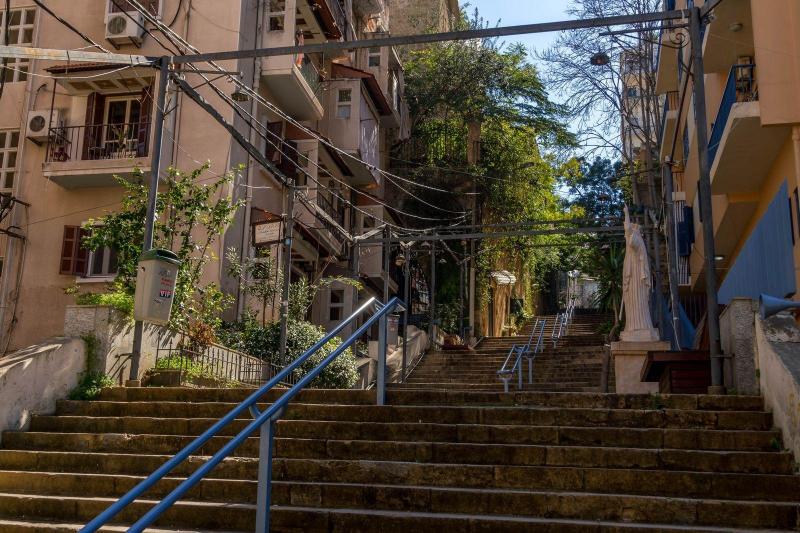
Beirut's unique blend of coastal areas and elevated neighborhoods has made its public staircases an integral part of its urban fabric for decades. These staircases have historically facilitated movement between streets and neighborhoods separated by slopes. Over time, many of these pathways have transformed into significant cultural and heritage landmarks.
The staircases carry remnants of daily life from the past, once serving as vital routes for residents to access homes, shops, and neighboring districts. Today, they attract walkers, photographers, and those keen to discover traditional Beiruti architecture.
The Iconic Mar Nicolas Stairs
The Mar Nicolas Stairs stand as one of Beirut's most renowned heritage staircases, connecting the areas of Gemmayzeh and Ashrafieh and serving as a pedestrian passage through parts of the old neighborhood.
Surrounded by heritage buildings, these stairs exude a unique architectural charm that combines old stonework with traditional Beiruti districts. Local sources note that they comprise approximately 125 steps, making them a favored route for exploring Beirut by foot.
The Beginnings of Mar Nicolas Stairs
The emergence of many of Beirut's staircases is linked to the city's urban expansion, necessitating convenient passageways between elevated and lower areas. In the late 19th and early 20th centuries, these stairs became part of the residents’ daily movement, particularly in naturally sloped areas. Over the years, they have transitioned from mere passages to historical markers of the city's development.
From Pedestrian Pathway to Cultural Space
Mar Nicolas Stairs have evolved from a daily commuter route to a vibrant space for art and cultural activities. The stairs and surrounding areas have become synonymous with art exhibitions, social events, and cultural engagements, thereby embedding them deeply within Beirut's cultural scene.
Heritage Significance of Beirut's Stairs
Beirut's staircases hold immense heritage value, representing the city's urban legacy. They reveal the planning of old neighborhoods before the advent of cars and modern roads, offering glimpses into hidden details like stone facades, wooden doors, and narrow alleyways.
Appeal to Photographers
The architectural details of these old staircases provide unique photographic opportunities, combining aged stones with heritage facades and local greenery. The different angles available on these staircases allow photographers to capture unique images of the steps, surrounding buildings, and connecting alleys.
Daily Life and Beirut's Stairs
Before modern transport, pedestrian movement was central in Beirut's daily life, and stairs played an essential role in connecting areas. Residents used them to reach homes, markets, places of worship, and main streets, and now, they serve as part of the city’s visual memory.
A Unique Tourist Experience in Beirut
Interested visitors can include the Mar Nicolas Stairs in a tour of Gemmayzeh and Ashrafieh, areas known for historical buildings, restaurants, cafes, and art spaces. Walking is recommended, with comfortable shoes, especially since climbing these stairs might be challenging for some.
Preserving Heritage Stairs
Beirut’s historic staircases require ongoing maintenance to preserve their structure and function. They are not just tourist attractions but also crucial in maintaining the identity of old neighborhoods and the memory of their residents. Revitalizing these paths can encourage walking, cultural tourism, and support artistic and commercial activities nearby.
Tips for Visiting Beirut's Stairs
Those planning to explore Beirut's staircases should consider simple tips: wear comfortable walking shoes, carry a water bottle, allocate time for photos, respect the privacy of nearby residences, avoid littering, and include the steps in a broader tour of Gemmayzeh and Ashrafieh.
In conclusion, Beirut's public staircases are a vital part of the city's urban and cultural memory. The Mar Nicolas Stairs exemplify staircases that have transcended their original pedestrian function to become spaces associated with art, culture, and heritage. Visiting these stairs offers a different perspective on Beirut, where old architecture entwines with modern life, turning the stone steps and surrounding alleys into a unique cultural and tourist experience.
See Also