


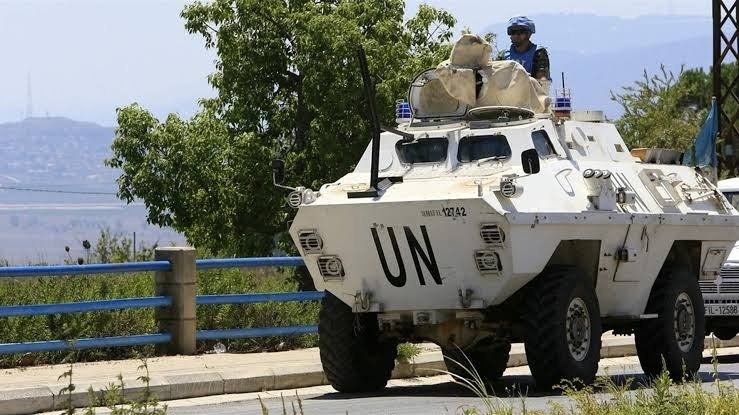
The United Nations Interim Force in Lebanon (UNIFIL) spokesperson, Dani Ghaffari, has disclosed a significant increase in Israeli military activity in southern Lebanon over the past two weeks, warning of the fragile security environment following recent attacks.
In an exclusive statement to 'Al Arabiya.net/Al Hadath.net', Ghaffari announced that peacekeeping forces continue to monitor breaches related to Resolution 1701 within UNIFIL’s area of operations south of the Litani River, noting a remarkable rise in projectile counts in the south.
He clarified that the intensity of violence remains considerably lower than in previous months; however, the overall situation remains fragile. Ghaffari urged all parties to exercise restraint, halt escalation, and recommit to implementing Resolution 1701.
These remarks follow President Joseph Aoun's assertion on Monday regarding the importance of maintaining UNIFIL's presence in southern Lebanon, emphasizing its role in stabilizing villages and towns in cooperation with the Lebanese army.
The UN Security Council has decided to conclude UNIFIL's mission, transferring security responsibilities to the Lebanese army while continuing Lebanon-Israel negotiations under U.S. mediation. This involves activating 'trial zones' for Israeli withdrawal and empowering the army's security role while de-escalating Hezbollah’s armament, which has commenced in Western Zourtr.
Recent Israeli airstrikes targeted the towns of Ansar and Deir Al-Zahrani last Saturday, resulting in 11 fatalities, including three children—the highest daily toll since the Lebanon-Israel framework agreement was signed in late June.
Regarding Resolution 1701's future, Ghaffari reiterated its continued relevance as endorsed by the Security Council on August 11, 2006, asserting the resolution’s core principles remain applicable for sustainable solutions.
Resolution 1701 outlines disengagement between Israel and Hezbollah, escalating Lebanese army deployment in the south, and supporting UNIFIL's role in implementation and oversight within its operational zone.
Ghaffari noted the Security Council’s August 2025 decision under Resolution 2790 to extend UNIFIL’s mandate 'once more' until December 31, 2026, after which a gradual, organized withdrawal is to commence, based on arrangements outlined by the council.
Under the same resolution, the council requested the UN Secretary-General to explore options for continued Resolution 1701 implementation post-UNIFIL, including monitoring the Blue Line, enhancing Lebanese army deployments south of the Litani River using UN mechanisms.
Ghaffari highlighted that the Secretary-General has already submitted future international presence options to the Security Council, potentially aiding in observation and support for the Lebanese army.
Secretary-General António Guterres proposed in June 2026 three deployment options ranging from approximately 2,000 personnel to over 5,500 UN personnel for monitoring ceasefires and supporting Lebanese armed forces, varying in geographic range and operational capacity based on force size.
On the humanitarian front, Ghaffari described the situation as 'worrisome,' especially with the security vulnerability, cautioning that civilians bear the brunt of escalating tensions.
He reported that recent weeks have forced many families into displacement or lifestyle changes due to uncertainty, emphasizing that aiding the most affected communities remains a UNIFIL priority.
Peacekeepers continue to provide support “within the limits of their capabilities,” including basic humanitarian aid such as food, medicine, and hygiene supplies, stressing that compliance with Resolution 1701 is crucial for de-escalation and restoring full stability along the Blue Line.
UNIFIL has been stationed in southern Lebanon since 1978, functioning under relevant Security Council resolutions, notably Resolution 1701 issued after the 2006 Israel-Hezbollah war.
Despite the international force's presence, southern Lebanon has witnessed repeated escalation rounds and clashes between Israel and Hezbollah over decades, the latest broad escalation occurring post-Gaza War, and after the claimed martyrdom of an Iranian guide at the outbreak of the US-Israeli war on Tehran.