


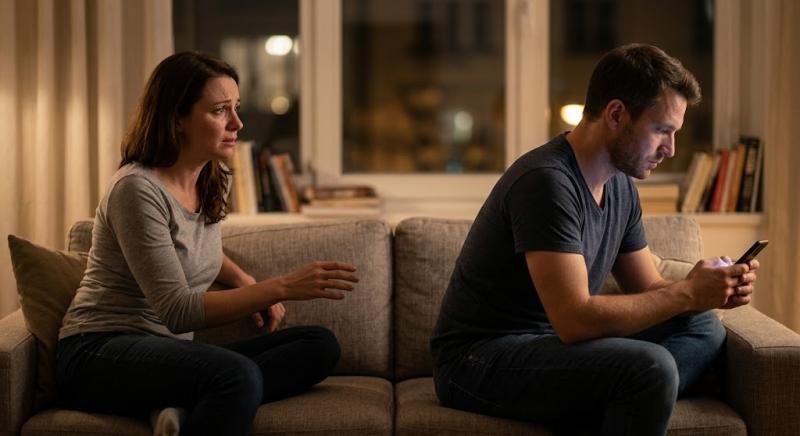
Marital relationships experience various phases, and expressions of love and emotions are not static throughout marriage. Responsibilities, work pressures, financial issues, and parenting can influence how couples communicate, sometimes making one partner seem less interested or more occupied.
However, when emotional distance persists over a long time, a wife may notice significant changes in her husband's behavior. It's crucial to differentiate between transient emotional withdrawal, which can occur in any relationship, and persistent emotional coldness that requires dialogue and understanding of underlying causes.
What is Emotional Coldness in a Husband?
Emotional coldness doesn't necessarily mean a husband has stopped loving his wife or wants to end the relationship. It may manifest as a decrease in expressing emotions, lack of interest, or weak communication. If these changes are consistent and noticeable compared to previous relationship dynamics, particularly if one partner feels a lack of emotional support or attention, this indicates a deeper issue requiring attention.
Major Signs of Emotional Coldness in a Husband:
Lack of Communication and Conversation
A wife may notice her husband's reduced desire to talk or share daily details. Conversations may become limited to functional and daily matters, like work, home, or children, without spaces for discussing feelings or personal interests. Yet, less talking alone does not necessarily indicate emotional coldness, as it can be due to personal traits or periods of stress and busyness.
Lack of Emotional Concern
A wife might feel her husband no longer asks about her emotional state or what bothers her as he did previously. This may show through ignoring discussions about her issues, downplaying her feelings, or changing the subject when trying to open an emotional dialogue. Repeated behavior like this may lead to feelings of loneliness despite the marriage.
Lack of Initiative
A noticeable decline in initiative can be observed, such as not trying to organize joint times, start conversations, or express interest. This sign becomes significant if there was a history of consistent initiative, with a clear behavioral change over an extended period.
Reduced Affection Expression
People express love differently, so emotions cannot be measured by words alone. However, sudden or continuous changes in how affection is expressed, whether through words, attention, or daily actions, may indicate a cooling relationship that needs to be understood.
Constant Distraction from the Relationship
A husband may spend most of his time at work, on the phone, with friends, or in other activities, without trying to allocate time for the marital relationship. Constant disregard and lack of effort to find common time might widen the emotional gap between spouses.
Avoiding Discussions on Issues
Some husbands might refuse to engage in any discussion about the relationship or its issues. Continuous avoidance can lead to unresolved matters piling up, making a wife feel her husband is uninterested in improving the relationship or understanding her feelings.
Lack of Emotional Support
Both spouses need to know they have each other's support during difficult times. Emotional coldness may appear when a wife feels her husband offers no support or care during her problems or pressures, especially if this behavior becomes consistent.
Lack of Interest in Shared Details
A husband may lose interest in matters that were part of their shared life, like special occasions, future plans, or activities they used to enjoy together. Forgetting a single occasion doesn't necessarily indicate a problem, but a continuous change in attention to shared life may need investigation.
Does Emotional Coldness Mean a Husband No Longer Loves His Wife?
Not necessarily. Emotional coldness can be a result of factors not directly related to feelings towards the wife. A husband might be under professional or financial stress, experiencing exhaustion, or personal problems hindering effective communication and emotional expression. There may also be accumulated unresolved issues within the relationship leading to gradual emotional withdrawal from either party. Thus, interpreting the behavior as a loss of love may not be accurate before understanding what is truly happening.
Related Articles:
Signs Your Husband Still Loves You