


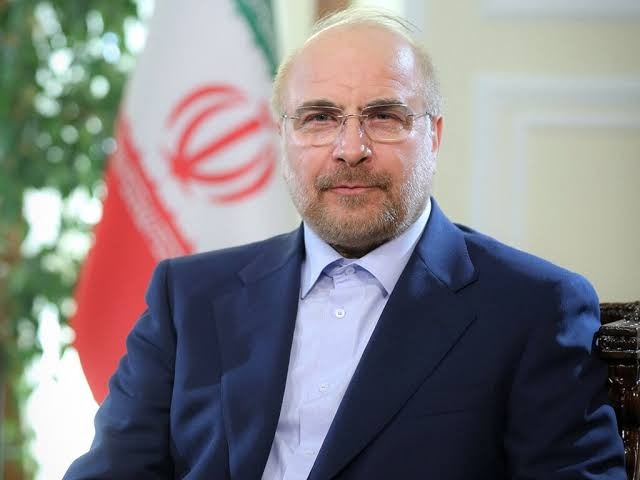
Mohammad Bagher Ghalibaf, Speaker of the Iranian Parliament, declared on Tuesday that Iran anticipates overcoming the U.S. economic pressure campaign. He stated that the U.S., having faced defeat in military and political arenas, will also face failure in economic warfare. Meanwhile, the U.S. is intensifying sanctions and aiming to financially and commercially isolate Tehran.
Ghalibaf's remarks came during a meeting with Iraq's Chief Justice Faiq Zidan in Tehran, where they discussed bilateral relations, judicial and legal cooperation, and rapid regional developments.
Ghalibaf described the region as undergoing a crucial and historical phase, indicating that a new regional order is forming, with Iran and Iraq playing key roles in these transformations.
These statements reflect Tehran's perspective of the current period as a broad confrontation that extends beyond bilateral sanctions issues with Washington to a wider struggle over the political and security balance in the Middle East.
Ghalibaf's comments on economic warfare coincide with the Trump administration escalating its pressure on Iran, threatening to expand secondary sanctions on companies, banks, and foreign entities continuing to engage with Tehran.
In response, Iranian leadership aims to showcase its resilience against new pressures, asserting that Washington has already exhausted most economic tools available and that expanding sanctions will not cause a fundamental shift in Tehran's stance.
During his meeting with Zidan, Ghalibaf also addressed the U.S. military presence in Iraq, commending the withdrawal of international coalition forces as a historical achievement for the Iraqi government and people.
He expressed hope for the complete withdrawal of foreign forces from Iraqi territory and airspace, reflecting Tehran's ongoing priority of ending U.S. military presence in its regional security agenda.
Ghalibaf's comments about Iraq hold additional significance as Baghdad approaches a sensitive period concerning arms outside state institutions, amid internal and external pressures regarding the future of armed factions and their relationship with the government.
In a previous visit to Baghdad, Ghalibaf spoke of building a new regional system free from foreign interference, considering what he termed as "resistance in Iraq" as a strength for the country.
These positions come as the Iraqi government balances its close ties with Iran and its security and political partnerships with the United States, alongside efforts to assert state authority over all armed forces.
Faiq Zidan arrived in Tehran on Tuesday heading a high-level judicial delegation, following an official invitation and held a series of meetings with senior Iranian officials.
According to the Iraqi Supreme Judicial Council's media, Zidan and Ghalibaf's meeting focused on sharing expertise and coordinating legal and judicial matters of mutual interest.
Zidan also met with Iranian President Masoud Bezhgikian to discuss strengthening legal and judicial cooperation between Baghdad and Tehran.
This judicial initiative is an extension of previous discussions between the two countries on activating memorandums of understanding, exchanging detainees, and cooperating on cross-border issues, aiming to expand bilateral relations alongside political, security, and economic matters.
However, Ghalibaf's statements gave the visit a political dimension that transcends judicial cooperation, linking Iraqi-Iranian relations with ongoing regional changes amid escalating Iran-U.S. tensions and approaching critical Iraqi decisions regarding foreign presence and armed factions.
While Washington speaks of unprecedented economic isolation on Iran, Tehran presents a counter-narrative based on strengthening ties with neighboring countries and betting on changing regional dynamics—a vision Ghalibaf summarized by discussing a "new regional order" and a predicted American defeat in "economic warfare."