


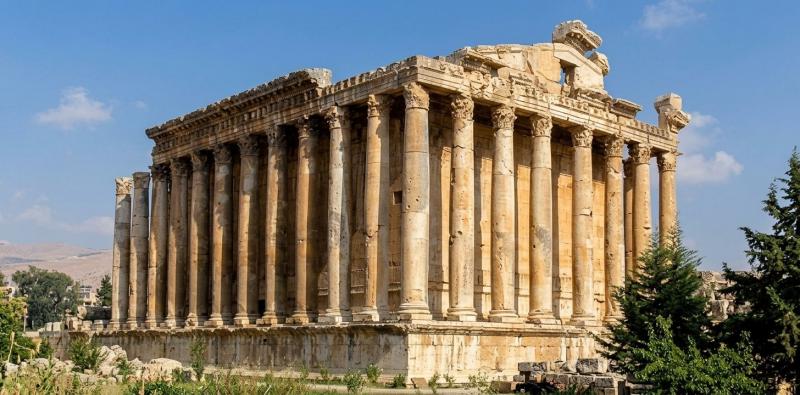
Baalbek attracts thousands of visitors annually, thanks to its massive Roman temples, towering columns, and archaeological sites that reflect the grandeur of one of the world's most historic cities. These sites provide ideal backdrops for capturing distinguished photos blending architectural art, nature, and natural lighting that transforms throughout the day.
Whether you're a professional photographer or an enthusiast seeking unique shots, Baalbek offers numerous angles that give your photos an extraordinary historical touch. Additionally, the diverse locations within and around the city allow for capturing panoramic photos as well as detailed architectural shots.
Top Photography Spots in Baalbek
1. The Temple of Bacchus: A Perfect Roman Masterpiece for Photography
The Temple of Bacchus is among the best-preserved Roman temples globally, characterized by its intricate stone details and massive columns, offering stunning visual depth for photos. The carvings and decorations that adorn the entrances and walls add a unique artistic touch to every shot.
For the best photo, stand below the temple’s main gateway to showcase the massive structure against a person’s size in the image. The side corridors between the columns also provide opportunities for dramatic photos with sunlight streaming between the ancient stones.
2. The Six Columns of the Temple of Jupiter
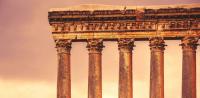
Photography in Baalbek wouldn’t be complete without stopping at the famous six columns that have become a symbol of the city and one of the most renowned archaeological landmarks in Lebanon. These towering columns, rising tens of meters, make a stunning backdrop for photos.
One of the best angles is shooting from a low level to highlight the height and grandeur of the columns. Moreover, sunset is ideal for capturing photos where the columns blend with the golden and orange hues of the sky.
3. The Hexagonal Courtyard and the Great Court
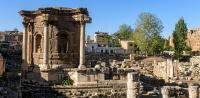
The Hexagonal Courtyard and the Great Court boast a unique architectural design combining stone arches, ornate walls, and expansive spaces, offering photographers multiple creative options.
Arches and old windows can be used as a natural frame for the photo, showcasing columns or individuals deep in the scene. The open spaces also allow for capturing panoramic photos that highlight the splendor of the entire archaeological complex.
4. The Stone of the Pregnant Woman
Located in the Roman quarry near the archaeological city, the Stone of the Pregnant Woman is one of the largest carved stones known to ancient history. This site attracts photography enthusiasts due to its awe-inspiring size.
To capture a distinctive shot, you can stand or sit atop the stone while the photographer captures the image from a suitable distance to show the stark contrast between human size and the massive rock, giving the shot an impressive visual effect.
5. The Temple of Venus
The Temple of Venus, situated outside the main archaeological complex, is noted for its circular design, different from the rest of Baalbek's Roman temples. This makes it a favored spot for lovers of architectural photography.
A wide-angle lens is the best choice to capture the temple’s full details along with the surrounding nature. Photos can also be taken in the early morning hours to benefit from the soft lighting and fewer visitors.
Best Time for Photography in Baalbek
The success of a photo greatly depends on the timing of your visit. It is preferable to arrive in the early morning hours to take advantage of the calm natural light and avoid crowds, especially during tourist seasons.
In contrast, sunset provides warm hues that add an artistic touch to the photos, especially when capturing open temples and columns. Moreover, clear blue skies help highlight the details of the historical stones more clearly.
Tips for Professional Photography
Before starting photography, ensure to wear clothing colors that match the stone backgrounds to make the person in the photo stand out. It’s also preferable to use a wide lens for capturing large architectural scenes, while standard lenses are suitable for photographing details and decorations.
Additionally, don’t hesitate to try different shooting angles, whether from a low or high view. Changing the camera angle may give the photo a more creative touch. If you are using a smartphone, try activating high-definition photography mode for the best results.
Why is Baalbek an Ideal Destination for Photography Lovers?
Baalbek combines history, nature, and architecture in one place, making it one of the best destinations for photography enthusiasts in Lebanon. The massive Roman temples, expansive courtyards, and historical columns offer countless opportunities for capturing unique photos that suit various photography styles.
Moreover, the city offers a rich cultural experience to its visitors, as it allows the exploration of archaeological sites in conjunction with enjoying local atmospheres, restaurants, and nearby markets, making the journey more diverse and enjoyable.
In conclusion, Baalbek’s top photography spots represent an extraordinary opportunity for history and photography lovers to discover one of the greatest ancient cities in the world. From the Temple of Bacchus and the famous six columns to the Stone of the Pregnant Woman and the Temple of Venus, the city offers marvelous sites that help in documenting unforgettable moments through the lens.
If you're planning to visit Baalbek, make sure to allocate ample time to explore these sites calmly, as every corner tells a story from the Roman civilization’s history and gives you a photo worth keeping.
See also
How to Deal with Jealousy in Marital Relationships?
Best Hotels in Baalbek for Various Budgets
The History of Zahle: How Did It Become the Bride of the Beqaa?