


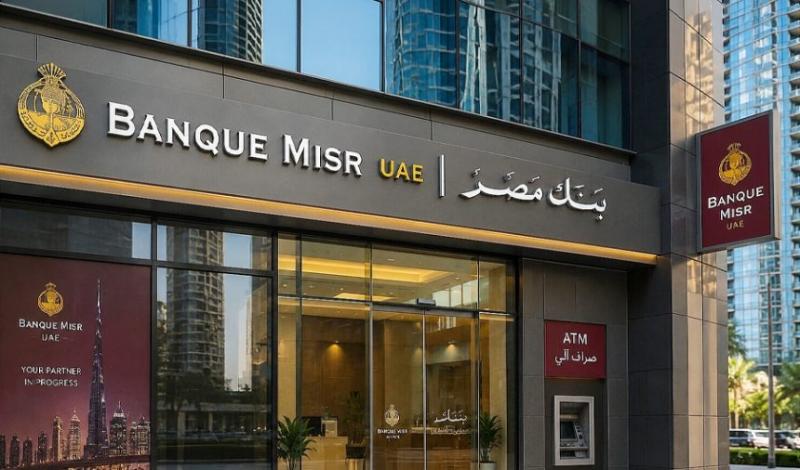
The United States has intensified its financial campaign against Iran by targeting Bank of Egypt's operations in the UAE. The U.S. authorities have accused the UAE unit of the bank of processing approximately $1.8 billion in transactions for companies suspected of ties to parallel Iranian banking networks.
The U.S. Department of Treasury's Financial Crimes Enforcement Network (FinCEN) has proposed an action under Section 311 of the Patriot Act, which would prevent U.S. financial institutions from opening or maintaining correspondent bank accounts for or on behalf of Bank of Egypt in the UAE.
If implemented, the action would restrict the UAE branches’ access to the U.S. financial system and limit transactions via correspondent accounts, without fully placing Bank of Egypt on U.S. sanctions lists.
FinCEN clarified that the proposed measure applies solely to Bank of Egypt in the UAE and would not affect the bank's operations in Egypt or other countries.
$1.8 Billion and 103 Companies
The U.S. authorities have labeled Bank of Egypt in the UAE a “primary money laundering concern” after detecting around $1.8 billion in transactions from January 2024 to June 2026 for 103 companies that Washington alleges may be part of parallel Iranian banking networks.
The Treasury Department stated these networks rely on shell companies and financial institutions across various countries to move funds, access foreign currencies, and circumvent sanctions on Tehran.
U.S. documents suggest some companies dealing with Bank of Egypt's UAE branches were previously linked to entities under U.S. sanctions. Washington believes severing correspondent banking channels limits these Iran-linked networks' access to the dollar.
Central Bank of Egypt Clarifies Scope of Action
In Cairo, the Central Bank of Egypt quickly explained the scope of U.S. action, asserting it is limited to Bank of Egypt in UAE’s dollar transactions with correspondent banks.
The central bank stressed that actions do not extend to Bank of Egypt within Egypt or its other international branches, nor do they affect any other banks within the Egyptian banking sector.
The Central Bank stated it is coordinating with the Egyptian Foreign Ministry to engage with the U.S. on these measures, highlighting the resilience of Egypt's banking sector in handling external changes.
The U.S. action does not mean a complete freeze of Bank of Egypt's assets or a halt to its international operations; rather, it specifically targets the UAE operations’ access to U.S. financial institutions.
Expanding Pressure on Iran
This move is part of a broader U.S. campaign targeting what Washington describes as “shadow banking networks” Iran uses to evade sanctions and transfer funds through foreign companies and financial institutions.
The proposed measure against Bank of Egypt in the UAE coincides with other U.S. actions targeting the manager of Iran's Bank Melli branch in Dubai and a Hong Kong-registered company accused by Washington of aiding money transfers linked to Iranian networks.
Targeting a non-Iranian financial institution signals a broader U.S. effort to include foreign entities allegedly providing direct or indirect financial channels for Tehran. However, selecting a targeted action against the UAE branches of Bank of Egypt, rather than imposing comprehensive sanctions on the Egyptian bank, reflects an American attempt to isolate problematic activity without directly impacting the entire Egyptian banking sector.