


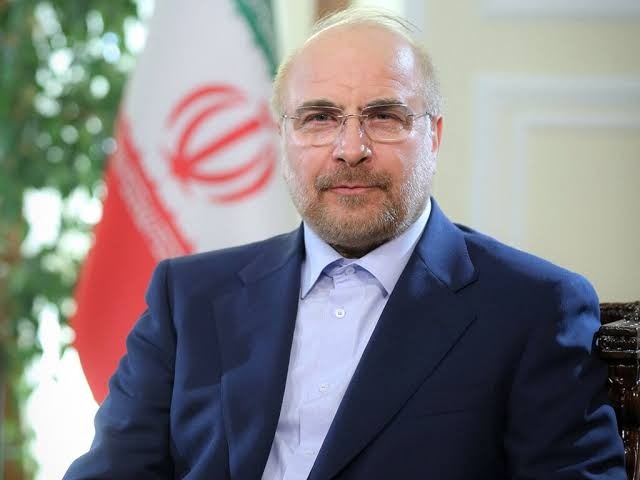
Iranian Parliament Speaker Mohammad Bagher Ghalibaf has stated that the region is witnessing signs of 'new regional treaties, collaborations, and arrangements,' emphasizing that the unity of Islamic countries and peoples can build a security system free from external power intervention.
Ghalibaf made these remarks in a message on Saturday to mark the 'Islamic Unity Week,' highlighting what he described as a 'significant and strategic truth in the Islamic world' - transitioning from division to unity and from hostility to brotherhood and solidarity.
He noted that Shia and Sunni Muslims in Iran, despite sectarian differences, unite over their love for Prophet Muhammad and his family, alongside a shared Iranian national identity.
According to Ghalibaf, the coexistence of ethnicities and sects is a cornerstone of Iranian national strength, with Sunni and Shia unity evolving beyond a ceremonial slogan to become a pillar of the country's security and progress.
'Regional security reshaped from outside is fragile'
He further discussed regional security, considering recent developments as proof that foreign powers cannot provide sustainable security for the region's countries and peoples.
Ghalibaf argued that security based on external presence and intervention is 'fragile and imposed,' suggesting an alternative model founded on regional cooperation and the will of the people.
He urged Islamic countries to enhance self-reliance rather than depending on external powers, underscoring the potential of achieving 'sustainable, esteemed, and enduring' security.
Hints at 'new regional arrangements'
The Iranian speaker alluded to 'signs of awakening' through the formation of 'new regional treaties and collaborations,' potentially marking a stage where neighboring Islamic countries rely on self-capabilities and opt for cooperation over exhaustive competitions.
Although Ghalibaf did not mention specific agreements, Israeli newspaper 'Maariv' interpreted his remarks as a nod to the recent defense pact signed by Turkey, Saudi Arabia, and Pakistan.
This perspective holds significance in light of regional security arrangements that might reduce dependence on Western powers, though it's 'Maariv's' interpretation, as Ghalibaf did not explicitly name the agreement in his comments.
'Tasting Defeat'
Ghalibaf linked Islamic unity to recent regional developments, indicating that the 'fruit of Muslim unity' has been 'subjecting the enemy to defeat and achieving successive victories,' by compelling 'arrogance' to reconsider its stances.
The Iranian Parliament Speaker concluded his message by calling for the Muslim world to enter a 'new era' of unity, independence, and security, enabling regional states to determine their fates without foreign intervention.
Ghalibaf's statements offer an Iranian vision for regional security rooted in Islamic cooperation and reduced reliance on outside powers amid new defense agreements reshaping traditional alliances.