


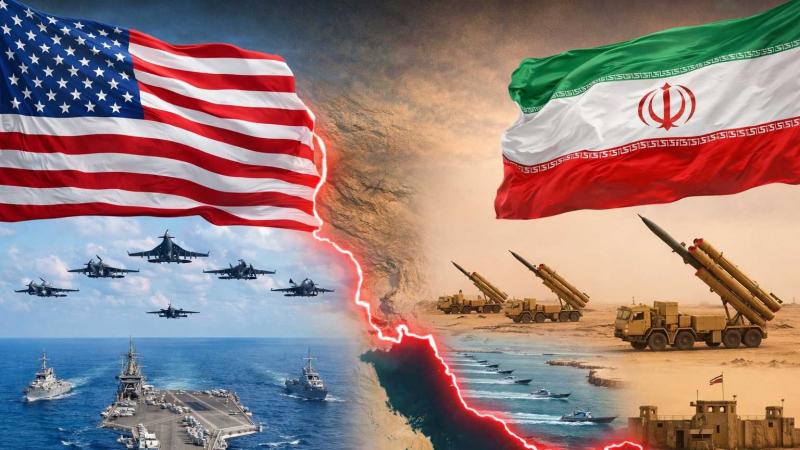
After six months of conflict with the United States and Israel, the economic costs of this confrontation have become more apparent in Iran, with official acknowledgment of a one-third decline in foreign trade and a sharp rise in inflation, as President Donald Trump’s administration escalates its financial campaign to choke Iran’s funding sources.
Reflecting the pressures on the Iranian economy, President Masoud Pezeshkian stated that exports and imports have dropped by about 35% due to U.S. sanctions and the maritime blockade on Iranian ports, with annual inflation reaching 66% last month.
The Iranian government announced on Saturday that addressing the economic impact of the war and sanctions has become a top priority, with a focus on curbing inflation, stabilizing markets, creating jobs, directing investments towards local production, and gradually reducing reliance on the dollar.
Pezeshkian indicated that the government would start imposing restrictions on state institutions and official bodies before burdening citizens with additional hardships, highlighting attempts to contain the social fallout of the crisis.
Leadership Warnings
Amid growing concerns about the economic situation, Iranian Supreme Leader Mojtaba Khamenei urged the government to deal “seriously” with economic and living challenges, notably inflation, unemployment, and price hikes causing disruptions in goods and services markets.
Khamenei has not appeared publicly since his injury in the February 28 attack that killed his father, former Supreme Leader Ali Khamenei, with recent statements issued through written messages.
These developments come as Washington ramps up its economic pressure on Tehran after negotiations between the two sides reached a deadlock.
The U.S. has urged countries and companies to reduce their trade dealings with Iran under threat of secondary sanctions but has so far avoided wide-ranging direct measures against China and India, Iran’s key trade partners, amid concerns over potential global economic repercussions.
90 Million Barrels Offer Breathing Room
Despite the restrictions on Iranian trade, oil has provided Iran with significant relief during a brief pause in tensions.
Pezeshkian mentioned that Iran managed to sell about 90 million barrels of oil during the period of implementing the memorandum of understanding with the U.S. in June, when Washington temporarily permitted Iranian oil sales.
However, the collapse of those arrangements has returned the Iranian economy to battling war pressures, sanctions, and blockades, as the government attempts to mitigate the crisis’s effects on prices and living standards.
Diplomacy Returns via Strait of Hormuz
While Washington bets on economic pressure, regional efforts to reopen the diplomatic path continue.
Qatari Prime Minister Sheikh Mohammed bin Abdulrahman Al-Thani met Iranian officials in Tehran on Thursday, emphasizing the importance of restoring freedom of navigation through the Strait of Hormuz to pre-war levels.
Tehran asserts that “diplomacy and defense” are complementary paths to protecting its interests, while Qatar and Pakistan strive to reinvigorate talks between Iran and the United States.
The two countries had mediated the Iranian-US memorandum in June, which led to a brief ceasefire before it collapsed over disagreements regarding the Strait of Hormuz.
The strait remains one of Iran’s crucial leverage points, with about 20% of the global shipments of oil and liquefied natural gas passing through it before the war.
In contrast, the U.S. claims its forces have removed naval mines planted by the Iranian Revolutionary Guards, while Trump asserts that the strait is open for navigation.
However, ship movement data indicates ongoing disruptions, with preliminary numbers showing only seven commercial ships passed through on Thursday, compared to 17 the previous day, with a ten-day average of about 15 ships daily.
After half a year of war, the economic battle parallels the military and diplomatic standoff; as Washington wagers that tightening financial and trade restrictions will pressure Tehran into concessions, the Iranian government endeavors to prevent sanctions, blockades, and inflation from escalating into a deeper domestic living crisis.