


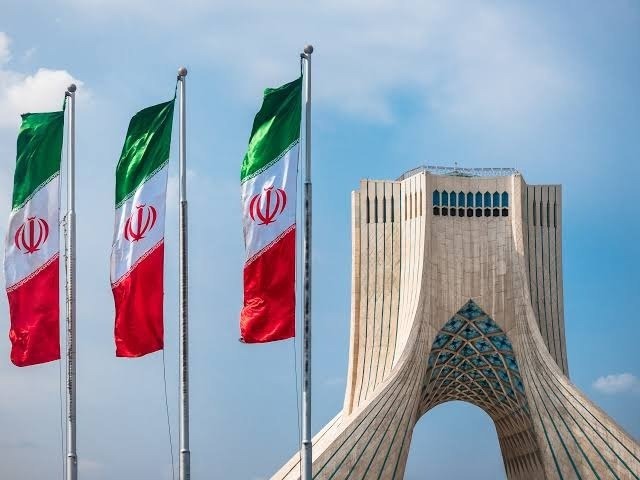
Under the weight of sanctions, maritime blockades, and economic pressures, Iran is crafting a strategy that combines diplomacy with defensive capabilities, keeping the door open for negotiations with Washington while fortifying its internal front.
The Iranian government, on Saturday, pledged to counter U.S. sanctions and what it called 'American-Israeli conspiracies,' emphasizing that diplomatic actions and strengthening defensive capabilities are integral to protecting the country's interests.
In a statement reported by state media and Reuters, the government asserted that diplomacy and defense are coordinated tools to safeguard national interests, security, and Iran's territorial integrity.
The government aims to operate on both fronts simultaneously, prioritizing economic measures such as combating inflation, creating job opportunities, supporting local production, and gradually reducing reliance on the dollar.
This position follows remarks by Iranian Foreign Minister Abbas Araghchi, who stated that reviving diplomacy with the United States is not impossible but conditioned on Washington understanding that pressure tactics are unproductive.
Araghchi called on the U.S. to build trust, speak respectfully, acknowledge Iran's rights, and fulfill its commitments, following discussions in Tehran with Qatari Prime Minister and Foreign Minister Sheikh Mohammed bin Abdulrahman Al Thani.
Qatar is working to revive diplomatic channels and end the conflict, with its Prime Minister emphasizing the importance of returning to pre-war conditions, including ensuring free navigation through the Strait of Hormuz during his visit to Tehran.
Alongside external messaging, calls have emerged within Iran to bolster internal unity and prevent polarization amid rising economic pressures, price hikes, inflation, and unemployment.
Iran's Supreme National Security Council Secretary Mohsen Rezaei cited Supreme Leader Mojtaba Khamenei’s emphasis on preventing actions that harm social cohesion as providing a 'clear strategy for all.'
According to Iran’s Mehr News Agency, Khamenei urged against demoralizing rhetoric or creating 'false polarizations,' considering national unity and social cohesion as pillars of strength and national security.
In a written message on Friday, Khamenei urged officials to avoid statements undermining national and public motivation, warning that focusing on weaknesses could serve Iran's adversaries.
He praised the performance of President Massoud Barzikian’s government while calling for intensifying efforts to address inflation, unemployment, price hikes, and boosting local investment and production.
These statements come amid increasing U.S. pressure on Iran, combining economic sanctions, maritime blockades, and military maneuvers in the Strait of Hormuz.
The U.S. Central Command reported altering the course of 82 commercial ships by August 28 as part of enforcing the blockade, disabling three ships, and boarding two others to ensure compliance.
Washington also announced the removal of naval mines from international passageways in the Strait of Hormuz, asserting its enhanced capability to secure maritime navigation.
The Trump administration views advancements in the strait as additional leverage in future negotiations, helping push Iran toward more favorable terms for Washington.
The Iranian government seeks to alleviate external pressure repercussions by bolstering local production and gradually minimizing dollar reliance while striving to curb inflation and improve labor market conditions.
Recent Iranian messages outline a three-pronged strategy: diplomatic to keep negotiation channels open, defensive to protect Iranian interests, and domestic to alleviate economic pressure and maintain social cohesion.
While Tehran insists diplomacy has not reached a dead end, Washington bets on sanctions, blockades, and shifting the power balance in the Strait of Hormuz, keeping a wide gap between the two despite regional efforts to bring them back to the negotiating table.