


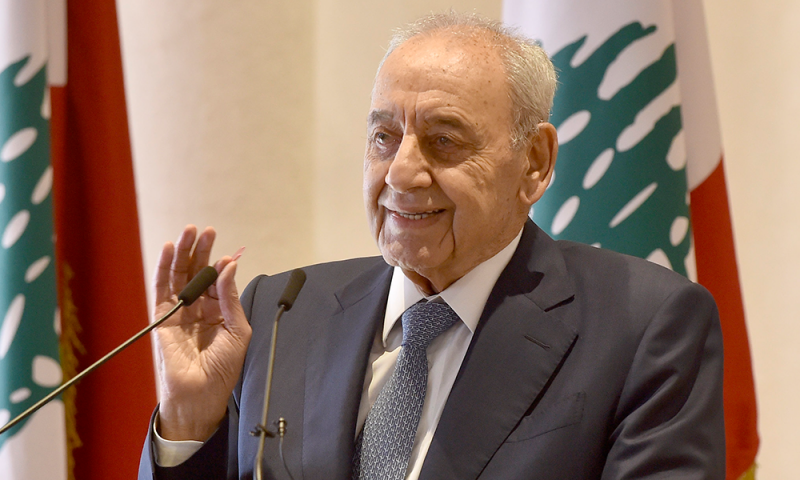
The United States' refusal to renew the mandate for the United Nations Interim Force in Lebanon (UNIFIL) opens a window for a new UN-backed force to take its place, with European and American consensus. This proposal comes from Lebanon's Parliament Speaker Nabih Berri, who emphasizes the need for such a force to ensure legal support for international oversight and aid to the Lebanese army in asserting state sovereignty, contingent upon Israel's withdrawal to its international borders.
According to Berri, bilateral agreements between Lebanon and Israel cannot replace international presence in southern Lebanon. Israel's reluctance to implement the initial phase of the US-mediated 'framework agreement' stands in contrast to this need. Berri, despite not endorsing the agreement initially, suggested its expansion to include broader administrative divisions rather than limiting it to the occupied town of West Zoutar.
The expiration of the UNIFIL mandate on December 31, insisted upon by Washington, raises concerns among Lebanese citizens, especially in the south. The absence of an international body to oversee Israeli withdrawal complicates matters, with bilateral agreements between the countries facing significant Lebanese opposition. Lebanon's President Michel Aoun has called for an alternative, European force under UN auspices if the US does not support Lebanon's request to the UN Security Council for a temporary extension of UNIFIL.
A ministerial source highlighted the necessity of harmonizing international decisions, such as Resolution 1701, with the 'framework agreement' that remains stagnant, testing US credibility in supporting Lebanon's implementation efforts. The Security Council reiterated its commitment to Resolution 1701, with UN Secretary-General Antonio Guterres stating that a replacement would only be possible through a new international monitoring force.
While the US pushes for the 'framework agreement,' Israel's lack of cooperation hinders the expansion of 'experimental areas' and the verification of Lebanese army deployment devoid of Hezbollah’s influence, a critical point for continued negotiations, especially as both countries enter the third month post 'framework agreement' signing.
The question lingers about the situation post-UNIFIL mandate, especially with tensions high in the south. Would the ceasefire hold until Israeli Prime Minister Benjamin Netanyahu completes his electoral battle?
Negotiation progress remains tethered to the disarmament of Hezbollah, as US Ambassador to Beirut, Michel Issa, conveyed to Lebanon. The cessation of conflict is tied to the disarmament and removal of Hezbollah from strategic locations, awaiting Lebanese army deployment.
Notably, the omission of Resolution 1701 in the 'framework agreement' does not negate the international and regional consensus on Hezbollah's disarmament. This step is seen as crucial for Lebanon’s recovery and is supported by the majority of local political forces.
Washington continues to pressure Netanyahu to relax constraints on the 'experimental areas' and establish a 'verification mechanism,' potentially reviving negotiation efforts. However, Hezbollah's antagonism towards UNIFIL complicates international confidence. This requires pragmatic measures from Hezbollah to facilitate saving Lebanon, detaching it from the complex US-Iran 'memorandum of understanding.'
As Washington remains committed to decoupling Lebanese matters from Iranian influence, Hezbollah must reconsider its stance towards UNIFIL, critical for resuming effective international negotiations and ensuring Lebanon's stability.